All species › Pelicans, herons and ibises › Herons and bitterns › Little Egret
Little Egret | Egretta garzetta
Kleine zilverreiger | Garceta común
The Little Egret is an Old World heron that crossed the Atlantic under its own power in the twentieth century. One of the first New World records came from Barbados in 1954, where the species has bred since 1994; in 2008 nests were also found on Antigua. Away from the Lesser Antilles and Trinidad and Tobago it is a rare visitor to the region, often overlooked among the far more numerous Snowy Egrets.
Voice
Mostly silent. At the colony croaking and bubbling sounds; when disturbed a hoarse kaark.
Recording: Julien Bottinelli — CC BY-NC-SA 4.0 · shortened to the first 60 s, mono · xeno-canto
Identification
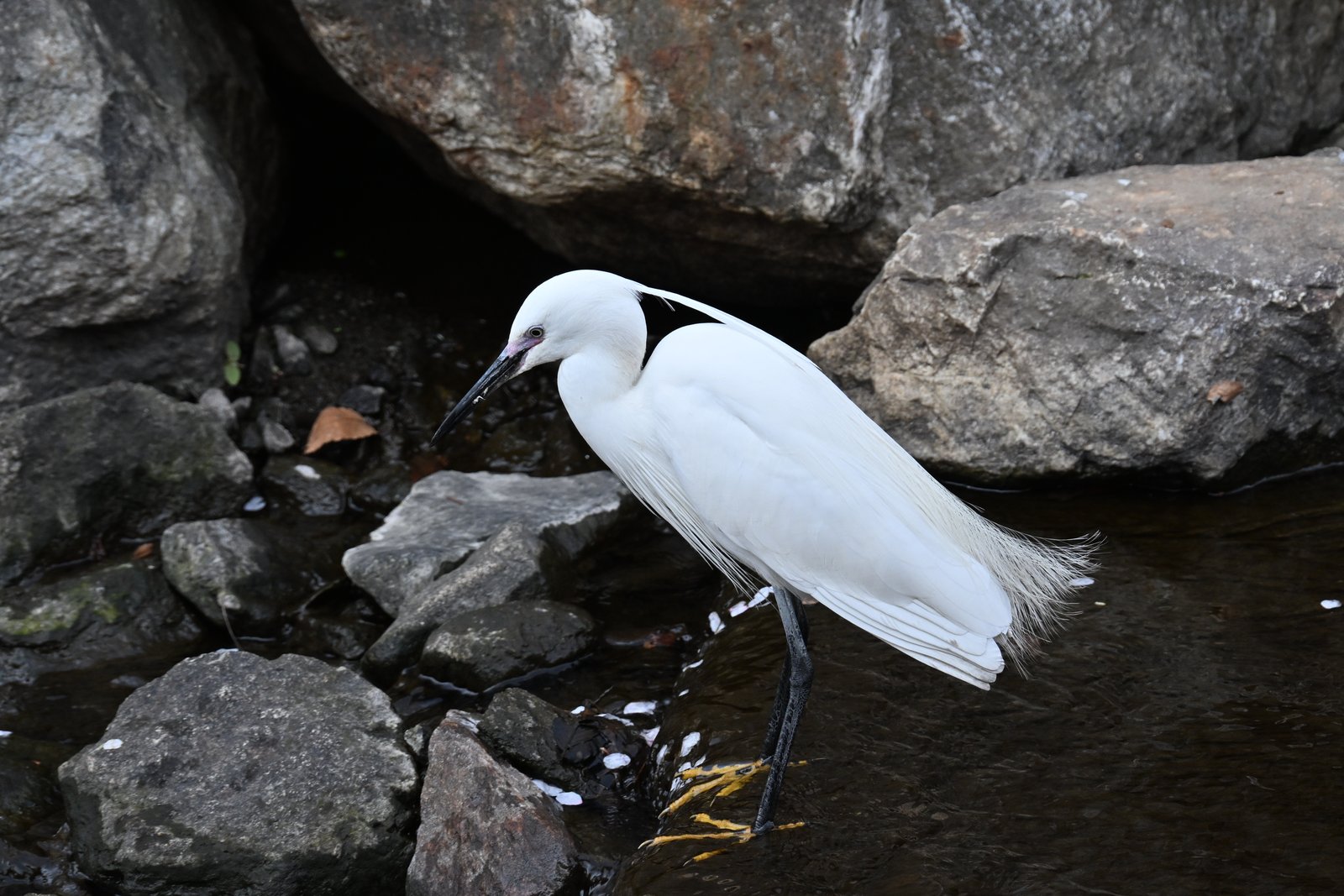
55–65 cm, slender and all white, with a thin black bill, black legs and yellow feet. The lores are blue-grey to green-grey outside courtship and briefly turn reddish during display. In the breeding season it carries two, sometimes three, long, narrow, straight nape plumes and long back plumes. Juveniles resemble non-breeding adults, with duller legs and feet. The sexes are alike.
Confusion species
Snowy Egret Egretta thula is the main pitfall: it has yellow lores, when breeding a full, shaggy crest of many feathers rather than two long nape plumes, and a slightly shorter bill; young birds have yellow on the rear of the legs. Little Blue Heron Egretta caerulea in white juvenile plumage has a grey-blue bill with a dark tip and greenish legs. Western Reef Heron Egretta gularis, a very rare vagrant from West Africa, has a heavier, yellowish-brown bill and also occurs in a dark morph.
Habitat
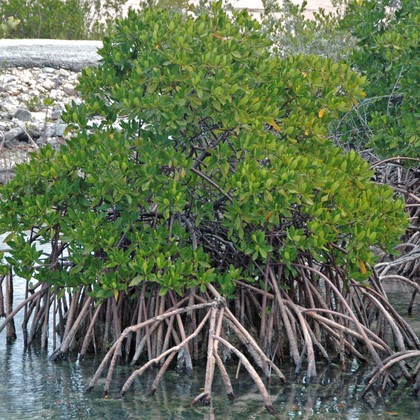
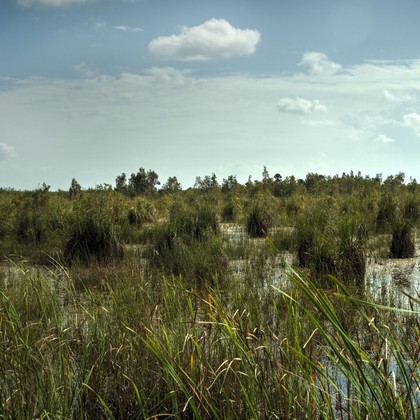
Coastal lagoons, salt ponds, tidal flats, mangroves, freshwater marshes and ponds. It eats small fish, crustaceans and insects, caught while walking or dashing through shallow water. It nests in mixed heron colonies; on Antigua the nests were found in a colony at McKinnon's Salt Pond.
Where the bird is most at home, classified by the vegetation types of the Caribbean.



Range and movements
Breeds on Barbados and Antigua. In addition, small numbers occur fairly regularly on Guadeloupe, Saint Lucia, Grenada and Trinidad and Tobago, and irregularly on Martinique, Dominica and Saint Vincent. On Trinidad and Tobago the species was seen dozens of times between 1959 and 2001, in every season, without proven breeding. A rare visitor to Puerto Rico, the Virgin Islands and the ABC islands; exceptional further north and west in the region. Outside the region widespread in Europe, Africa, Asia and Australia; elsewhere in the Americas a rare visitor along the Atlantic coast.
- Resident
- Winter visitor (c. Apr–Sep)
- Passage (Mar–Apr, Oct–Nov)
- dark = core range, pale = thinly spread
How and when to look
Barbados is the best place. Any group of white egrets in the Lesser Antilles is worth checking for lore colour and head plumes; outside the breeding season in particular, the blue-grey lores are the most useful feature against the yellow lores of Snowy Egret.
Conservation status
Not threatened globally. The Caribbean population is small and depends on a few breeding sites; those on Antigua were unprotected when discovered.
Scientific name
Egretta garzetta | (Linnaeus, 1766)
Linnaeus described the species in 1766 as Ardea Garzetta; because it was later moved to another genus, the author and year stand in brackets. The genus Egretta was introduced in 1817 by Forster. Egretta comes from Provençal aigrette, the name for the little egret, a diminutive of aigron 'heron'. garzetta is the Italian name for this heron. The specimen the first description was based on came from the Orient.