All species › Nightjars › Nightjars › Rufous Nightjar
Rufous Nightjar | Antrostomus rufus
Rosse nachtzwaluw | Chotacabras rojizo
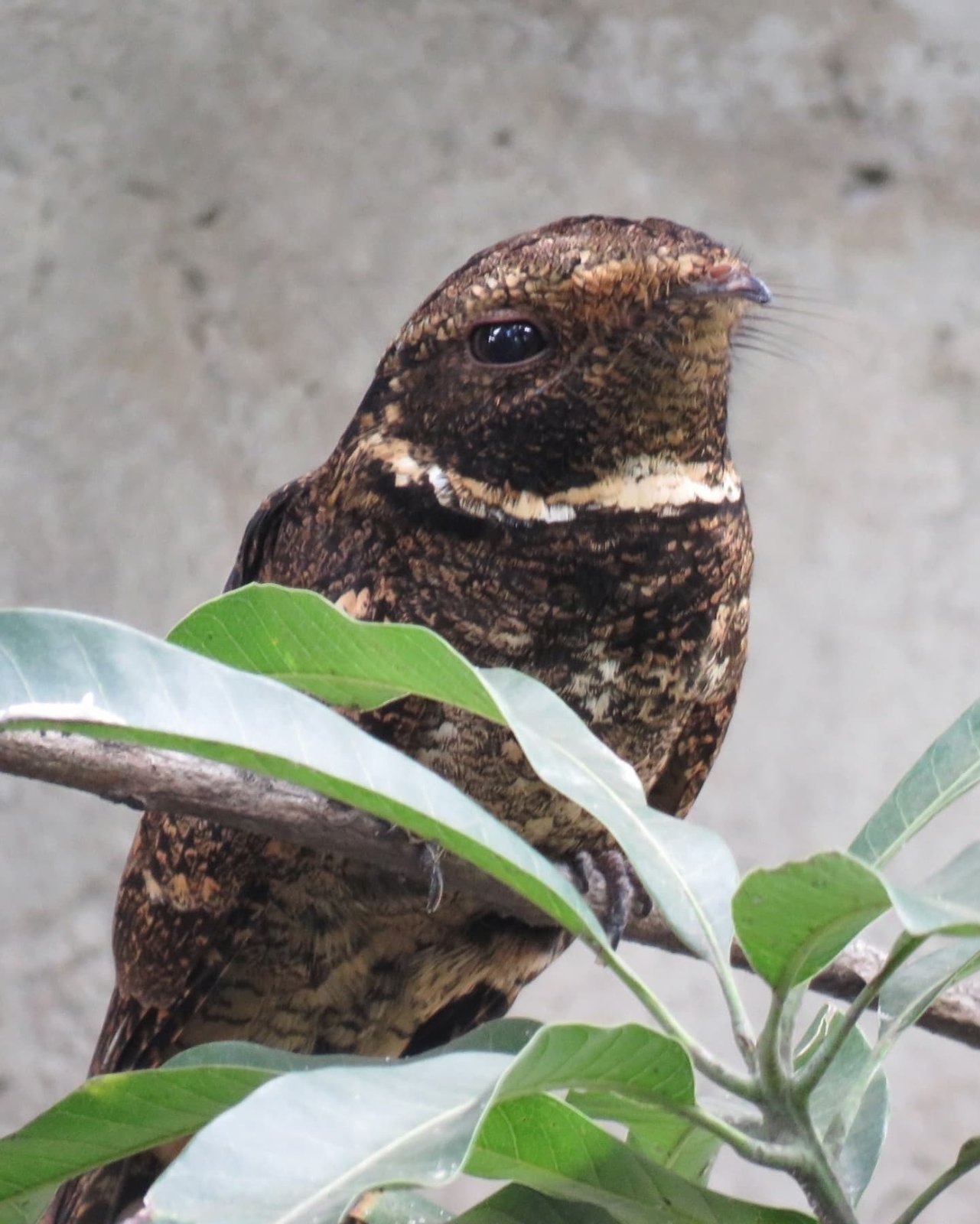
The Rufous Nightjar is a large, reddish-brown nightjar in the same genus as Chuck-will's-widow. In the Caribbean it lives on Trinidad and on Saint Lucia, which has its own subspecies, otiosus, sometimes treated as a separate species. It is usually found only by its powerful, rhythmic song at dusk.
Voice
The song is an energetic, rhythmic chuck, wick-wick-WEE-oo, with a soft first note, delivered from a perch up to about 20 m high. It is heard mainly at dusk and on moonlit nights.
Recording: JAYRSON ARAUJO DE OLIVEIRA — CC BY-NC-SA 4.0 · converted to mono · xeno-canto
Identification
25–30 cm, robust, with a large head and a fairly short, rounded tail. Plumage almost entirely reddish brown, finely barred and spotted with black, with buff markings on the neck and a white band across the throat. The wings have no white band. The male has large white spots at the tips of the outer tail feathers; in the female these tips are pale buff.
Confusion species
Pauraque Nyctidromus albicollis on Trinidad has a longer tail, greyer or marbled plumage with black scapular spots and a white wing band. White-tailed Nightjar Hydropsalis cayennensis is much smaller and greyer, and the male has white in wing and tail. Chuck-will's-widow Antrostomus carolinensis is very similar but reaches Trinidad and Saint Lucia at most as a vagrant and is silent in winter. Common Nighthawk Chordeiles minor has pointed wings with a white bar.
Habitat
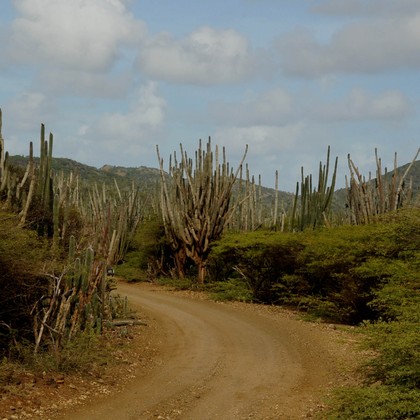
On Trinidad dry and semi-evergreen forest, forest edges and scrub in the north and centre of the island, also near pasture and farmland. On Saint Lucia only in dry forest and scrub on the north-east coast. It hunts large insects at dusk from a perch. The egg is laid without a nest on the forest floor.
Where the bird is most at home, classified by the vegetation types of the Caribbean.




Range and movements
On Trinidad a local resident, with records from the Northern Range, the Arima and Aripo area and the Chaguaramas peninsula among others; not on Tobago. On Saint Lucia confined to the dry north-east coast, around Grande Anse and Marquis. Outside the region from Costa Rica through northern and central South America to northern Argentina.
- Resident
- dark = core range, pale = thinly spread
How and when to look
On Trinidad the species is regularly heard at dusk around Mount St. Benedict and at the Aripo Savannah. On Saint Lucia the trails along the north-east coast near Grande Anse are the place to look; a local guide helps in finding singing birds.
Conservation status
Not threatened as a species, although the world population is declining. The Saint Lucia subspecies has a small range, and the dry forest of the north-east coast is under pressure from development and introduced predators such as mongooses and rats.
Scientific name
Antrostomus rufus | (Boddaert, 1783)
Boddaert described the species in 1783 as Caprimulgus rufus; because it was later moved to another genus, the author and year stand in brackets. The genus Antrostomus was introduced in 1838 by Bonaparte. Antrostomus is Greek, from antron 'cave' and stoma 'mouth': 'cave-mouth', after the enormous gape. rufus is Latin for 'red, rufous', after the warm rufous plumage. The specimen the first description was based on came from Cayenne, French Guiana.