All species › Nightjars › Nightjars › Cuban Nightjar
Cuban Nightjar | Antrostomus cubanensis
Cubaanse nachtzwaluw | Guabairo
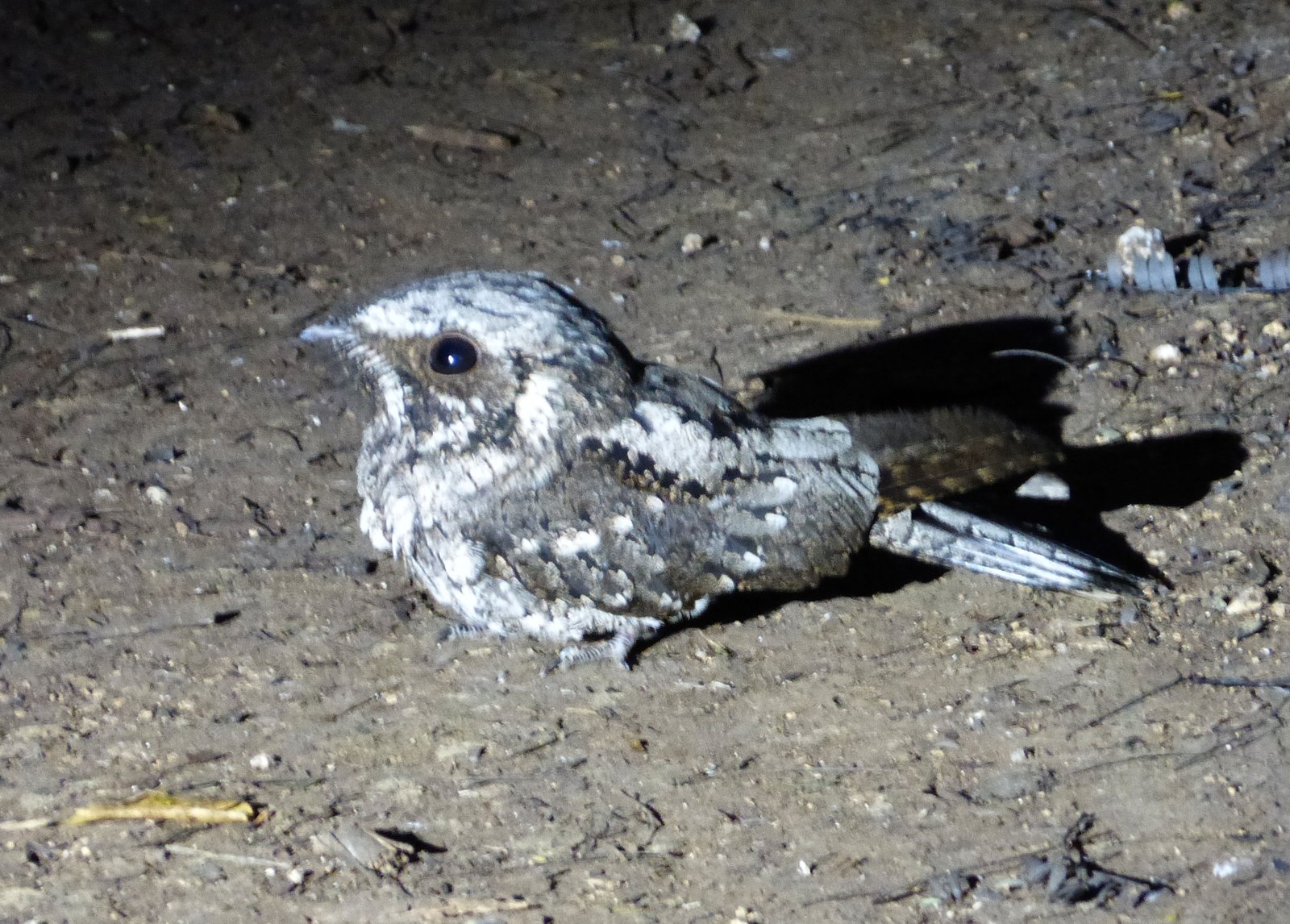
The Cuban Nightjar is a large, dark nightjar found only in Cuba and on Isla de la Juventud. By day it rests on the forest floor or a low branch, relying on its camouflage, and becomes active only at dusk. In Cuba it is called guabairo. It was formerly combined with Hispaniolan Nightjar Antrostomus ekmani as a single species, Greater Antillean Nightjar; the American Ornithological Society still follows that broad concept.
Voice
The song is a single harsh, buzzy note that rises and falls, ending slightly lower, repeated at length at dusk and on moonlit nights. Also short, low calls when disturbed.
Recording: GABRIEL LEITE — CC BY-NC-SA 4.0 · converted to mono · xeno-canto
Identification
25–29 cm, with a large flat head, a small bill with long rictal bristles and a long rounded tail. The upperparts are dark brown, speckled greyish and pale buff; the crown has broad black streaks. The face is tawny with dark speckles, the throat dark brown with cinnamon spots, the breast dark brown with pale spotting. There is no white wing patch. The male has white tips to the outer tail feathers, the female buff ones. The Isla de la Juventud subspecies, insulaepinorum, is smaller, darker and shorter-tailed.
Confusion species
Chuck-will's-widow Antrostomus carolinensis, a winter visitor to Cuba, is slightly larger, warmer rufous-brown and paler overall; the male shows more extensive white on the inner webs of the outer tail feathers. A singing bird in the breeding season is almost certainly the Cuban species. Antillean Nighthawk Chordeiles gundlachii has long, pointed wings with a white bar and a forked tail, and hunts high over open ground.
Habitat
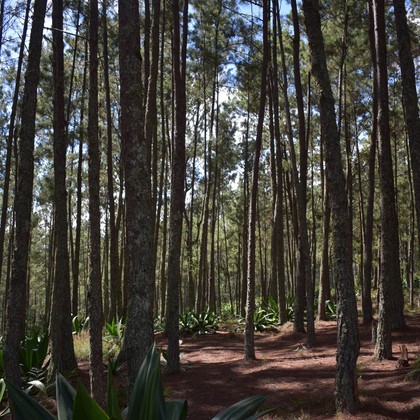
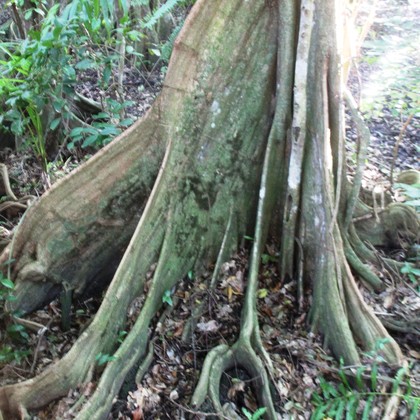
Dense scrub, open woodland, forest edges and the edges of swamps, also fairly closed forest, in dry lowland forest, semi-evergreen forest, pine forest and limestone forest on karst. It hunts flying insects at dusk and at night, often making short sallies from a low branch. Breeding is from March to July; the two eggs are laid on the ground among leaf litter without any nest material.
Where the bird is most at home, classified by the vegetation types of the Caribbean.



Range and movements
Only in Cuba, including the larger islands of the surrounding archipelagos, and on Isla de la Juventud (subspecies insulaepinorum). Widespread across the island wherever there is forest or dense scrub. The species does not occur outside Cuba.
- Resident
- dark = core range, pale = thinly spread
How and when to look
Best in the first hours after sunset along forest tracks, for example on the Zapata Peninsula and in the Sierra de la Güira, where the song gives the bird away. In a torch beam the eyes shine orange-red. By day roosting birds stay hidden and are usually noticed only when flushed from close range.
Conservation status
Not threatened, although numbers are thought to be declining. Forest clearance and introduced predators such as cats, dogs and mongooses are potential threats to this ground-nesting bird.
Scientific name
Antrostomus cubanensis | Lawrence, 1861
Lawrence described the species in 1861 and placed it straight away in the genus where it still stands. The genus Antrostomus was introduced in 1838 by Bonaparte. Antrostomus is Greek, from antron 'cave' and stoma 'mouth': 'cave-mouth', after the enormous gape. cubanensis means 'from Cuba', where the species is endemic. The specimen the first description was based on came from Ciénaga de Zapata and the coast near Manzanillo, Cuba.