All species › Birds of prey › Hawks, eagles and kites › Red-tailed Hawk
Red-tailed Hawk | Buteo jamaicensis
Roodstaartbuizerd | Guaraguao colirrojo
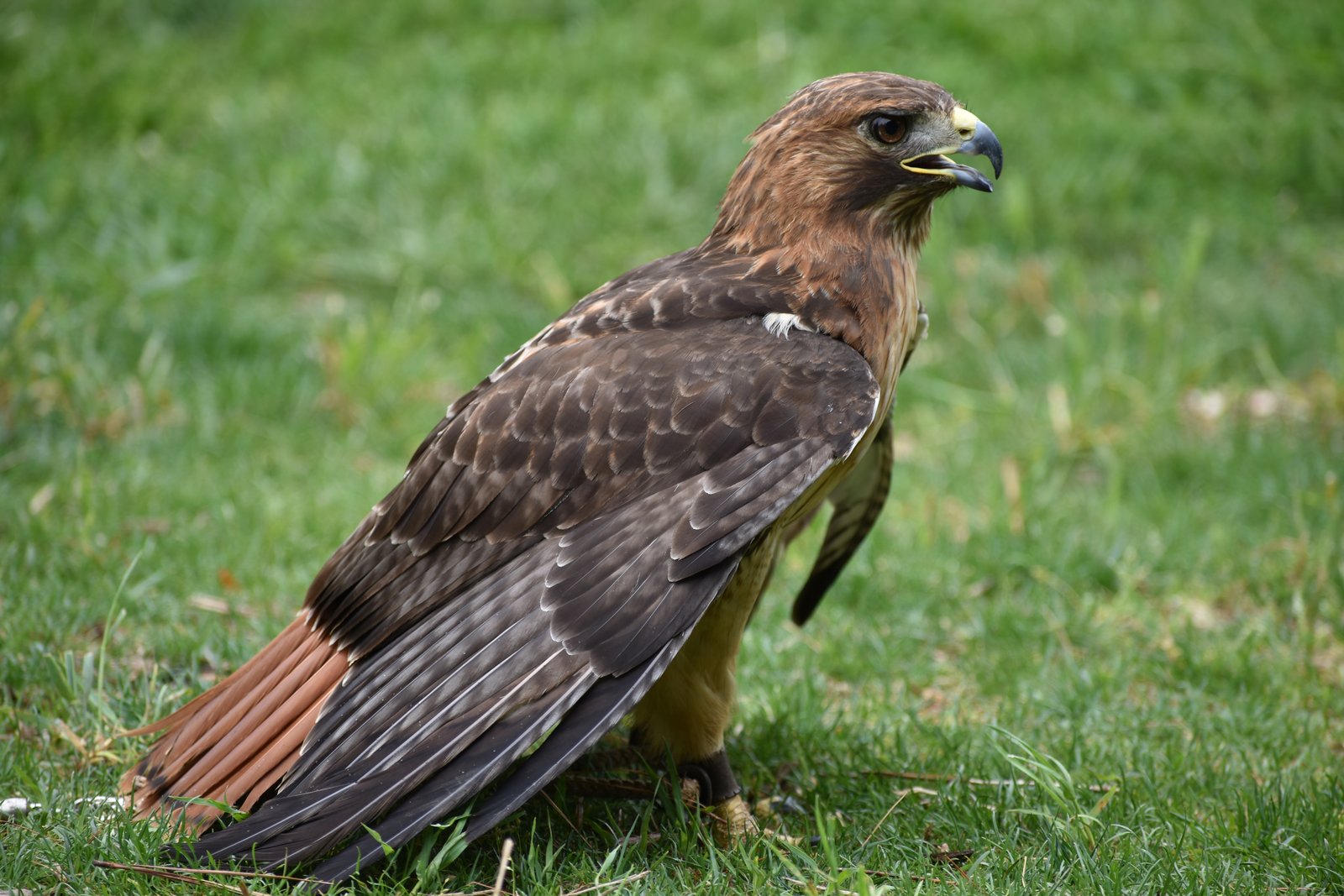
The Red-tailed Hawk is the largest and most frequently seen buteo of the northern islands. Its scientific name refers to Jamaica, where the species was first described. Two resident subspecies live on the islands: jamaicensis in Jamaica, Hispaniola, Puerto Rico and the islands to the east, and solitudinis in Cuba and the Bahamas. In Puerto Rico and the Dominican Republic it is called guaraguao, in Cuba gavilán colorado.
Voice
A hoarse, rasping scream that starts high and slurs downwards, roughly kee-eeeer, lasting two to three seconds and often given in soaring flight. Young beg with a wailing klee-uk.
Recording: Manuel Grosselet — CC BY-NC-SA 4.0 · converted to mono · xeno-canto
Identification
45–65 cm, heavily built, with broad, rounded wings and a broad, short tail. Females are clearly larger than males. Adults are dark brown above, often with pale spotting on the scapulars; the underparts are white to pale buff with a band of dark streaks across the belly. The tail is rusty red above, pinkish orange below. In flight a dark bar along the leading edge of the inner wing and a dark patch at the bend of the wing are obvious. Juveniles have a brown-grey tail with many narrow dark bars, paler eyes and more heavily streaked underparts. Caribbean birds are fairly dark and often show a rufous wash on the flanks.
Confusion species
Broad-winged Hawk Buteo platypterus is much smaller, with a rufous-barred breast and a black-and-white banded tail. Ridgway's Hawk Buteo ridgwayi in Hispaniola is small and grey, with a banded tail. Cuban Black Hawk Buteogallus gundlachii is dark with long legs and a short black tail with a white band. Osprey Pandion haliaetus has a white body, a dark eye-stripe and angled wings.
Habitat
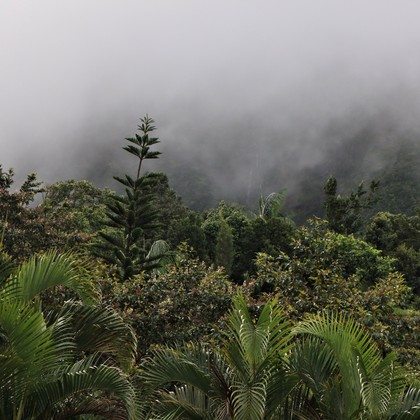
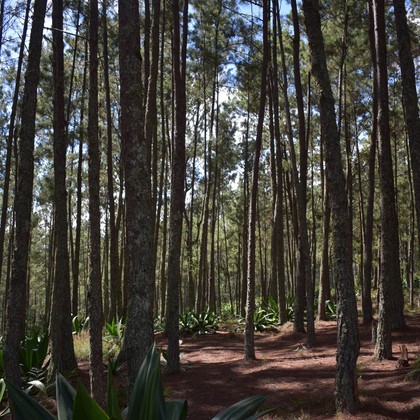
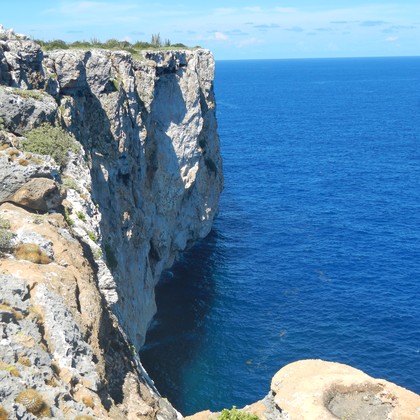
Almost any landscape with high perches and open ground: dry and moist forest, montane forest, pine forest, cliffs and rocky slopes, savanna, pasture and farmland, into villages and the outskirts of towns. It hunts from a high perch or in soaring flight, taking rats, lizards, snakes and birds. It nests on a large stick nest in a tall tree, on a palm or against a rock face.
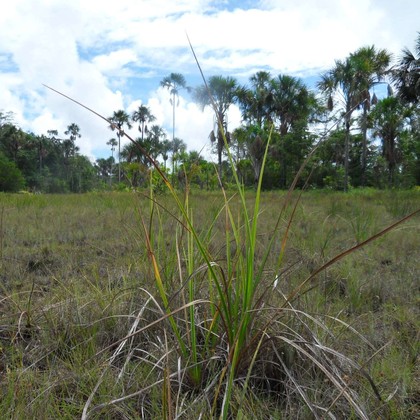
Where the bird is most at home, classified by the vegetation types of the Caribbean.



Range and movements
Resident in the northern Bahamas (including Grand Bahama, Abaco, Andros and New Providence), Cuba and the Isla de la Juventud, Jamaica, Hispaniola, Puerto Rico, the Virgin Islands and the northern Lesser Antilles from Sint Maarten and Saint-Barthélemy to Saba, Sint Eustatius, Saint Kitts and Nevis. North American birds rarely reach the Bahamas and Cuba in winter. Outside the region from Alaska and Canada to Panama.
- Resident
- Winter visitor (c. Apr–Sep)
- Passage (Mar–Apr, Oct–Nov)
- dark = core range, pale = thinly spread
How and when to look
In the Greater Antilles visible almost anywhere over open country and ridges, especially in the late morning when birds start to soar. Perched birds can be studied on palms, poles and bare trees along roads; the rusty tail shows best when the bird banks in the sun.
Conservation status
Not threatened. The species is common on most islands and benefits from open and semi-open landscapes. Shooting by people who fear for their chickens and electrocution on power poles are local risks.
Scientific name
Buteo jamaicensis | (Gmelin, 1788)
Gmelin described the species in 1788 as Falco jamaicensis; because it was later moved to another genus, the author and year stand in brackets. The genus Buteo was introduced in 1799 by De Lacépède. Buteo is the Latin word for a buzzard. jamaicensis means 'of Jamaica', where the type came from. The specimen the first description was based on came from Jamaica.