All species › Birds of prey › Hawks, eagles and kites › Western Marsh Harrier
Western Marsh Harrier | Circus aeruginosus
Bruine kiekendief | Aguilucho lagunero occidental
The Western Marsh Harrier is a harrier of reedbeds in Europe, western Asia and North Africa, part of which winters in sub-Saharan Africa. A few birds have crossed the Atlantic: the first confirmed records for the New World are from Guadeloupe and Puerto Rico.
Voice
Almost always silent away from the breeding grounds.
Recording: Lars Edenius — CC BY-NC-SA 4.0 · converted to mono · xeno-canto
Identification
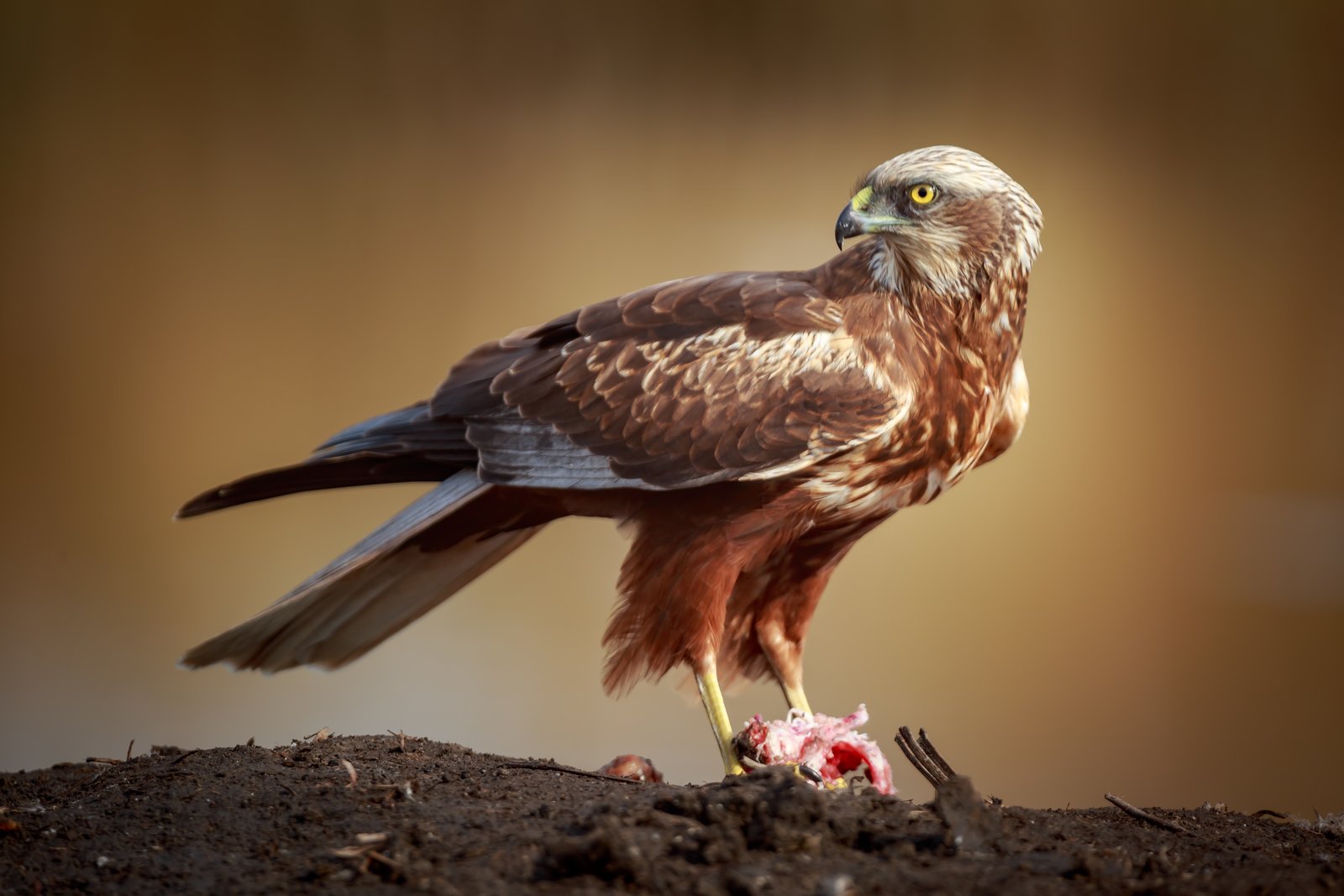
48–56 cm, a bulky, fairly broad-winged harrier without a white rump. The adult male is three-coloured: body and wing coverts brown, head paler and streaked buffish, secondaries and tail silver-grey and wingtips black. The female is dark chocolate brown with a cream crown and throat and often a pale leading edge to the wing. Immatures resemble the female but are even darker, with a tawny or cream head. When gliding it holds the wings in a V.
Confusion species
Hen Harrier Circus cyaneus is slimmer and has a white rump. The dark morph of Long-winged Harrier Circus buffoni is larger and blacker, with a narrow white rump and a banded tail. Snail Kite Rostrhamus sociabilis has a white tail base and a thin, hooked bill.
Habitat
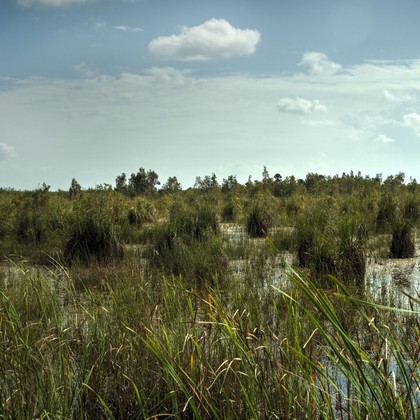
Reed marshes, open water with fringing vegetation, rice fields and wet pastures. It hunts in low, slow flight for small mammals, birds, frogs and large insects. In Puerto Rico the birds stayed in a large freshwater marsh; on Barbados the bird hunted over a pasture and a private impoundment.
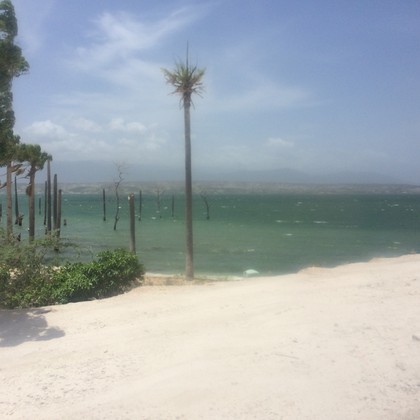
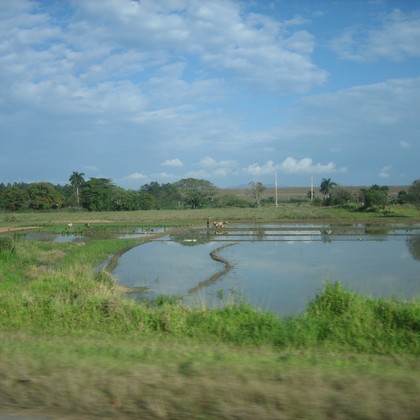
Where the bird is most at home, classified by the vegetation types of the Caribbean.

Range and movements
Vagrant with a handful of records: Guadeloupe in winter 2002–2003; Laguna Cartagena in south-west Puerto Rico in early 2004 and in January and February 2006; Guadeloupe in October 2015 and then Barbados from 8 to 14 December 2015, possibly the same bird. Outside the region it breeds in Europe, western and central Asia and North Africa and winters in the Mediterranean and Africa.
How and when to look
Any large, dark harrier without a white rump over a marsh in the Lesser Antilles or Puerto Rico deserves a closer look. Photographs of the rump, head and wing pattern are needed to document a new record.
Conservation status
Not threatened. In Europe the species has recovered well after a steep decline in the twentieth century.
Scientific name
Circus aeruginosus | (Linnaeus, 1758)
Linnaeus described the species in 1758 as Falco aeruginosus; because it was later moved to another genus, the author and year stand in brackets. The genus Circus was introduced in 1799 by De Lacépède. Circus is from the Ancient Greek kirkos, a bird of prey named for its circling flight. aeruginosus is Latin for 'rusty', from aerugo 'rust, verdigris'. The specimen the first description was based on came from Sweden.