All species › Passerines › New World warblers › Plumbeous Warbler
Plumbeous Warbler | Setophaga plumbea
Guadeloupezanger | Reinita plúmbea
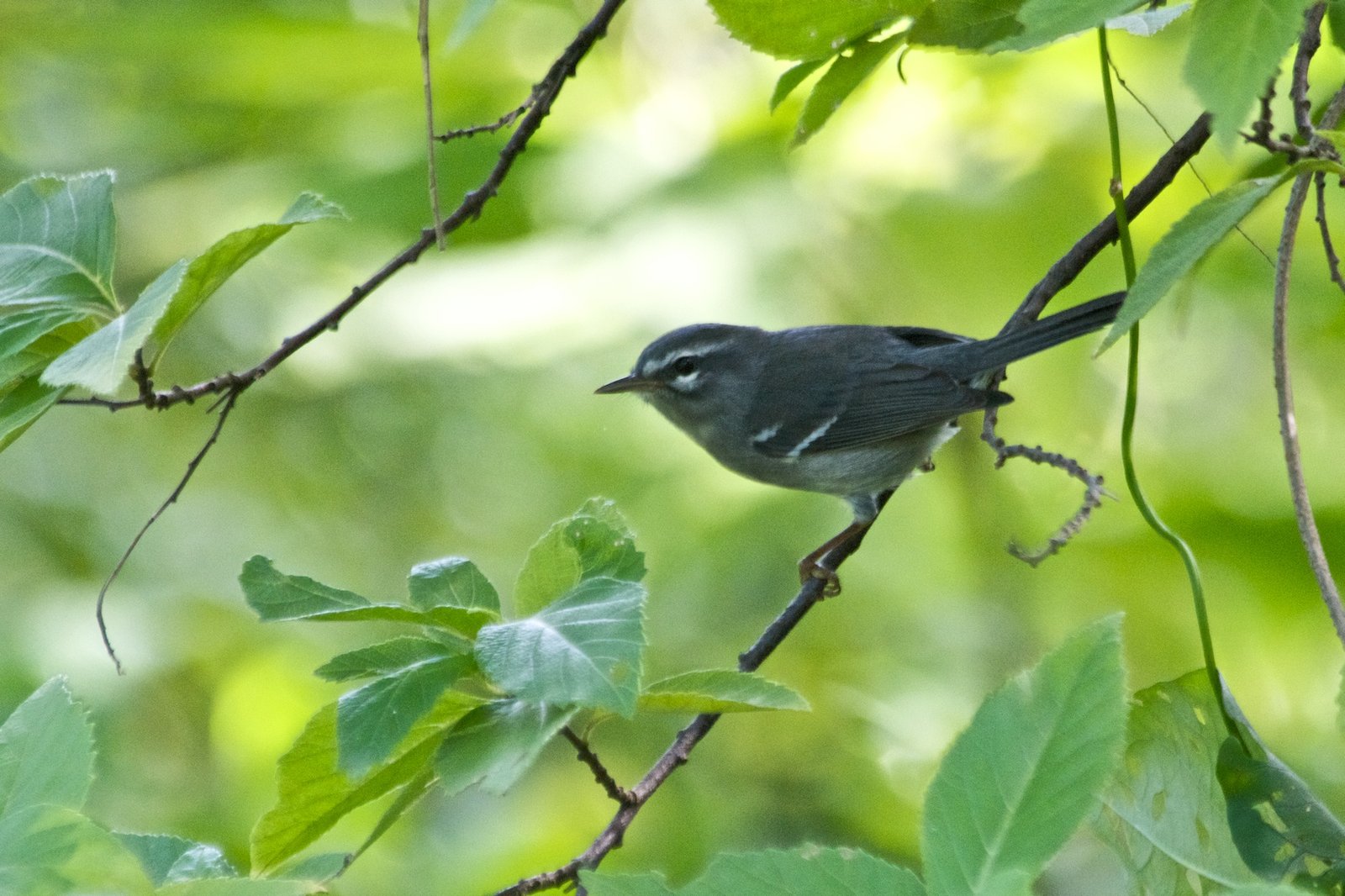
The Plumbeous Warbler is a grey, subtly marked warbler found only on Guadeloupe and its satellite islands and on Dominica. Its name, meaning lead-coloured, describes the plumage. It is common within its small range and keeps mainly to the lower levels of the forest.
Voice
The song consists of three to twelve slow, whistled notes, the first three on the same pitch. The call is a dry, rattling series.
Recording: Étienne Leroy — CC BY-NC-SA 4.0 · converted to mono · xeno-canto
Identification
12–14 cm. Upperparts are plain grey, with a white supercilium and a white spot below the eye. The wing shows two white wing-bars and the outer tail feathers have white spots. Underparts are paler grey, with a white belly and white centre to the breast. The sexes are alike. Juveniles are greenish grey above and buffish below, with a less distinct supercilium.
Confusion species
Female Black-throated Blue Warbler Setophaga caerulescens, a scarce winter visitor, is olive-brown with a single small white wing spot instead of two wing-bars. Northern Parula Setophaga americana also has grey upperparts and wing-bars, but a yellow throat and breast and a green patch on the mantle. The other resident warblers on Guadeloupe and Dominica show yellow.
Habitat
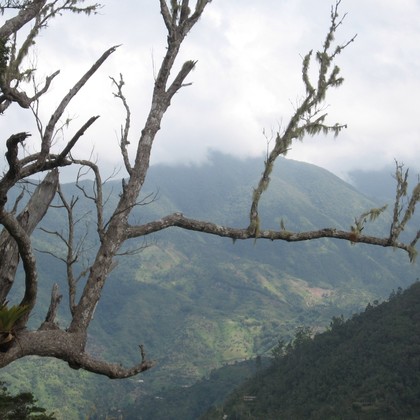
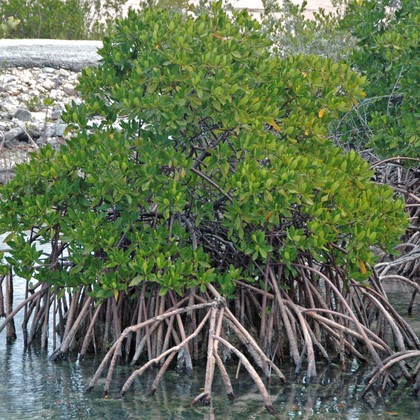
Mainly moist montane and semi-evergreen forest, but also drier woodland, scrub and mangroves, from sea level to about 900 m. It forages in the understorey and middle levels of the forest, often low, for insects and other invertebrates.
Where the bird is most at home, classified by the vegetation types of the Caribbean.



Range and movements
Only on Guadeloupe (Basse-Terre and Grande-Terre), Marie-Galante and Les Saintes, and on Dominica. The species does not occur outside these islands.
- Resident
- dark = core range, pale = thinly spread
How and when to look
On Guadeloupe the forest trails of the Parc national de la Guadeloupe on Basse-Terre, on Dominica the trails in the interior, such as the Syndicate Nature Trail. Forest either side of a trail in the early morning is best; the slow whistles point to the bird.
Conservation status
Not threatened. The species occurs in a wide range of forest types and is fairly common within its small range; hurricanes can cause major, temporary damage to its habitat.
Scientific name
Setophaga plumbea | (Lawrence, 1877)
Lawrence described the species in 1877 as Dendroeca plumbea; because it was later moved to another genus, the author and year stand in brackets. The genus Setophaga was introduced in 1827 by Swainson. Setophaga is Greek, from sēs, sētos 'moth' and -phagos '-eating': 'moth-eater'. plumbea is Latin for 'leaden', after the grey plumage. The specimen the first description was based on came from Dominica.