All species › Pigeons and doves › Pigeons and doves › Plain-breasted Ground Dove
Plain-breasted Ground Dove | Columbina minuta
Dwergduif | Tórtola pecho liso
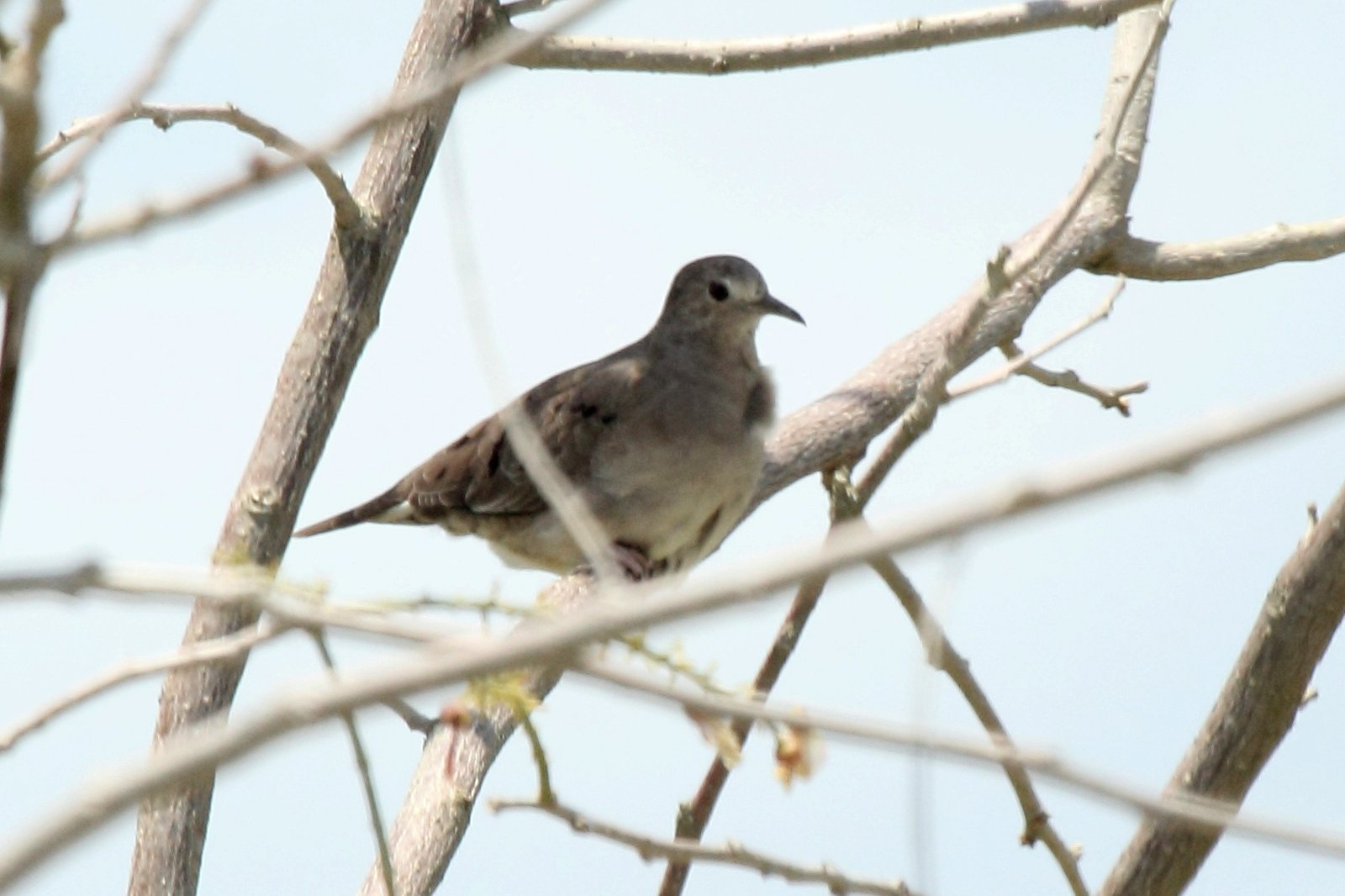
The Plain-breasted Ground Dove is the smallest ground dove in the region, an inhabitant of open grassland that within the West Indies occurs only in Trinidad. As its name says, it lacks the scaling on the breast that marks Common Ground Dove. Small, drab and quiet, and usually walking in grass, it is often overlooked or taken for a female Ruddy Ground Dove.
Voice
A soft, short cooing, woop or woo-oop, repeated in series from the ground or a low branch; softer than the call of Ruddy Ground Dove. The bird does not call much and is usually seen before it is heard.
Recording: Fernando Igor de Godoy — CC BY-NC-SA 4.0 · converted to mono · xeno-canto
Identification
14.5–16 cm, a little smaller even than Common Ground Dove, with a short tail. The male has a blue-grey crown and nape, a grey face and a plain grey to faintly pinkish-grey breast without scaling; the upperparts are grey-brown. The wing coverts carry a few dark, purplish-glossed spots. The female is duller and browner, with a pale grey breast and paler throat and belly. The bill is grey with a dark tip, without red or pink at the base. In flight the primaries flash rufous, and the underwing is largely rufous. The sexes differ little; in the field the male is best recognised by its greyer head.
Confusion species
Common Ground Dove Columbina passerina is slightly larger, has finely scaled head, neck and breast and a pinkish-red or orange-red base to the bill. Ruddy Ground Dove Columbina talpacoti is larger; the male is warm cinnamon, the female grey-brown with black, not purplish, wing spots and a darker underwing. Female Blue Ground Dove Claravis pretiosa is larger and warmer brown, with chestnut wing spots and a rufous rump, and lives at the forest edge. Scaled Dove Columbina squammata is long-tailed and scaled over the whole body.
Habitat
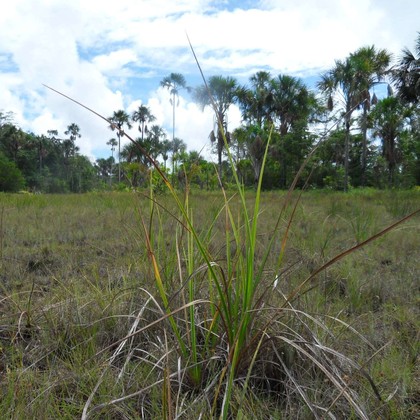
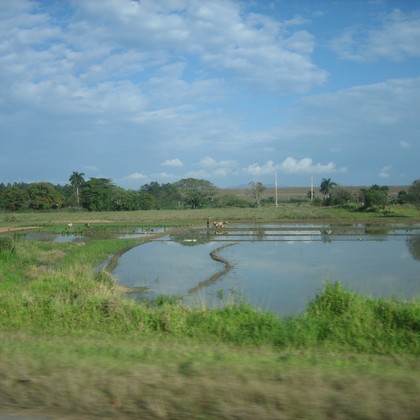
Open, grassy country: savanna, dry and wet grassland, pastures, rice fields and their margins, fallow land and road verges with short grass and bare patches. It avoids forest and dense scrub. It walks singly or in pairs through the grass in search of small seeds; when disturbed it flies off low and drops in again a little further on. The nest is a small, loose structure of grasses and stems, low in a shrub or grass tussock, with one or two white eggs.
Where the bird is most at home, classified by the vegetation types of the Caribbean.

Range and movements
Within the region only in Trinidad, where it occurs locally in open grassland and farmland in the lowlands. It does not occur in Tobago or on the other islands; a few isolated reports from elsewhere in the region are uncertain. Beyond the region in Mexico and Central America, and in South America from Colombia, Venezuela and the Guianas to eastern Peru and southern Brazil.
- Resident
- dark = core range, pale = thinly spread
How and when to look
Open grassland and rice fields in the lowlands of Trinidad, preferably early in the morning, when the birds feed on tracks and bare patches in the grass. Small doves flying with rufous wings in Trinidad are almost always Ruddy Ground Doves; a small, drab dove with a plain breast and a grey bill that flushes low from the grass is worth following up.
Conservation status
Not threatened. The species is widespread in Central and South America and benefits from forest clearance and the spread of open grassland. In Trinidad it is local and seldom reported; being small and usually walking in grass, it may be under-recorded there. No data on numbers or trends on the island are known.
Scientific name
Columbina minuta | (Linnaeus, 1766)
Linnaeus described the species in 1766 as Columba minuta; because it was later moved to another genus, the author and year stand in brackets. The genus Columbina was introduced in 1825 by Spix. Columbina is Latin for 'little dove', a diminutive of columba 'dove'. minuta is Latin for 'small', after the small size. The specimen the first description was based on came from Cayenne, French Guiana.