All species › Falcons › Falcons › Peregrine Falcon
Peregrine Falcon | Falco peregrinus
Slechtvalk | Halcón peregrino
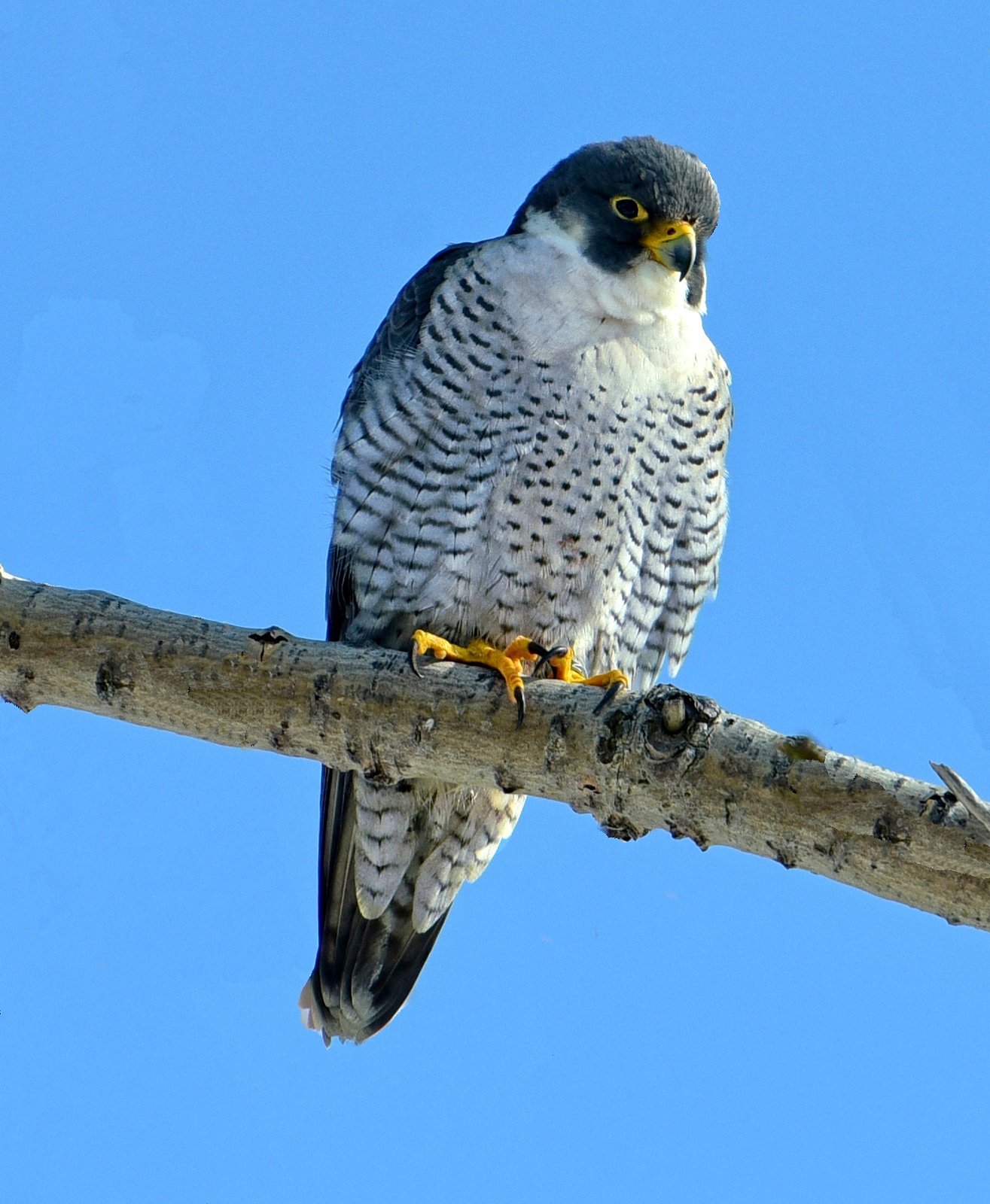
The Peregrine Falcon is the largest falcon occurring regularly in the Caribbean. It does not breed in the region, but winters and passes through along coasts and in towns on almost every island. The birds belong to North American subspecies: tundrius from the Arctic, which makes up most of the migrants, and anatum from Canada and the United States.
Voice
Usually silent in winter quarters; when alarmed a harsh, repeated kek-kek-kek.
Recording: Frantz Barrault — CC BY-NC-SA 4.0 · converted to mono · xeno-canto
Identification
36–49 cm, powerfully built, with broad-based, sharply pointed wings and a fairly short tail. Adults are slate grey above, with a dark hood and a broad black moustache on the white cheek. The underparts are white to salmon, finely barred black on breast and belly. Immatures are brown above and buffish below with dark streaks; in tundrius the forehead is pale and the moustache narrower. The female is clearly larger than the male.
Confusion species
Merlin Falco columbarius is much smaller, with a faint moustache and streaked underparts. Aplomado Falcon Falco femoralis, regular only on Trinidad, is slimmer, with a long tail, a white supercilium and a cinnamon belly. Bat Falcon Falco rufigularis on Trinidad is smaller, with a white throat and rufous belly. In flight Sharp-shinned Hawk Accipiter striatus can resemble a small falcon, but has rounded wings.
Habitat
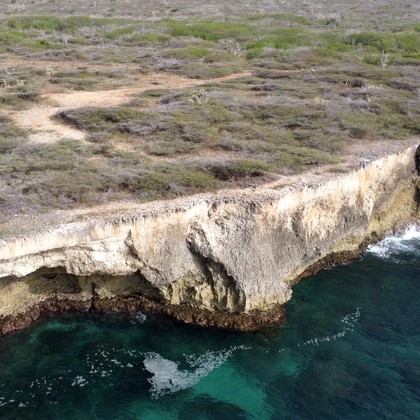
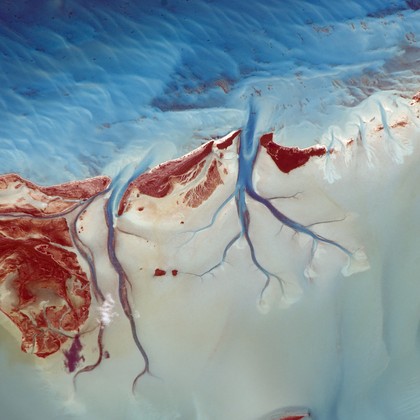
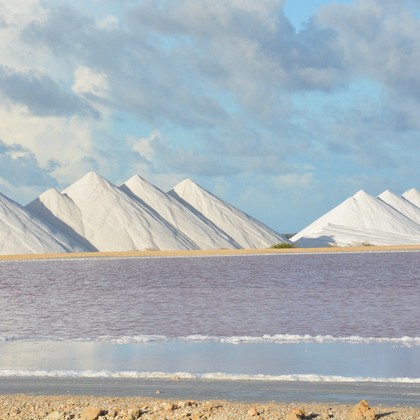
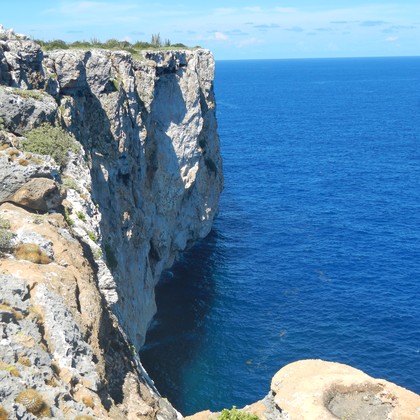
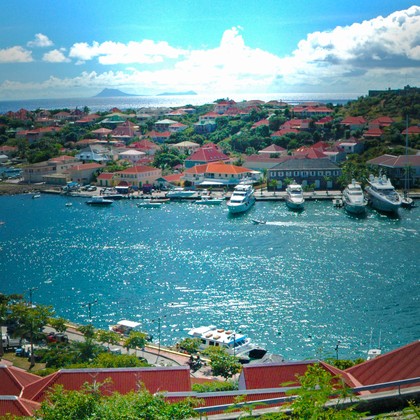
Coasts and open country with plenty of prey: mudflats, salt ponds, lagoons, mangrove edges, rocky shores and cliffs, also harbours, airports and towns, where birds perch on tall buildings, masts and cranes. It hunts mainly pigeons, shorebirds, terns and other medium-sized birds, struck in a fast stoop or caught in aerial pursuit.
Where the bird is most at home, classified by the vegetation types of the Caribbean.


Range and movements
Winter visitor and passage migrant throughout: the Bahamas, the Turks and Caicos Islands, the Greater Antilles, the Cayman Islands, the Virgin Islands, the Lesser Antilles, the ABC Islands, San Andrés and Trinidad and Tobago. Everywhere in small numbers; most regular in Cuba, Puerto Rico, Aruba and Trinidad, especially during autumn migration in October. Outside the region almost worldwide.
- Resident
- Summer visitor (c. Oct–Mar)
- Winter visitor (c. Apr–Sep)
- Passage (Mar–Apr, Oct–Nov)
- dark = core range, pale = thinly spread
How and when to look
Best in October and November along salt ponds, lagoons and coasts where shorebirds and terns gather. In towns the bird often sits on tall buildings, church towers or radio masts; a flock of pigeons suddenly scattering may point to a hunting Peregrine.
Conservation status
Not threatened. North American populations have recovered strongly since the ban on DDT.
Scientific name
Falco peregrinus | Tunstall, 1771
Tunstall described the species in 1771 and placed it straight away in the genus where it still stands. The genus Falco was introduced in 1758 by Linnaeus. Falco is Late Latin for 'falcon', from falx, falcis 'sickle', after the sickle-shaped claws of the bird. peregrinus is Latin for 'wanderer, one from abroad'; young birds were taken on migration for falconry rather than from the nest. The specimen the first description was based on came from Northamptonshire, England.