All species › Waders, gulls and terns › Skuas › Parasitic Jaeger
Parasitic Jaeger | Stercorarius parasiticus
Kleine jager | Págalo parásito
The Parasitic Jaeger is the jaeger most often seen close to shore. It lives largely on fish that it takes from terns and small gulls in fast, agile chases. In the Caribbean it is a scarce passage migrant and winter visitor from its Arctic breeding grounds.
Voice
Almost silent away from the breeding grounds. At the breeding site wailing, nasal calls such as a repeated ee-ah.
Recording: Stanislas Wroza — CC BY-NC-SA 4.0 · converted to mono · xeno-canto
Identification
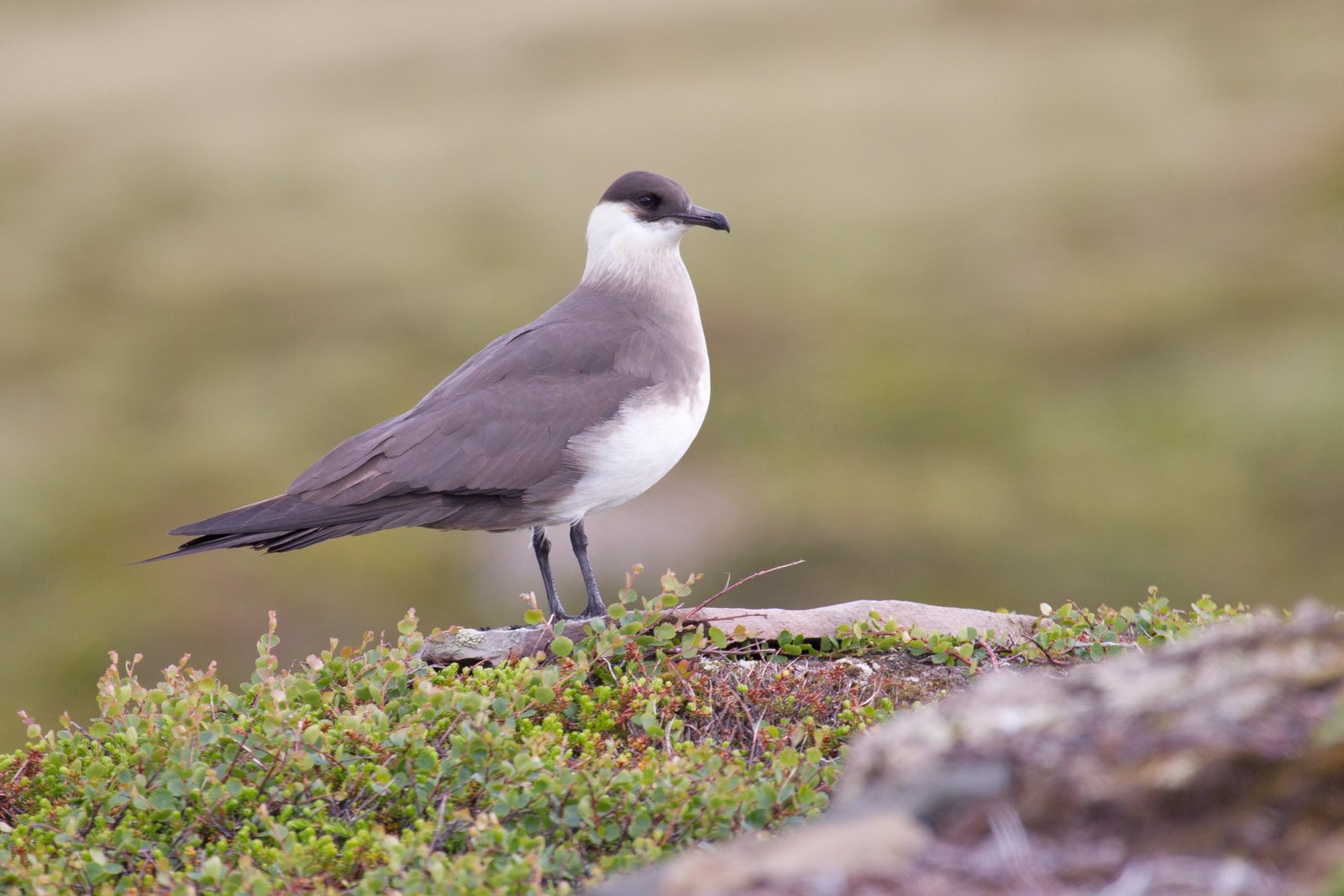
41–46 cm, plus a few centimetres of elongated central tail feathers in breeding adults. Slim, with narrow, pointed wings and a fairly fine, dark bill. In adults the elongated central feathers are narrow and pointed. Pale, dark and intermediate morphs occur. Pale adults have a dark cap with a pale spot above the bill base, a white or yellowish neck, a white belly and often a grey-brown breast band; dark birds are uniformly dark brown. Juveniles are highly variable, from pale to almost black, and often tinged warm rusty brown, with pale tips to the primaries and short, pointed central tail feathers. In flight there is a white flash at the base of the primaries, without a second patch on the underwing.
Confusion species
Pomarine Jaeger Stercorarius pomarinus is larger, with a deeper chest, a thicker two-toned bill, blunt spoon-shaped tail feathers and a slower flight. Long-tailed Jaeger Stercorarius longicaudus is slimmer, with a smaller bill, greyer upperparts with a dark trailing edge to the wing and only two or three white primary shafts above; juveniles are colder grey. Young Laughing Gulls Leucophaeus atricilla lack the white primary bases and do not chase other birds.
Habitat
Coastal waters and open sea, especially where terns and small gulls are fishing: bays, river mouths, the outer edge of reefs and sandbanks. Often less far offshore than the other jaegers. It chases terns and gulls with fast, falcon-like twists until they drop their fish.
Where the bird is most at home, classified by the vegetation types of the Caribbean.

Range and movements
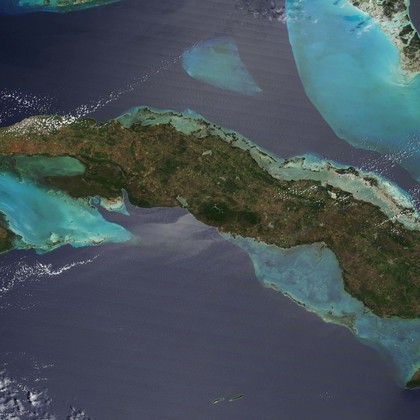
Passage migrant and winter visitor throughout the region. Regularly reported around the Bahamas, the Dominican Republic, Jamaica and Guadeloupe; rare off Cuba, with few records from Puerto Rico, Martinique, Barbados, Curaçao and Trinidad. Beyond the region it breeds circumpolarly on the tundra and Arctic coasts of North America and Eurasia, south to Scotland, and winters at sea off South America, West and southern Africa and Australia.
- Winter visitor (c. Apr–Sep)
- Passage (Mar–Apr, Oct–Nov)
- dark = core range, pale = thinly spread
How and when to look
Following flocks of fishing terns gives the best chance, for example over bays or from headlands during migration. A chase in which a dark bird drives a tern high into the air often betrays a jaeger. Juveniles are highly variable; wing shape, bill and the pale primary tips are the features to check.
Conservation status
Not threatened. Numerous worldwide, but in parts of Europe, such as Scotland, breeding numbers are falling steeply through food shortage linked to the decline of sandeels. At sea, birds are sometimes caught in fishing gear.
Scientific name
Stercorarius parasiticus | (Linnaeus, 1758)
Linnaeus described the species in 1758 as Larus parasiticus; because it was later moved to another genus, the author and year stand in brackets. The genus Stercorarius was introduced in 1760 by Brisson. Stercorarius is Latin for 'of dung', from stercus 'dung': the food disgorged by seabirds when pursued by skuas was once taken for excrement. parasiticus is Latin for 'parasitic', after the habit of robbing other seabirds of their catch. The specimen the first description was based on came from the coast of Sweden.