All species › Passerines › Waxbills › Orange-cheeked Waxbill
Orange-cheeked Waxbill | Estrilda melpoda
Oranjewangastrild | Estrilda carinaranja
The Orange-cheeked Waxbill is a small estrildid finch from West and Central Africa. On Puerto Rico it has lived in the wild since the 19th century – it was first reported there before 1874 – and it is now one of the island's most common introduced songbirds. It has also become established on Guadeloupe and Martinique.
Voice
High, thin tsee and tsip calls, mainly from flocks in flight; these are often the first sign of the birds' presence. The song is a short series of thin, whistled notes.
Recording: Bram Piot — CC BY-NC-SA 4.0 · shortened to the first 60 s, mono · xeno-canto
Identification
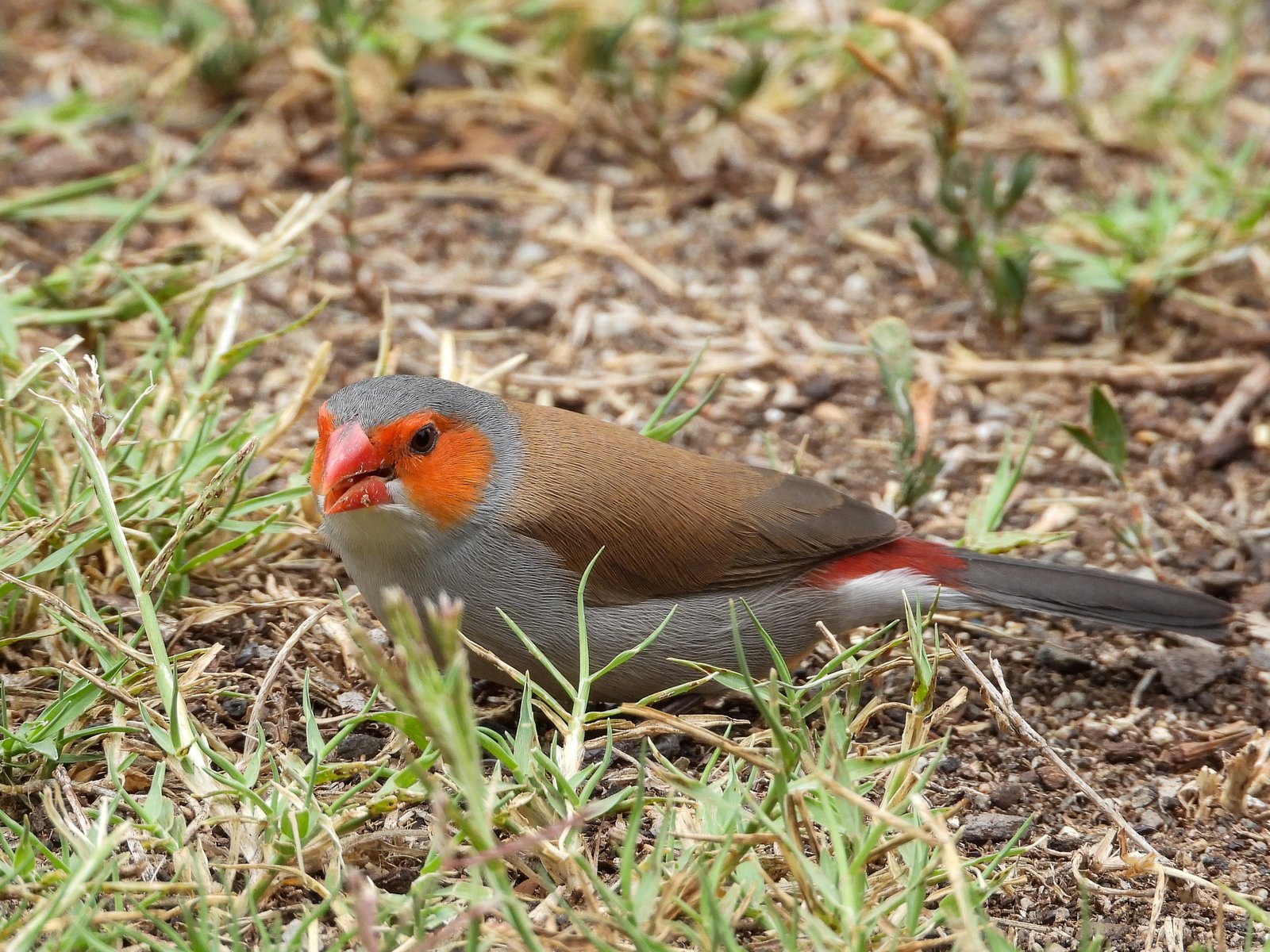
9–10 cm, small and slim, with a fairly long, blackish tail and a red bill. Crown and nape are pale grey, back and wings grey-brown. A large orange patch covers the lores, eye and ear coverts. Throat and underparts are pale grey to whitish, with an orange-yellow wash in the centre of the belly. Rump and uppertail coverts are red and visible in flight. The female is slightly duller, with a smaller orange cheek patch. Juveniles are browner, with a dark bill and a faint cheek patch; the red rump is already present.
Confusion species
Common Waxbill Estrilda astrild and Black-rumped Waxbill Estrilda troglodytes have a narrow red eye-stripe instead of an orange cheek; Common Waxbill is finely barred and has a brown rump, Black-rumped Waxbill a black rump and white undertail coverts. Female and non-breeding Red Avadavat Amandava amandava also has a red rump, but shows dark lores, small white spots on the wing coverts, a shorter tail and no orange cheek.
Habitat
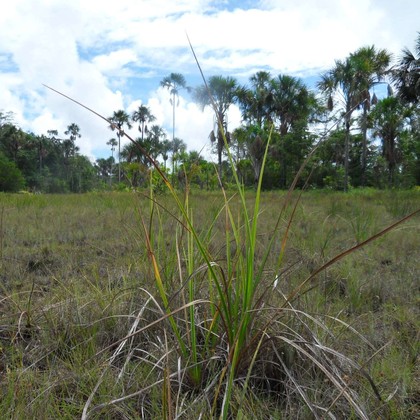
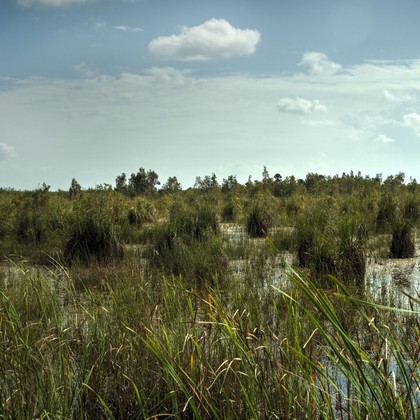
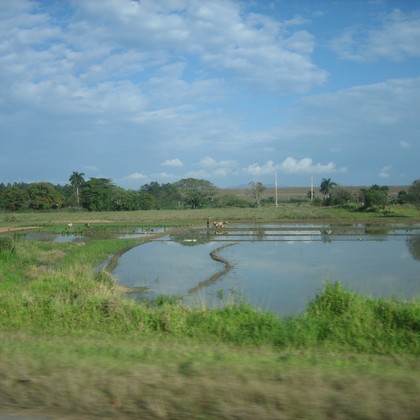
Tall grass and rank vegetation in open lowlands: pastures with scattered shrubs, roadsides, fallow land, the edges of cane and rice fields, and grassy margins of marshes and lagoons; also grassy ground at the edge of settlements. It forages in small flocks on grass seeds, low in the vegetation or on the ground, often with other seed-eaters. The nest is a ball of grass with a side entrance, low in dense vegetation. On Puerto Rico it breeds year-round, mostly from March to July.
Where the bird is most at home, classified by the vegetation types of the Caribbean.



Range and movements
Introduced and established on Puerto Rico, where it is common in the coastal lowlands, and on Guadeloupe and Martinique. One record from the US Virgin Islands. Native from Senegal and Gambia east to the Central African Republic and south to Congo and northern Angola. Also introduced to southern California, Saipan and Singapore.
- Resident
- dark = core range, pale = thinly spread
How and when to look
On Puerto Rico almost any grassy area in the coastal lowlands, for example around Laguna Cartagena in the south-west and in the Humacao Nature Reserve. Flocks keep to tall grass and are usually first detected by their high calls; in flight the red rump stands out.
Conservation status
Not threatened globally. In the Caribbean an established alien, with a widespread and stable population on Puerto Rico.
Scientific name
Estrilda melpoda | (Vieillot, 1817)
Vieillot described the species in 1817 as Fringilla melpoda; because it was later moved to another genus, the author and year stand in brackets. The genus Estrilda was introduced in 1827 by Swainson. Estrilda was formed from astrild, the epithet Linnaeus gave the common waxbill; the origin of that word is uncertain — perhaps a German or Dutch avicultural term for a waxbill, perhaps a misprint for Estrilda. melpoda is Greek and is connected with melpō 'to sing'. The specimen the first description was based on came from Senegal.