All species › Passerines › Waxbills › Common Waxbill
Common Waxbill | Estrilda astrild
Sint-helenafazantje | Estrilda común
The Common Waxbill is an African estrildid finch that has spread worldwide through the cage-bird trade and has gone feral on many islands, including St Helena, which gives the species its Dutch name. In the Caribbean it has become established on Trinidad and Martinique.
Voice
A nasal chip or chee contact call and a high, penetrating flight call. The song is short, nasal and grating, with a falling last note, roughly che-che-cheeee.
Recording: João Tomás — CC BY-NC-SA 4.0 · converted to mono · xeno-canto
Identification
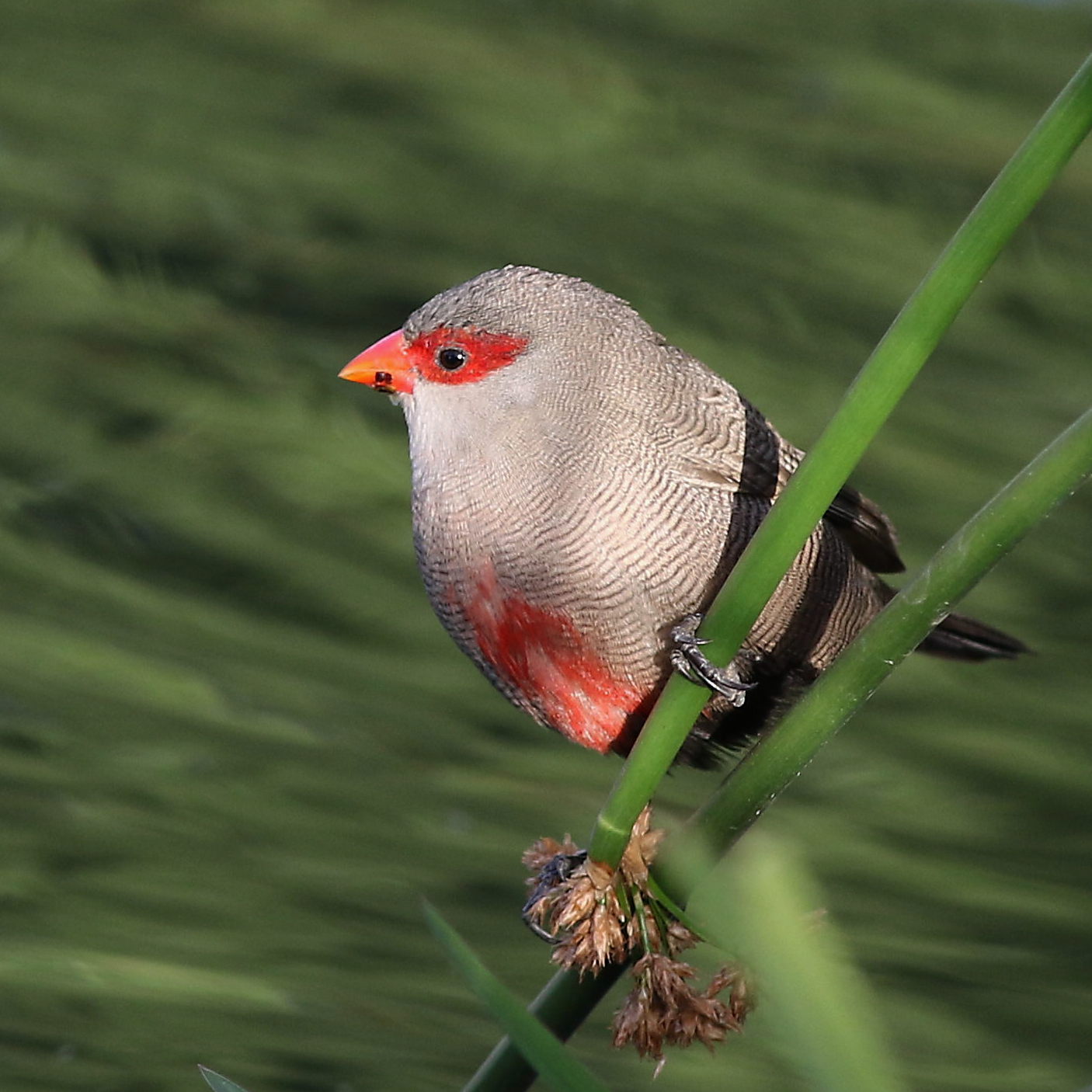
10–12 cm, slim, with a long, graduated tail. Adults have a bill the colour of sealing wax, and a narrow red stripe runs through the eye. Cheeks and throat are whitish. The upperparts are grey-brown and finely barred dark; the underparts are buff with a pinkish wash, also finely barred, with a red streak down the centre of the belly. The undertail coverts are black, the tail dark grey-brown. The female is paler, with less red on the belly. Juveniles are duller, barely barred, without red on the belly, and have a black bill.
Confusion species
Black-rumped Waxbill Estrilda troglodytes also has a red eye-stripe, but is smaller and almost unbarred, with a black rump and tail and white undertail coverts. Orange-cheeked Waxbill Estrilda melpoda has an orange cheek without an eye-stripe and a red rump. Black-billed juveniles are recognised by the long tail and blackish undertail.
Habitat
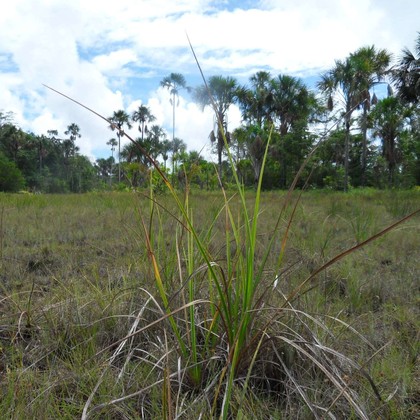
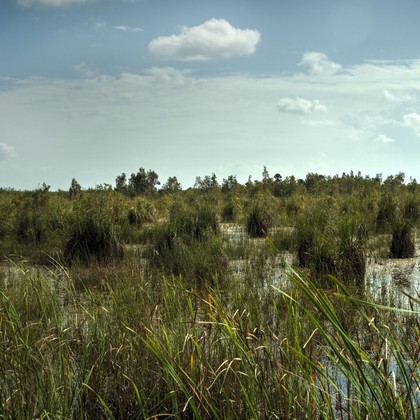
Damp grassland with tall grass and reeds, the banks of ditches and marshes, fallow land, the edges of cane fields and pastures with shrubs; also grassy ground near buildings. It forages in flocks on grass seeds, clinging to the seed heads or feeding on the ground. The nest is a ball of grass with a narrow entrance, low down or on the ground.
Where the bird is most at home, classified by the vegetation types of the Caribbean.



Range and movements
Introduced and established on Trinidad and Martinique. Isolated records from Barbados. Native to much of sub-Saharan Africa. Also introduced and feral in Brazil, on Bermuda, in the Iberian Peninsula and Hawaii, and on various islands in the Atlantic and Indian Oceans, including St Helena.
- Resident
- dark = core range, pale = thinly spread
How and when to look
On Trinidad and Martinique in wet grassland and marsh edges in the lowlands. Flocks cling to grass stems and give themselves away with their nasal calls; the red eye-stripe and red bill can be seen even at some distance.
Conservation status
Not threatened globally and common in much of its native range. In the Caribbean a locally established alien.
Scientific name
Estrilda astrild | (Linnaeus, 1758)
Linnaeus described the species in 1758 as Loxia Astrild; because it was later moved to another genus, the author and year stand in brackets. The genus Estrilda was introduced in 1827 by Swainson. Estrilda was formed from astrild, the epithet Linnaeus gave the common waxbill; the origin of that word is uncertain — perhaps a German or Dutch avicultural term for a waxbill, perhaps a misprint for Estrilda. astrild is of uncertain origin: perhaps a German or Dutch aviculturists' term for a waxbill, perhaps a misprint for Estrilda. The specimen the first description was based on came from Cape Town.