All species › Passerines › New World warblers › Northern Waterthrush
Northern Waterthrush | Parkesia noveboracensis
Noordse waterlijster | Chipe charquero
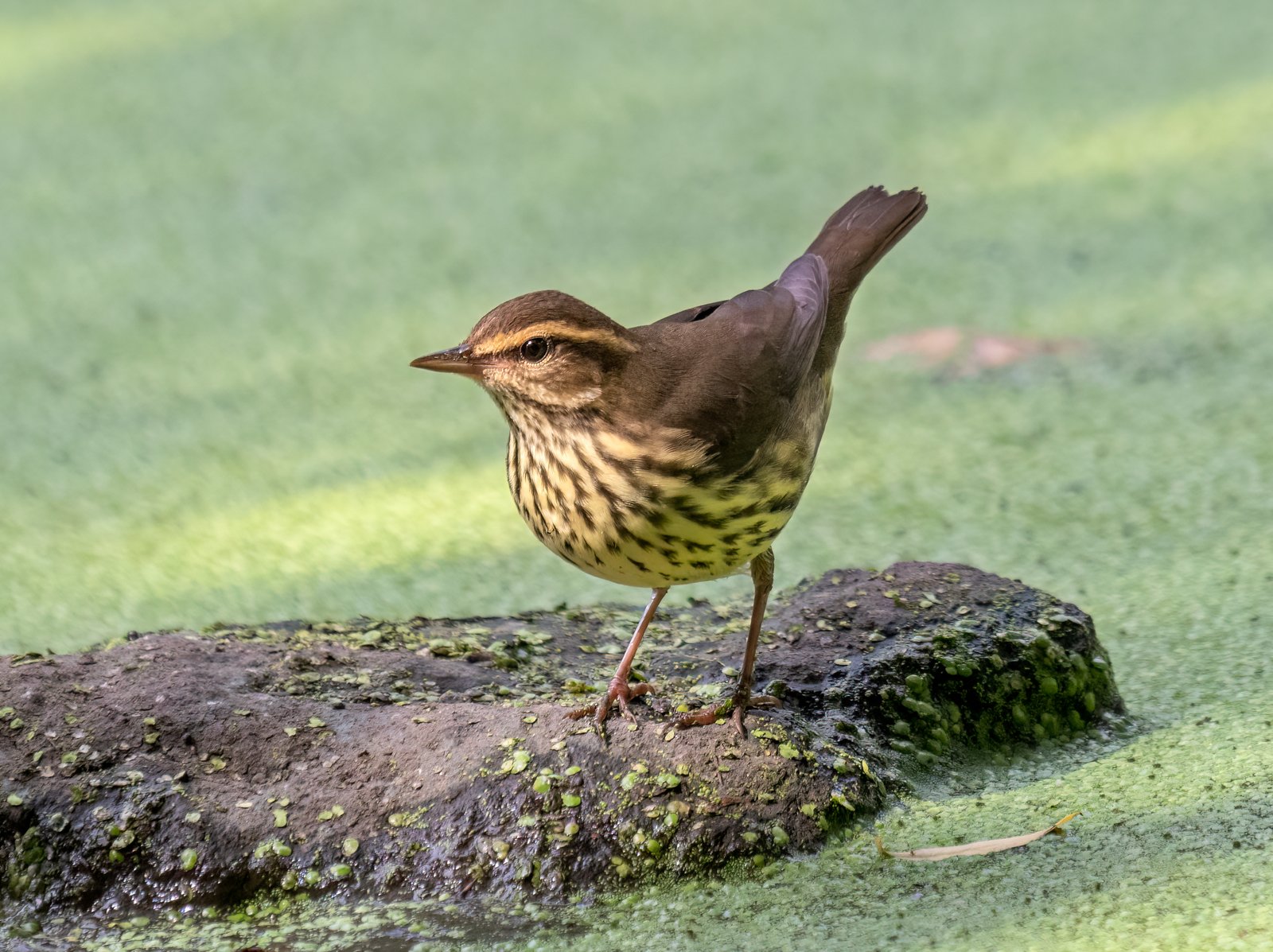
The Northern Waterthrush is a brown, streaked wood-warbler that is nearly always found near water and constantly bobs its rear body. In winter it is one of the most widespread North American warblers in Caribbean mangroves, from the Bahamas to Trinidad and the ABC Islands.
Voice
The call is a loud, metallic chink, often the first sign of its presence. The song, sometimes heard in spring, is a loud, rapid series of clear notes that speeds up and drops at the end, like sweet sweet sweet chew chew chew.
Recording: Cassin Finch — CC BY-NC-SA 4.0 · converted to mono · xeno-canto
Identification
13–15 cm, with a fairly long bill and pink legs. Upperparts plain dark olive-brown. A long, narrow supercilium, usually yellowish but sometimes almost white, which stays even or narrows behind the eye. Underparts yellowish to dull white, densely streaked dark, including the throat. The sexes are alike.
Confusion species
Louisiana Waterthrush Parkesia motacilla is slightly larger, with a heavier bill, a white supercilium that broadens behind the eye, an almost unstreaked white throat and buffy flanks contrasting with a white belly; it bobs with a slower, circular motion. Ovenbird Seiurus aurocapilla has an eye-ring and an orange crown stripe. Spotted Sandpiper Actitis macularius bobs in the same way but is a shorebird.
Habitat
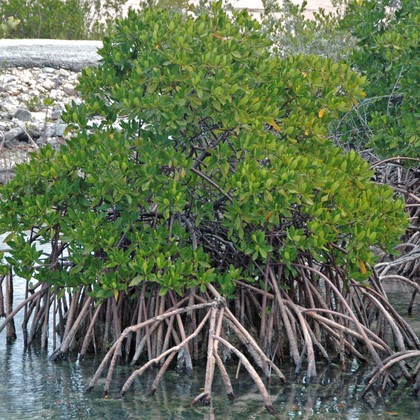
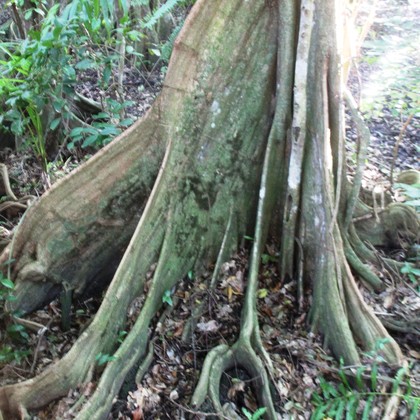
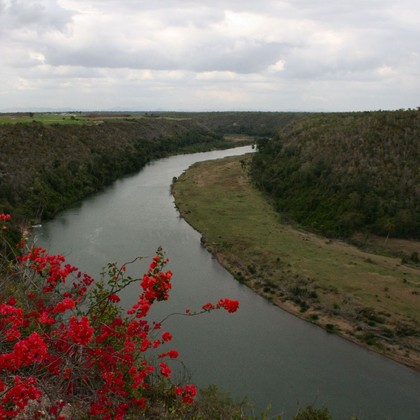
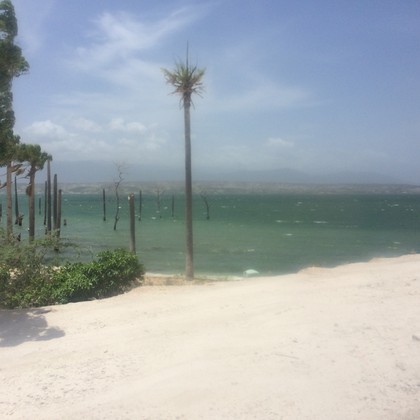
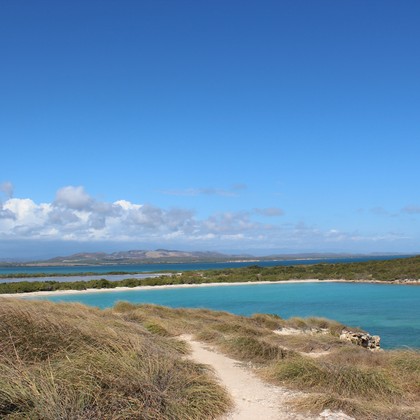
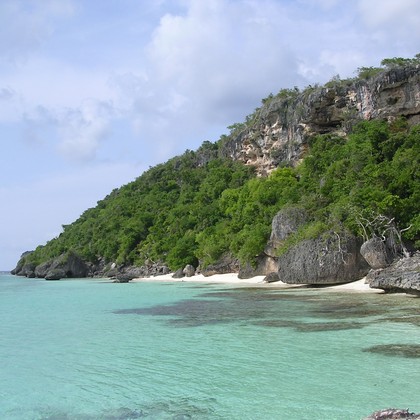
Mainly mangroves, also swamp forest, banks of streams and rivers, ponds, pools and wet spots in coastal scrub and gardens. It walks over mud, roots and stones at the water's edge, picking up insects, small crustaceans, snails and other small animals. In Puerto Rico males more often occupy the wettest mangroves and females drier sites.
Where the bird is most at home, classified by the vegetation types of the Caribbean.
Range and movements
A common winter visitor in the Bahamas, the Turks and Caicos Islands, Cuba, the Cayman Islands, Jamaica, Hispaniola (Haiti and the Dominican Republic), Puerto Rico, the Virgin Islands, the Lesser Antilles, the ABC Islands, San Andrés and Trinidad and Tobago. Breeds in northern North America, from Alaska to Newfoundland and the north-eastern United States, and winters from Florida and Mexico to northern South America.
- Resident
- Summer visitor (c. Oct–Mar)
- Winter visitor (c. Apr–Sep)
- Passage (Mar–Apr, Oct–Nov)
- dark = core range, pale = thinly spread
How and when to look
Along almost any mangrove shore or pool with a shaded bank, especially early in the morning; the metallic chink often gives the bird away before it is seen. A bird bobbing its rear and walking over the roots is usually this species.
Conservation status
Not threatened. A common species with a very large breeding range. Clearing and filling of mangroves affects its wintering habitat locally.
Scientific name
Parkesia noveboracensis | (Gmelin, 1789)
Gmelin described the species in 1789 as Motacilla noveboracensis; because it was later moved to another genus, the author and year stand in brackets. The genus Parkesia was introduced in 2008 by Sangster. Parkesia is named after the American ornithologist Kenneth Carroll Parkes (1922–2007), long-time curator of birds at the Carnegie Museum. noveboracensis means 'of New York', from Noveboracum, the Latin name for New York. The specimen the first description was based on came from Louisiana and New York.