All species › Passerines › New World warblers › Louisiana Waterthrush
Louisiana Waterthrush | Parkesia motacilla
Louisianawaterlijster | Reinita charquera de Luisiana
The Louisiana Waterthrush is the larger, more southerly of the two waterthrushes and belongs to running water: fast streams and rivers in hilly and mountainous country. It is one of the earliest warblers to arrive in autumn, often as early as July or August, and also leaves early.
Voice
The call is a loud, sharp chip, slightly fuller than that of Northern Waterthrush. The song begins with a few clear, descending whistles followed by a rapid, jumbled ending.
Recording: Jacob Saucier — CC BY-NC-SA 4.0 · shortened to the first 60 s, mono · xeno-canto
Identification
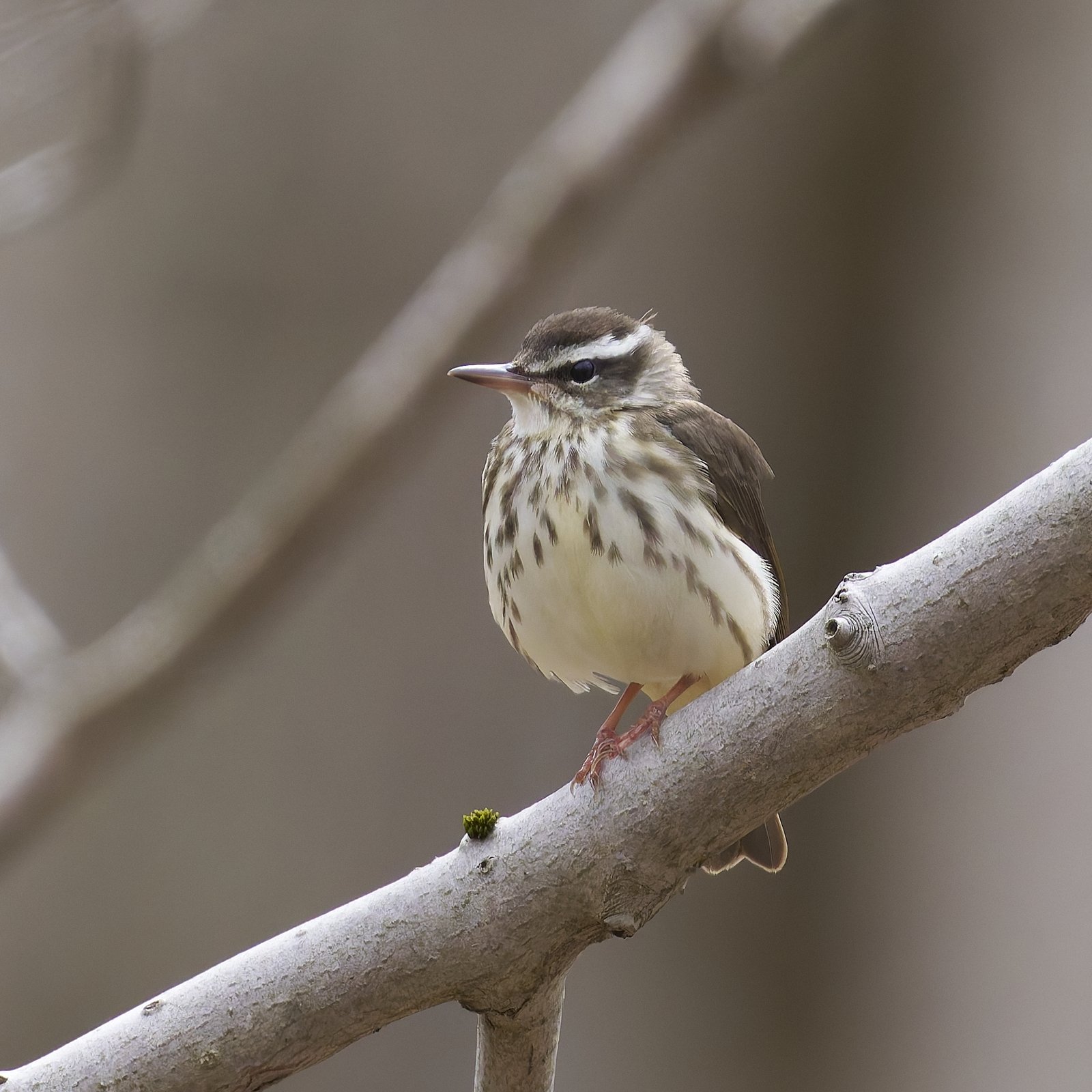
14–16 cm, with a fairly heavy bill and bright pink legs. Upperparts plain greyish olive-brown. A broad white supercilium that clearly widens behind the eye, often tinged buff in front of the eye. The throat is white and usually unstreaked. Breast and flanks streaked dark brown; the flanks are buff to warm ochre and contrast with the white belly. The sexes are alike.
Confusion species
Northern Waterthrush Parkesia noveboracensis is slightly smaller, with a narrower, often yellowish supercilium that does not broaden behind the eye, a streaked throat and evenly yellow or white underparts with denser streaking. It bobs more quickly up and down, Louisiana more slowly and with a sideways swing. Ovenbird Seiurus aurocapilla has an eye-ring and an orange crown stripe.
Habitat
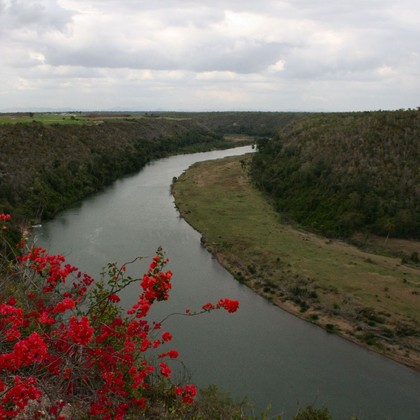
Fast-flowing, shaded streams and rivers in moist and montane forest, including limestone country; less often swamp forest and still water. It walks along banks and over stones in the current, searching for aquatic insects, larvae and other small animals. In the Greater Antilles it is also seen along roads and trails with puddles.
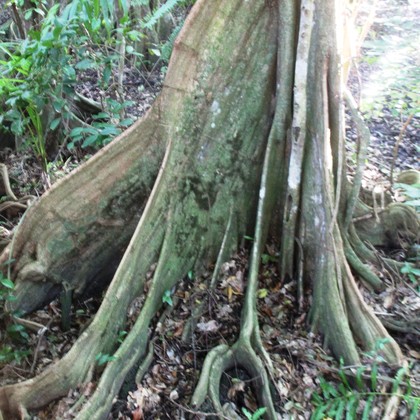
Where the bird is most at home, classified by the vegetation types of the Caribbean.



Range and movements
A fairly common winter visitor in Cuba, Jamaica, Hispaniola (Haiti and the Dominican Republic) and Puerto Rico. Scarcer in the Bahamas, the Cayman Islands and the Virgin Islands. Rare to scarce in the Lesser Antilles, with most records from the northern part of the chain; very rare on Trinidad and Tobago and the ABC Islands. Breeds in the eastern United States and extreme south-eastern Canada and winters in Mexico, Central America, the Caribbean and extreme northern South America.
- Resident
- Winter visitor (c. Apr–Sep)
- Passage (Mar–Apr, Oct–Nov)
- dark = core range, pale = thinly spread
How and when to look
Best along mountain streams in the forests of Jamaica, Puerto Rico or the Dominican Republic, where the bird walks over the stones. Chances are good from August onwards, when most other North American warblers have not yet arrived.
Conservation status
Not threatened. The species depends on clean, shaded streams; pollution, siltation and deforestation along watercourses degrade its habitat on both the breeding and the wintering grounds.
Scientific name
Parkesia motacilla | (Vieillot, 1809)
Vieillot described the species in 1809 as Turdus motacilla; because it was later moved to another genus, the author and year stand in brackets. The genus Parkesia was introduced in 2008 by Sangster. Parkesia is named after the American ornithologist Kenneth Carroll Parkes (1922–2007), long-time curator of birds at the Carnegie Museum. motacilla is Latin for 'wagtail', after the constant tail-bobbing. The specimen the first description was based on came from Kentucky.