All species › Gannets and cormorants › Cormorants › Neotropic Cormorant
Neotropic Cormorant | Nannopterum brasilianum
Bigua-aalscholver | Cormorán neotropical
The Neotropic Cormorant is the smallest and slimmest cormorant in the region and, unlike the Double-crested Cormorant, mainly a bird of fresh water. In the Caribbean it is common in Cuba and in Trinidad, the two islands where it breeds; on most other islands it is rare or unrecorded. In Cuba it is known as corúa de agua dulce, the freshwater cormorant.
Voice
Usually silent away from the colony. At colonies and roosts a low, grunting oonk and pig-like grunts.
Recording: Guillermo Treboux — CC BY-NC-SA 4.0 · converted to mono · xeno-canto
Identification
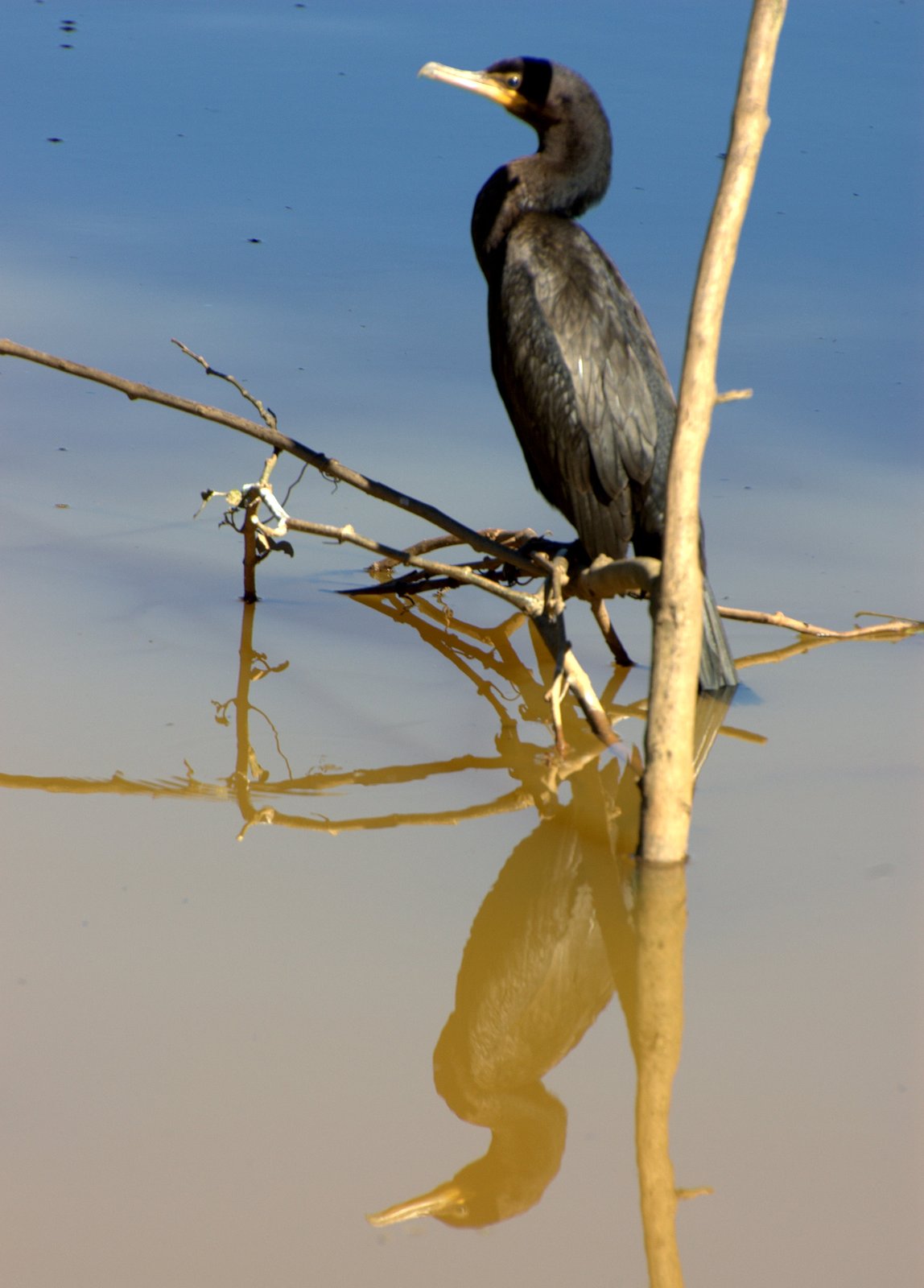
58–73 cm, with a long tail, a thin neck, a small head and a slender, hooked bill. Adults are wholly black, with a bronzy sheen on the back and wing coverts, which look scaled. The bare throat skin is dull yellow-brown and ends behind the bill base in a pointed angle; the lores are dark. In breeding plumage the throat skin is edged with a narrow white border and some birds show white plumes on the sides of the head. The eye is green. Juveniles are brown, with a paler, buff-brown neck and breast. It swims low in the water, flies with the neck slightly bent and often perches on posts, branches over water and power lines.
Confusion species
Double-crested Cormorant Nannopterum auritum is larger and heavier, with a shorter tail, a thicker bill and orange-yellow lores and throat skin with a rounded rear edge; in flight it shows a clear kink in the neck. Anhinga Anhinga anhinga has a straight, dagger-like bill, a very thin neck, a long fan-shaped tail and silvery-white streaks on the wings; it often swims with only head and neck above water.
Habitat
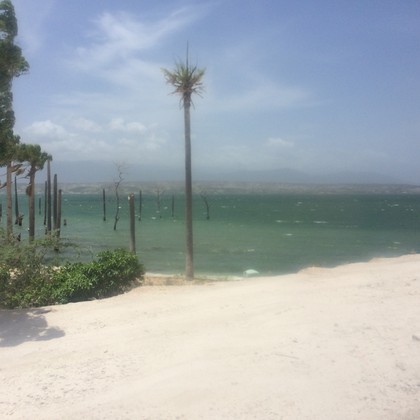
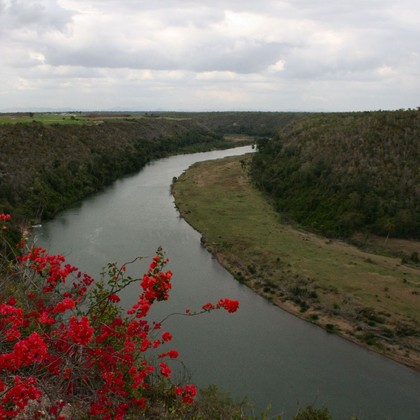
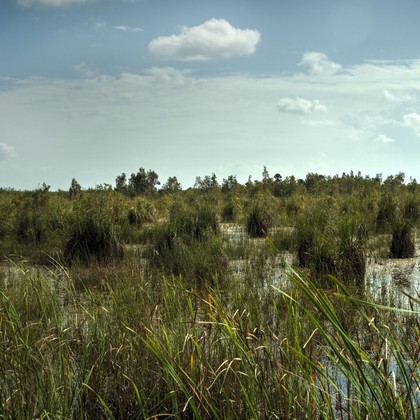
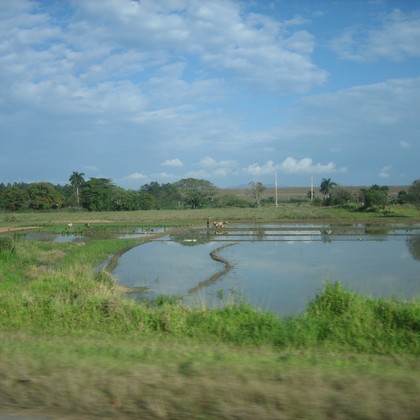
Lakes, ponds, reservoirs, rivers, canals, rice fields and fish farms, and freshwater marshes with open water; also brackish lagoons, mangroves and sheltered coastal waters, but less on the open sea than Double-crested Cormorant. It dives from the surface for fish, often in groups that hunt together. It breeds in colonies in trees or shrubs over or near water, frequently alongside herons.
Where the bird is most at home, classified by the vegetation types of the Caribbean.


Range and movements
Resident and common in Cuba and the Isla de la Juventud, and in Trinidad, where it is seen in marshes, rice fields and reservoirs. Scarce in Tobago. Local and in small numbers in the Bahamas. Wandering birds have been recorded in Jamaica, Hispaniola, the Cayman Islands, the ABC Islands and a few islands of the Lesser Antilles. Outside the region from the southern United States through Mexico and Central America to southern South America.
- Resident
- dark = core range, pale = thinly spread
How and when to look
In Cuba at almost any reservoir and in the marshes of the Zapata Peninsula; in Trinidad in the rice fields and marshes of Nariva and at the water reservoirs of the west coast. Birds drying their outspread wings on wires or dead branches are told from Double-crested Cormorants by the long tail and slim profile.
Conservation status
Not threatened. The species benefits from reservoirs, rice fields and fish farms. Locally it is hunted or persecuted by fishermen as a competitor, and birds become entangled in nets.
Scientific name
Nannopterum brasilianum | (Gmelin, 1789) (GBIF: Phalacrocorax brasilianus)
Gmelin described the species in 1789 as Procellaria brasiliana; because it was later moved to another genus, the author and year stand in brackets. The genus Nannopterum was introduced in 1899 by Sharpe. Nannopterum is Greek, from nannos 'dwarf' and pteron 'wing', after the stubby wings of the flightless Galápagos cormorant for which the genus was erected. brasilianum means 'Brazilian', after Brazil, where Willem Piso described the bird on which Gmelin based the name. The specimen the first description was based on came from Brazil (not specified).