All species › Gannets and cormorants › Darters › Anhinga
Anhinga | Anhinga anhinga
Amerikaanse slangenhalsvogel | Anhinga americana
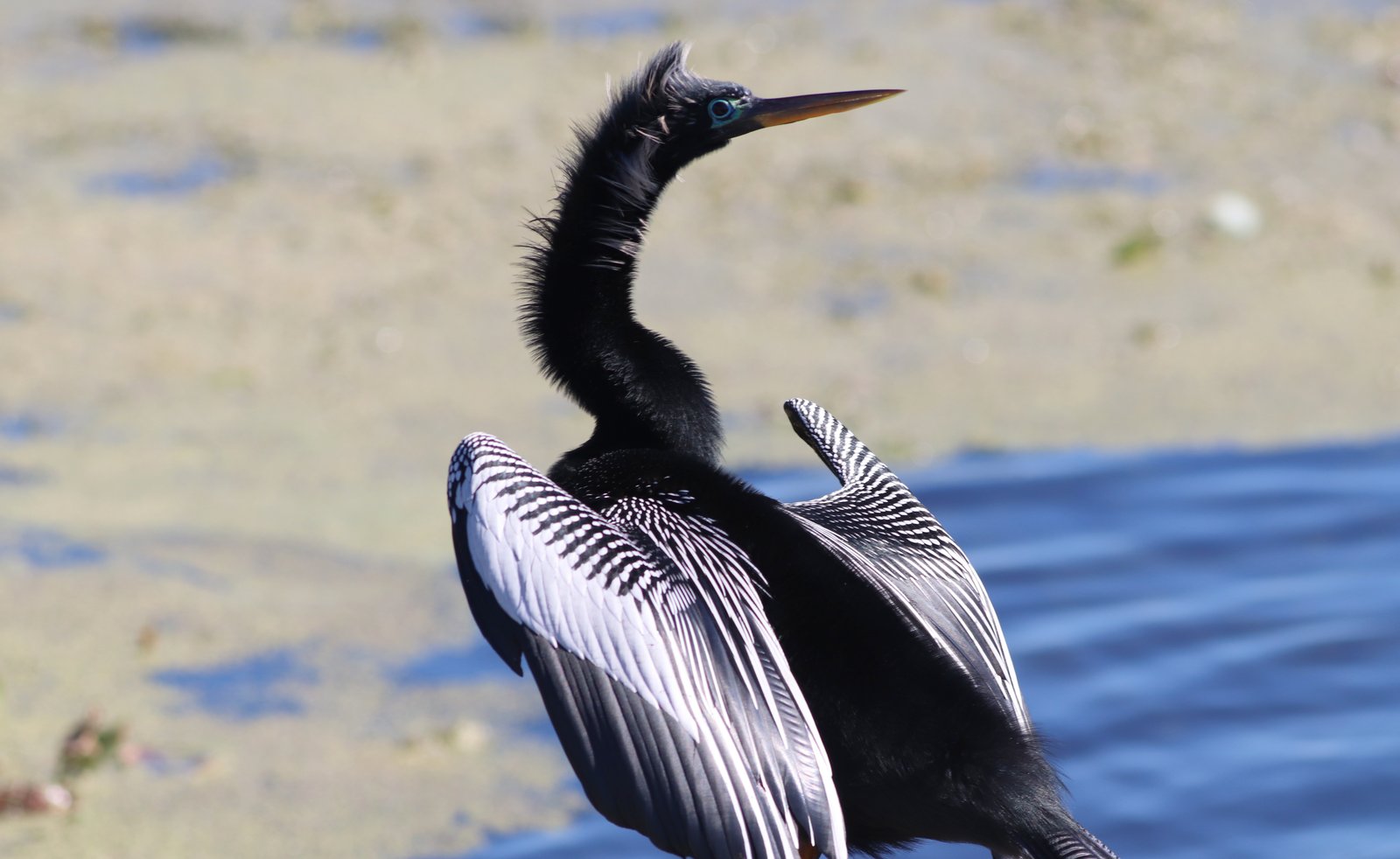
The Anhinga is a dark waterbird with a long, thin, kinked neck, a small head and a dagger-shaped bill with which it spears fish underwater. It often swims with only head and neck above the surface, like a snake, and then perches with wings spread to dry. In the region it lives mainly in Cuba and Trinidad; birds of Cuba and the Cayman Islands belong to the northern subspecies Anhinga anhinga leucogaster, those of Trinidad to the nominate form.
Voice
Usually silent. At the nest and roosts a dry clicking or rattling krr-krr-krr, and a soft cooing when approaching the nest.
Recording: Jacob Wijpkema — CC BY-NC-SA 4.0 · shortened to the first 60 s, mono · xeno-canto
Identification
75–95 cm, with a long, fan-shaped tail. The male is glossy black with a green sheen, with silvery-white spots and streaks on the mantle and upperwing and a pale terminal band on the tail; in the breeding season it has pale plumes on the hindneck. The female has the same wing pattern but a pale buff-brown head, neck and breast, sharply divided from the black belly. The bill is pointed and yellow, the eye red. Juveniles are browner, with less white on the wing. It often soars high on thermals with neck outstretched and tail spread, like a cross in the sky.
Confusion species
Neotropic Cormorant Nannopterum brasilianum and Double-crested Cormorant Nannopterum auritum have a shorter, thicker neck, a hooked bill, a shorter tail and no silvery-white wing pattern; they swim with the body higher in the water. In flight cormorants show fast wingbeats and a shorter tail; they are rarely seen soaring on thermals.
Habitat
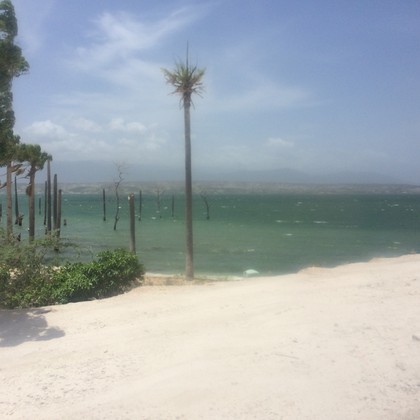
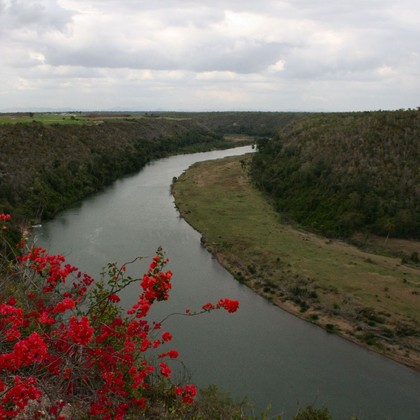
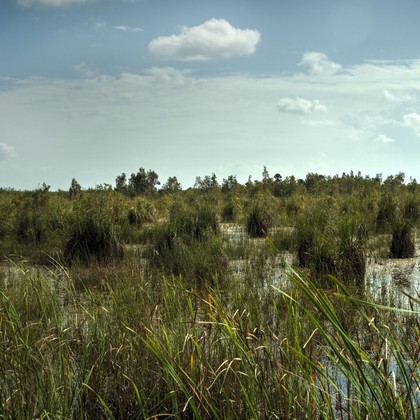
Calm fresh and brackish water with trees or shrubs along the shore: lakes, ponds, slow rivers, canals, swamp forest, mangroves and reservoirs, also rice fields. It hunts by swimming underwater and spears fish with its bill, tosses them above the water and swallows them head first. It nests colonially, often with herons, in trees and shrubs over water.
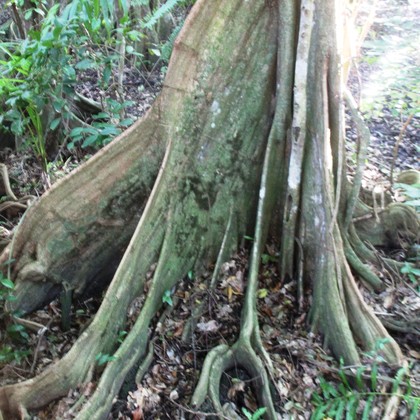
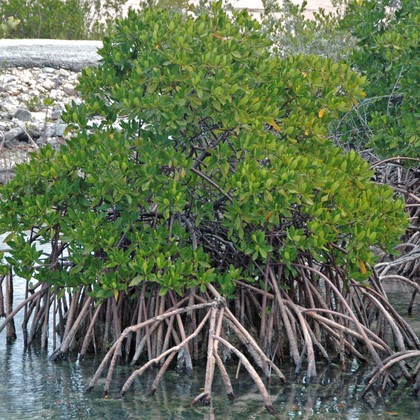
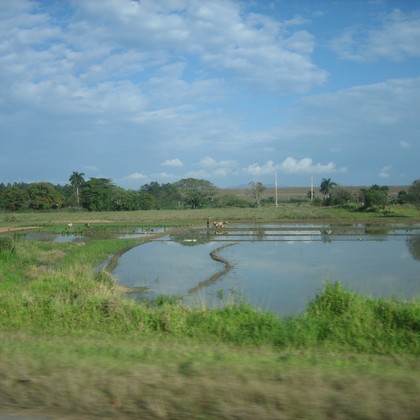
Where the bird is most at home, classified by the vegetation types of the Caribbean.
Range and movements
In Cuba fairly common in larger wetlands and at reservoirs, also on the Isla de la Juventud. On Grand Cayman now present year-round in small numbers. In Trinidad a resident of freshwater marshes such as Nariva and the Caroni area. Formerly also reported from Grenada. Vagrant to the Bahamas, Barbados and San Andrés. Outside the region from the south-eastern United States through Mexico and Central America to Argentina.
- Resident
- dark = core range, pale = thinly spread
How and when to look
In Cuba almost certain at the lagoons and canals of the Zapata Swamp and at larger reservoirs, where birds sit on dead branches over the water with wings spread. Swimming birds are often visible only as a thin neck sticking out of the water.
Conservation status
Not threatened. Locally it depends on the conservation of freshwater marshes and waterside trees; birds sometimes become entangled in fishing lines and nets.
Scientific name
Anhinga anhinga | (Linnaeus, 1766)
Linnaeus described the species in 1766 as Plotus anhinga; because it was later moved to another genus, the author and year stand in brackets. The genus Anhinga was introduced in 1760 by Brisson. Anhinga goes back to a Tupi name for the bird from Brazil; the often-quoted meaning 'devil bird' is uncertain. anhinga is the bird's name in Tupi, an Indigenous language of Brazil. The specimen the first description was based on came from Rio Tapajós, Pará, Brazil.