All species › Falcons › Falcons › Merlin
Merlin | Falco columbarius
Smelleken | Esmerejón
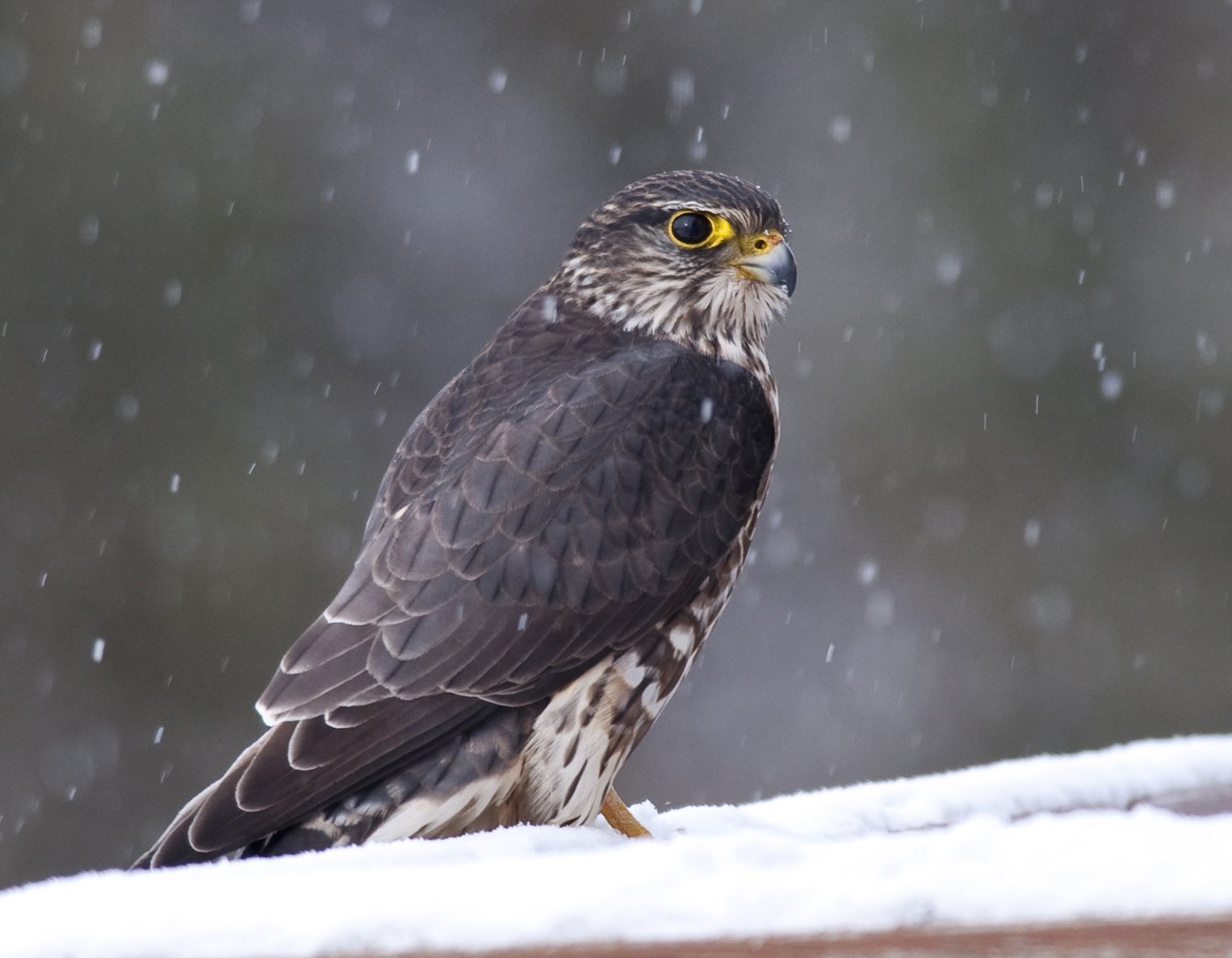
The Merlin is a small, powerful falcon that winters in or passes through the Caribbean. It hunts small birds, often shorebirds and songbirds, in fast, level flight, and is therefore seen mainly where prey gathers, such as at salt ponds, mudflats and rice fields. Wintering birds come from Canada and the northern United States.
Voice
Usually silent in winter quarters; when alarmed a rapid, high series kee-kee-kee-kee.
Recording: Don Profota — CC BY-NC-SA 4.0 · converted to mono · xeno-canto
Identification
24–33 cm, stocky, with pointed, rather short wings, a medium-length tail and a weakly marked face with at most a narrow moustache. The male is blue-grey above, females and immatures brown; both have densely streaked pale underparts and a tail with broad dark and narrow pale bands. Birds from eastern North America, which make up most of the wintering birds, are medium-dark; paler and darker forms from the west are rare in the region.
Confusion species
American Kestrel Falco sparverius is slimmer, with a rufous back and two black cheek stripes, and often hovers. Peregrine Falcon Falco peregrinus is much larger, with a broad, bold moustache and longer wings. Sharp-shinned Hawk Accipiter striatus has rounded wings and red eyes and hunts from cover. On Trinidad, Bat Falcon Falco rufigularis has a black hood, white throat and rufous belly.
Habitat
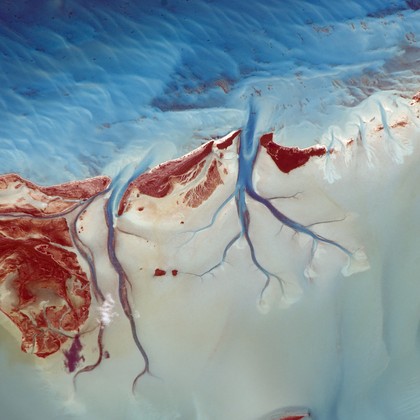
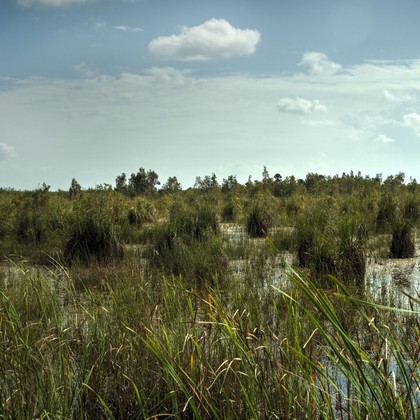
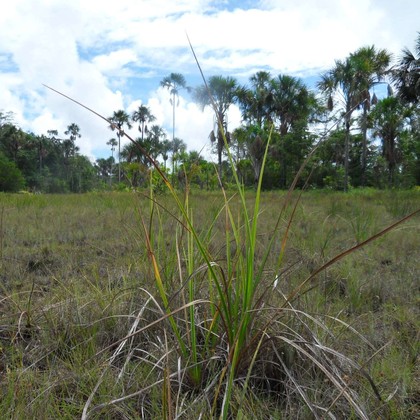
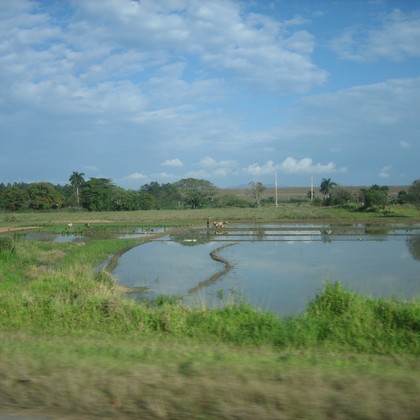
Open country, especially along coasts: mudflats, salt ponds, lagoons, mangrove edges, marshes, rice fields, savannas and golf courses, also in towns. It hunts from a perch or in low, fast pursuit of small birds; it also takes dragonflies and bats. It often sits on a dead branch, post or mast with a clear view.
Where the bird is most at home, classified by the vegetation types of the Caribbean.


Range and movements
In winter throughout the region, from the Bahamas, the Turks and Caicos Islands and the Greater Antilles through the Cayman Islands, the Virgin Islands and the Lesser Antilles to the ABC Islands, San Andrés and Trinidad and Tobago. Most regular in the Bahamas, Cuba, Puerto Rico, the Cayman Islands and Trinidad; everywhere in small numbers. Breeds in the boreal zone of North America and Eurasia.
- Resident
- Summer visitor (c. Oct–Mar)
- Winter visitor (c. Apr–Sep)
- Passage (Mar–Apr, Oct–Nov)
- dark = core range, pale = thinly spread
How and when to look
Best along salt ponds, lagoons and mudflats where shorebirds feed in flocks; a flock of shorebirds suddenly taking flight may point to a hunting Merlin. A small, dark falcon on a post that does not hover and flies off low and fast is probably a Merlin.
Conservation status
Not threatened. The North American population has recovered since the ban on DDT and is spreading into towns.
Scientific name
Falco columbarius | Linnaeus, 1758
Linnaeus described the species in 1758 and placed it straight away in the genus where it still stands. He introduced the genus Falco in that same work. Falco is Late Latin for 'falcon', from falx, falcis 'sickle', after the sickle-shaped claws of the bird. columbarius is Latin for 'of doves', from columba 'dove'. The specimen the first description was based on came from South Carolina.