All species › Falcons › Falcons › American Kestrel
American Kestrel | Falco sparverius
Amerikaanse torenvalk | Cernícalo americano
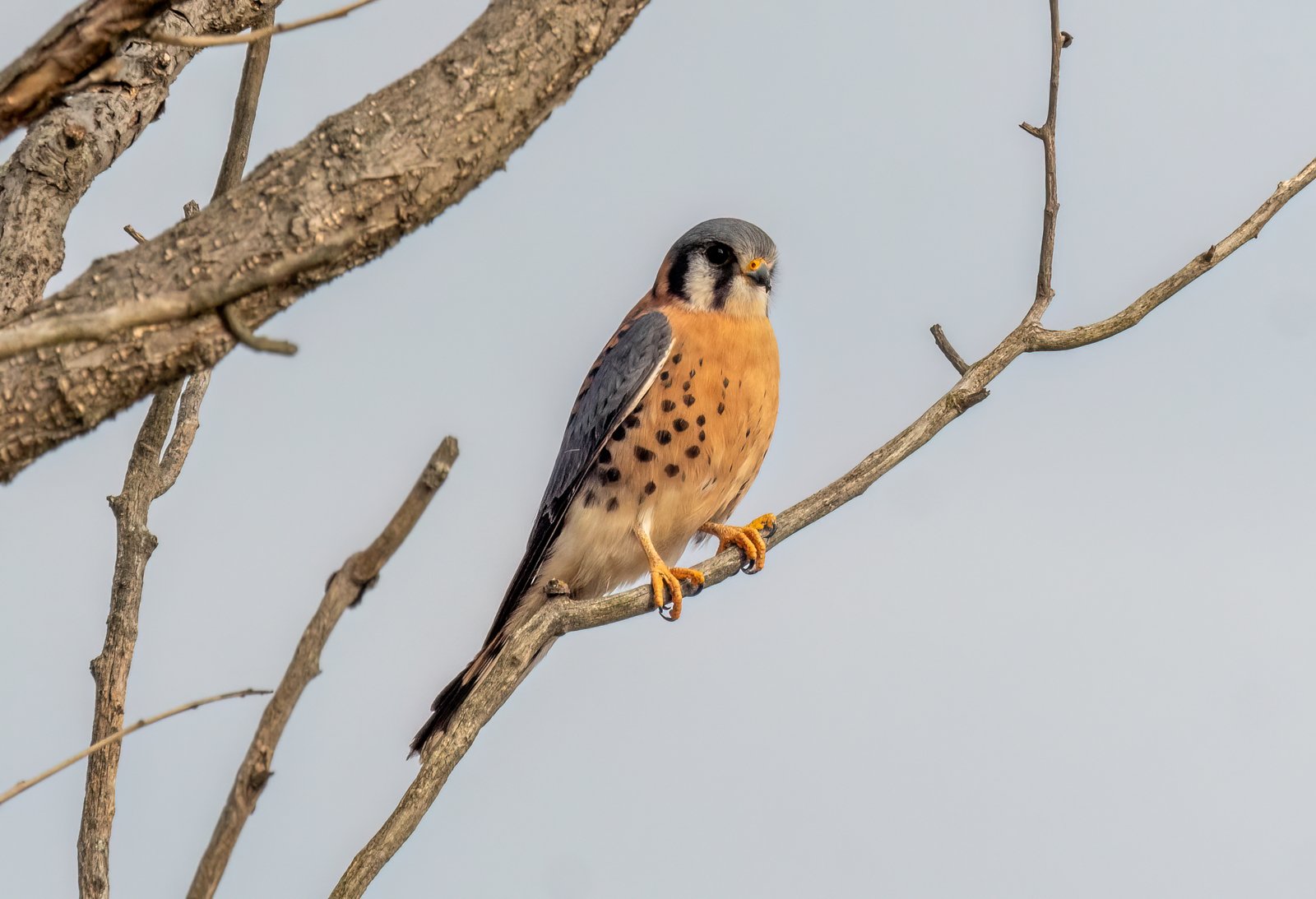
The American Kestrel is the smallest and most widespread falcon in the Caribbean, and on many islands the raptor seen most often. It perches on wires, posts and dead branches along roads and hunts mainly lizards and large insects. Four subspecies are found in the region: sparverioides in Cuba and the Bahamas, dominicensis on Hispaniola and Jamaica, caribaearum in Puerto Rico and the Lesser Antilles, and brevipennis in the ABC Islands. In Jamaica it is called killy hawk, in the Dominican Republic cuyaya.
Voice
A rapid, high series kli-kli-kli-kli or killy-killy-killy, especially when excited and around the nest; also a plaintive whine and a chirping chitter.
Recording: JAYRSON ARAUJO DE OLIVEIRA — CC BY-NC-SA 4.0 · converted to mono · xeno-canto
Identification
22–31 cm, slim, with pointed wings and a long tail. Both sexes have a rufous back and tail, a blue-grey crown with a rufous patch and two black vertical stripes on the white cheeks. The male has blue-grey wings with black spots, an unbarred rufous tail with a black terminal band and pale, spotted underparts. The female is slightly larger and has rufous wings, back and tail barred with black. The Caribbean subspecies are often less spotted below; in Cuba a dark morph with rufous underparts occurs alongside the pale morph.
Confusion species
Merlin Falco columbarius is stockier and darker and lacks the rufous back and double cheek stripe; it flies fast and low and does not hover. Sharp-shinned Hawk Accipiter striatus has rounded wings, red eyes and a barred tail, and flies with short wingbeats and glides. Bat Falcon Falco rufigularis on Trinidad is black above, with a white throat and rufous belly.
Habitat
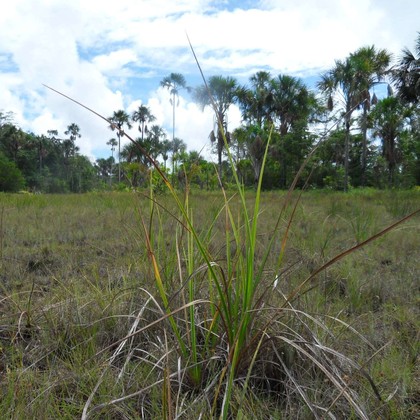
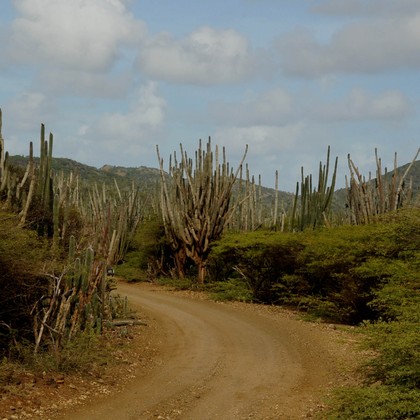
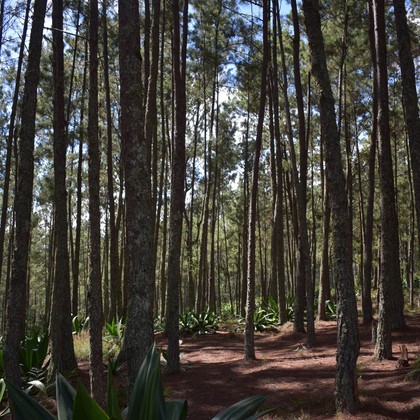
Open and semi-open country: savanna, pasture, farmland, dry forest and scrub, pine forest, forest edges, gardens, villages and towns, from the coast into the mountains. It hunts from a perch or by hovering over open ground for lizards, large insects, small rodents and small birds. It nests in tree holes, old woodpecker holes, cavities in palms, rock crevices and holes in buildings.
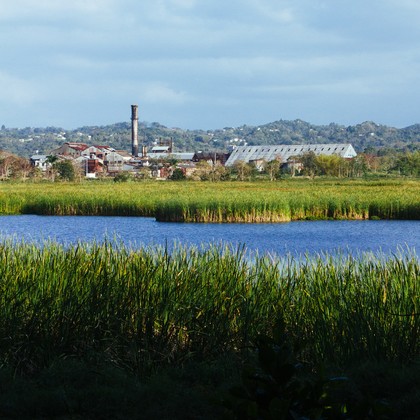
Where the bird is most at home, classified by the vegetation types of the Caribbean.



Range and movements
Common resident in the Bahamas, the Turks and Caicos Islands, Cuba, Jamaica, Hispaniola (Haiti and the Dominican Republic), Puerto Rico, the Virgin Islands and the Lesser Antilles south to St Lucia; scarcer on St Vincent and Grenada and virtually absent from Barbados. Also resident on Aruba, Curaçao and Bonaire. In the Cayman Islands mainly a winter visitor. A vagrant to Trinidad and Tobago. North American birds winter in the Bahamas, Cuba and the Greater Antilles. Outside the region from Alaska and Canada to Tierra del Fuego.
- Resident
- Summer visitor (c. Oct–Mar)
- Winter visitor (c. Apr–Sep)
- Passage (Mar–Apr, Oct–Nov)
- dark = core range, pale = thinly spread
How and when to look
Almost anywhere along roads through open country, where birds sit on power lines and look around while bobbing the tail. The call is one of the most familiar sounds of the Caribbean countryside and often gives the bird away before it is seen.
Conservation status
Not threatened. The species lives well alongside people and benefits from open farmland and settlements. Numbers are falling in North America, which may affect the supply of winter visitors.
Scientific name
Falco sparverius | Linnaeus, 1758
Linnaeus described the species in 1758 and placed it straight away in the genus where it still stands. He introduced the genus Falco in that same work. Falco is Late Latin for 'falcon', from falx, falcis 'sickle', after the sickle-shaped claws of the bird. sparverius is Medieval Latin for 'sparrowhawk', a name that does not really fit this true falcon. The specimen the first description was based on came from South Carolina.