All species › Passerines › Tanagers › Masked Cardinal
Masked Cardinal | Paroaria nigrogenis
Maskerkardinaal | Cardenal enmascarado
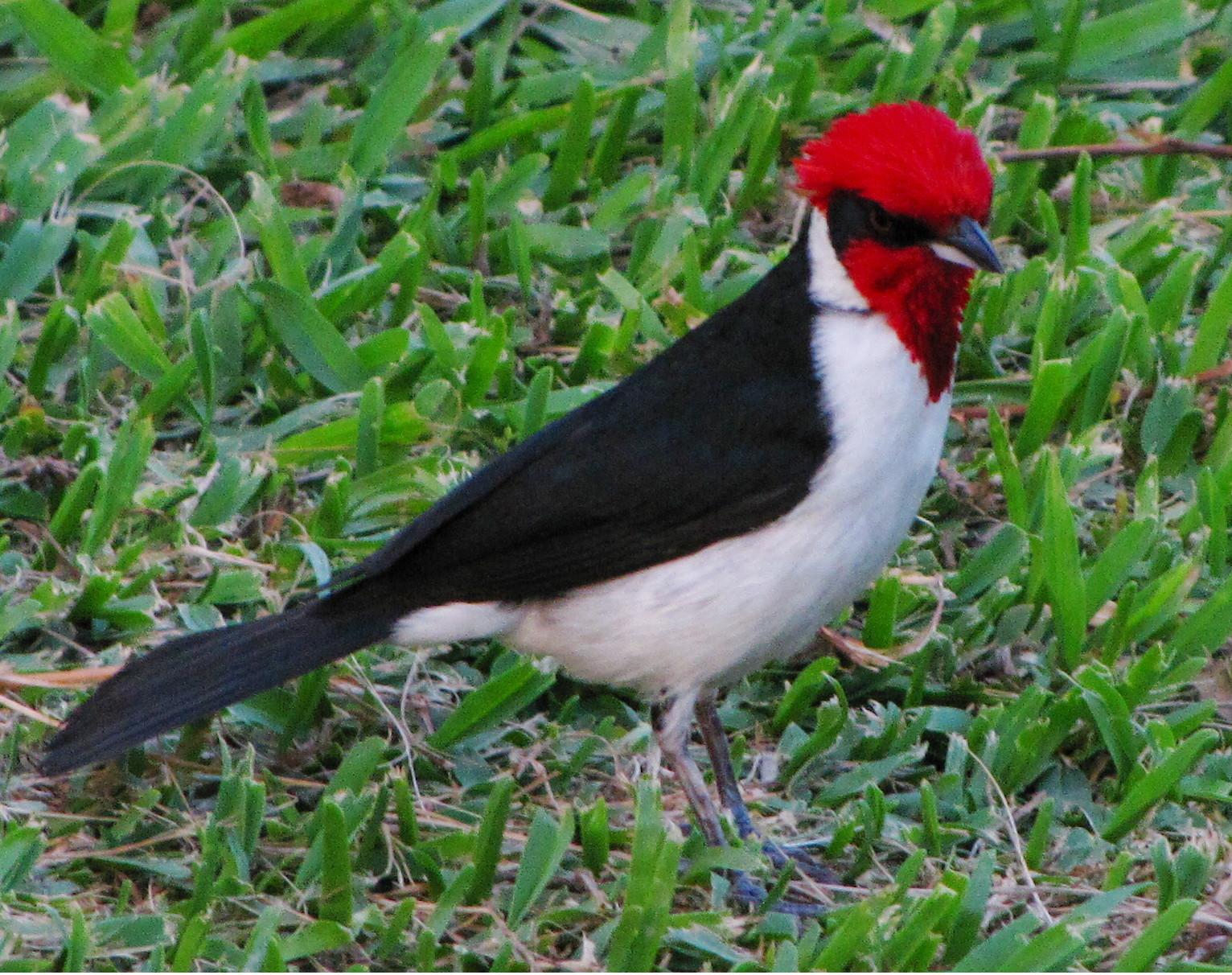
The Masked Cardinal is not a true cardinal but a tanager, related to the yellow finches and seedeaters. It lives by water, in mangroves and freshwater swamps, and often feeds low over the water or along the bank. It was formerly treated as a subspecies of Red-capped Cardinal Paroaria gularis; because the two meet in southern Venezuela without interbreeding, they are now regarded as separate species.
Voice
Calls are short, sharp chip notes. The song consists of clear, whistled phrases of two or three notes, repeated several times.
Recording: Rosendo Manuel Fraga — CC BY-NC-SA 4.0 · converted to mono · xeno-canto
Identification
16–17 cm, with a short, stout bill, black above and whitish or flesh-coloured below. Head, throat and upper breast are bright red; a black mask runs from the lores through the eye to the ear-coverts. Upperparts, wings and tail are glossy black, the underparts white from the breast down. The sexes are alike. Juveniles have a brownish or dull orange-brown head without a clear mask, and browner upperparts.
Confusion species
Hardly confusable in the region. The male Red-breasted Meadowlark Leistes militaris has a red throat and breast, but a black head and a scaly, blackish-brown back, and lives in open grassland. Young Masked Cardinals with a brownish head are recognised by the black-and-white body and the waterside habitat.
Habitat
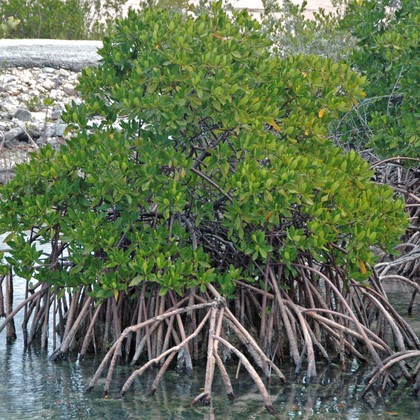
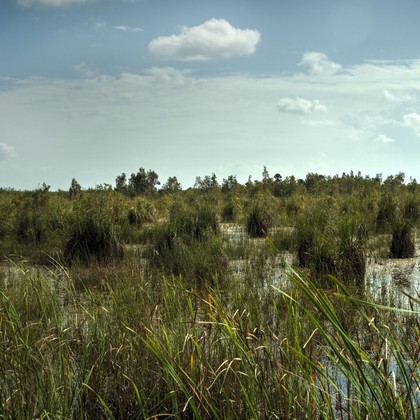
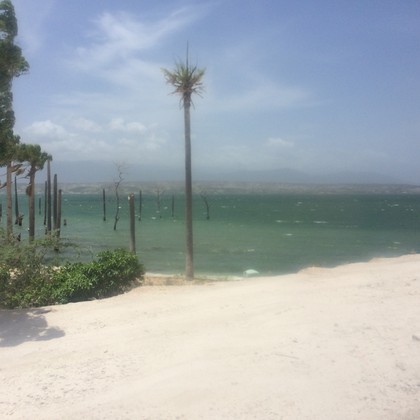
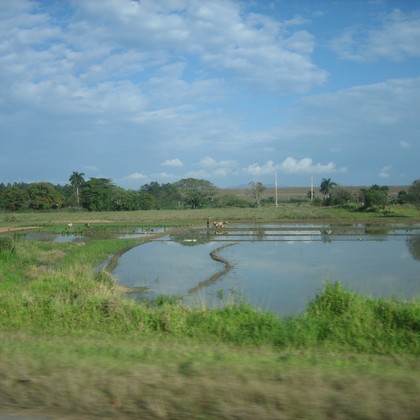
Mangroves, the edges of marshes and ponds, overgrown ditches and rice fields, almost always close to water. It lives in pairs or family parties that walk over the ground, along branches above the water and over floating vegetation, taking seeds, fruit and insects. The nest is a cup of fine plant stems in a shrub or small tree, often over or near water.
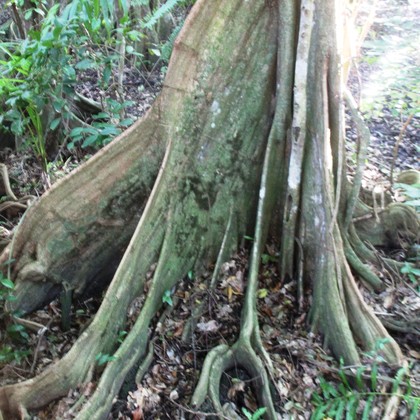
Where the bird is most at home, classified by the vegetation types of the Caribbean.
Range and movements
In the Caribbean only on Trinidad, where it is local in mangroves and freshwater swamps, mainly on the west side of the island, for example around Caroni Swamp. It is absent from Tobago. Two reports from Jamaica probably involve escaped cage birds. Outside the region in northern Venezuela and the far north-east of Colombia.
- Resident
- dark = core range, pale = thinly spread
How and when to look
Best looked for along the edges of mangroves and marshes on the west coast of Trinidad, where birds often perch in the open on a branch over the water or on the bank. They are most active early in the morning and late in the afternoon.
Conservation status
Not threatened. The range is fairly small, but within it the species is locally common. On Trinidad it depends on mangroves and swamps, which are reclaimed or built over in places. It is also kept as a cage bird.
Scientific name
Paroaria nigrogenis | (de Lafresnaye, 1846)
De Lafresnaye described the species in 1846 as Nemosia nigro-genis; because it was later moved to another genus, the author and year stand in brackets. The genus Paroaria was introduced in 1832 by Bonaparte. Paroaria comes from paroára, a name for a small yellow, red and grey bird in the extinct Tupi language. nigrogenis is Latin, from niger 'black' and gena 'cheek', after the black mask. The specimen the first description was based on came from mouth of the Orinoco, Venezuela.