All species › Passerines › New World warblers › Magnolia Warbler
Magnolia Warbler | Setophaga magnolia
Magnoliazanger | Reinita de magnolia
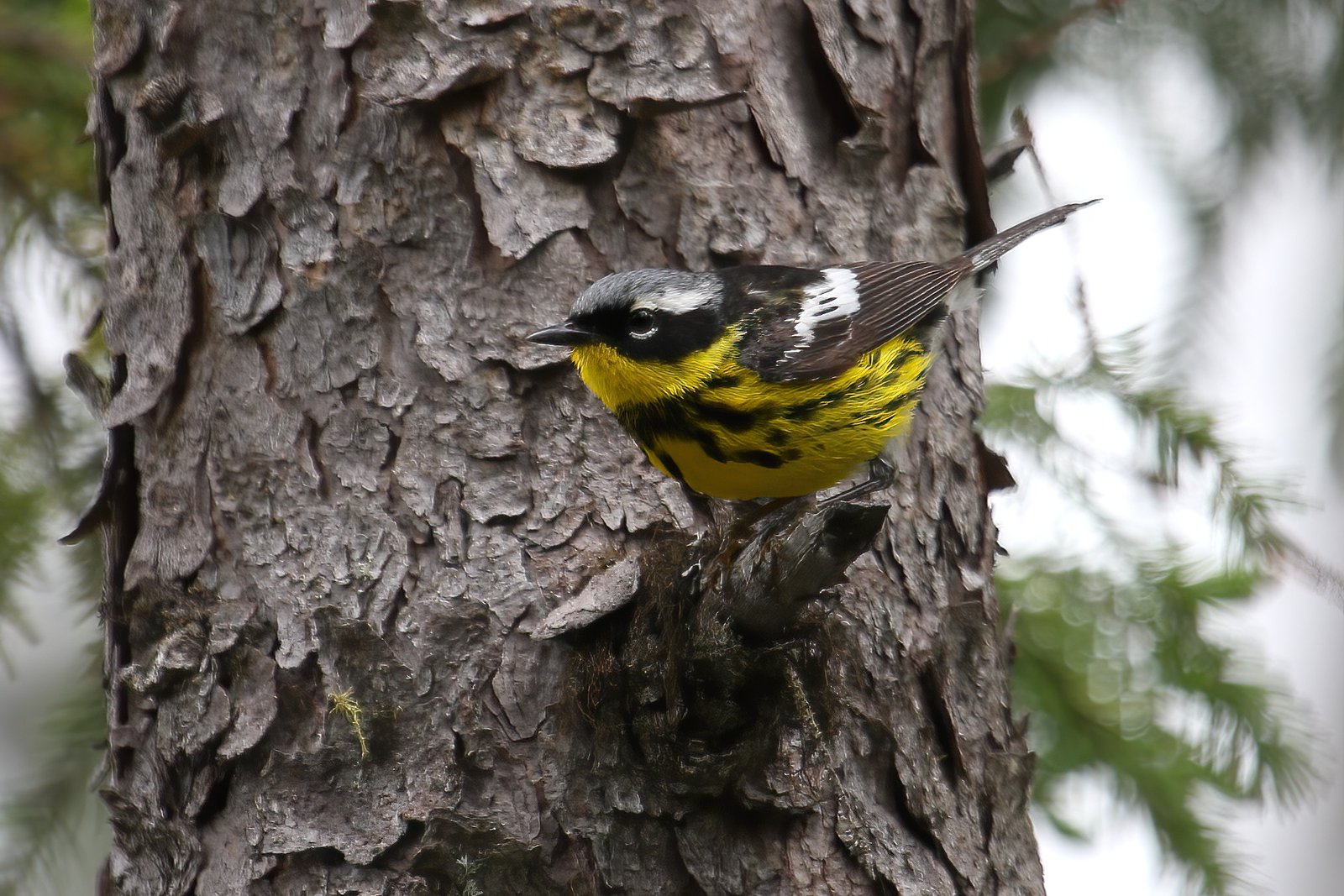
The Magnolia Warbler is a small warbler with yellow, black-streaked underparts and a white band across the middle of the tail, a feature visible in every plumage. It breeds in young conifer forest in Canada and the north-eastern United States. Most winter in Mexico and Central America; in the Caribbean it is a winter visitor mainly in the west.
Voice
The call is a slightly nasal tlep, unlike the sharp chip of most warblers. The song is short and musical: weesee weesee weechee, with an upward inflection at the end.
Recording: Scott Olmstead — CC BY-NC-SA 4.0 · shortened to the first 60 s, mono · xeno-canto
Identification
11–13 cm. The breeding male has a blue-grey crown, a white stripe behind the eye, a black mask, a black back, a large white wing patch and yellow underparts with a black necklace and heavy black streaks on breast and flanks. The female is duller, with a grey head, two wing bars and finer streaks. In non-breeding plumage, the one most often seen in the Caribbean, the head is grey with a white eye-ring, the back olive-green, the rump yellow and the underparts yellow with a narrow grey breast band and faint flank streaks. In every plumage the tail has a white band across the middle and a black terminal band; from below the tail looks white with a broad black tip.
Confusion species
No other warbler has a tail that is white from below with a black terminal band. Cape May Warbler Setophaga tigrina lacks the white tail band and has a more finely streaked breast. Prairie Warbler Setophaga discolor is streaked only on the flanks and constantly bobs its tail. Yellow-rumped Warbler Setophaga coronata also has a yellow rump but whitish underparts. Kirtland's Warbler Setophaga kirtlandii is larger, bobs its tail and lacks the white tail band.
Habitat
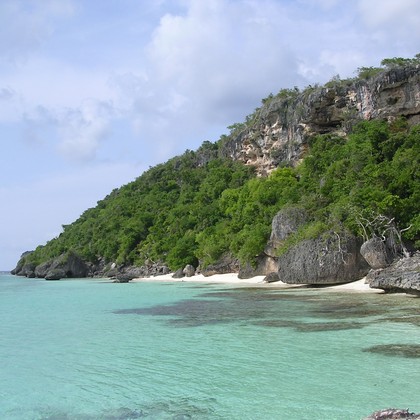
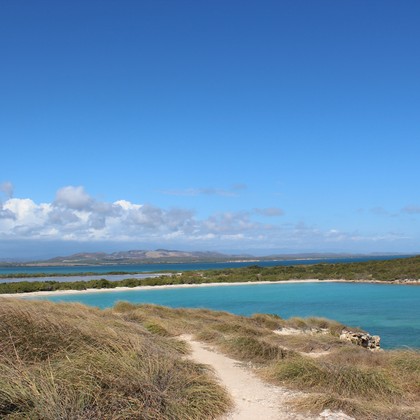
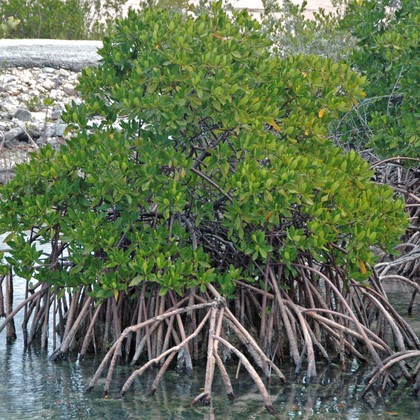
In winter in dry and semi-deciduous forest, coastal woodland, forest edges, beach scrub, mangroves and gardens; mostly low to mid-level in the vegetation. It searches the undersides of leaves for insects, often spreading its tail.
Where the bird is most at home, classified by the vegetation types of the Caribbean.



Range and movements
A fairly common passage migrant and winter visitor in the Bahamas, Cuba, the Cayman Islands and Jamaica; less common on Hispaniola (Haiti and the Dominican Republic) and Puerto Rico. Rare in the Turks and Caicos Islands, the Virgin Islands and the Lesser Antilles; a vagrant to Trinidad and Tobago and the ABC Islands. Breeds in Canada and the north-eastern United States and winters mainly from southern Mexico to Panama.
- Resident
- Summer visitor (c. Oct–Mar)
- Winter visitor (c. Apr–Sep)
- Passage (Mar–Apr, Oct–Nov)
- dark = core range, pale = thinly spread
How and when to look
Best looked for in autumn and winter in coastal woodland and forest edges on Cuba and the Bahamas. Seen from below, the white tail with its black tip is the quickest feature.
Conservation status
Not threatened. The population is large and stable. On the breeding grounds the species benefits from young conifer forest regrowing after logging or fire.
Scientific name
Setophaga magnolia | (Wilson, 1811)
Wilson described the species in 1811 as Sylvia magnolia; because it was later moved to another genus, the author and year stand in brackets. The genus Setophaga was introduced in 1827 by Swainson. Setophaga is Greek, from sēs, sētos 'moth' and -phagos '-eating': 'moth-eater'. magnolia refers to the magnolia trees in which Alexander Wilson found the first specimens. The specimen the first description was based on came from Fort Adams, Mississippi, United States.