All species › Passerines › New World warblers › Kirtland's Warbler
Kirtland's Warbler | Setophaga kirtlandii
Kirtlands zanger | Reinita de Kirtland
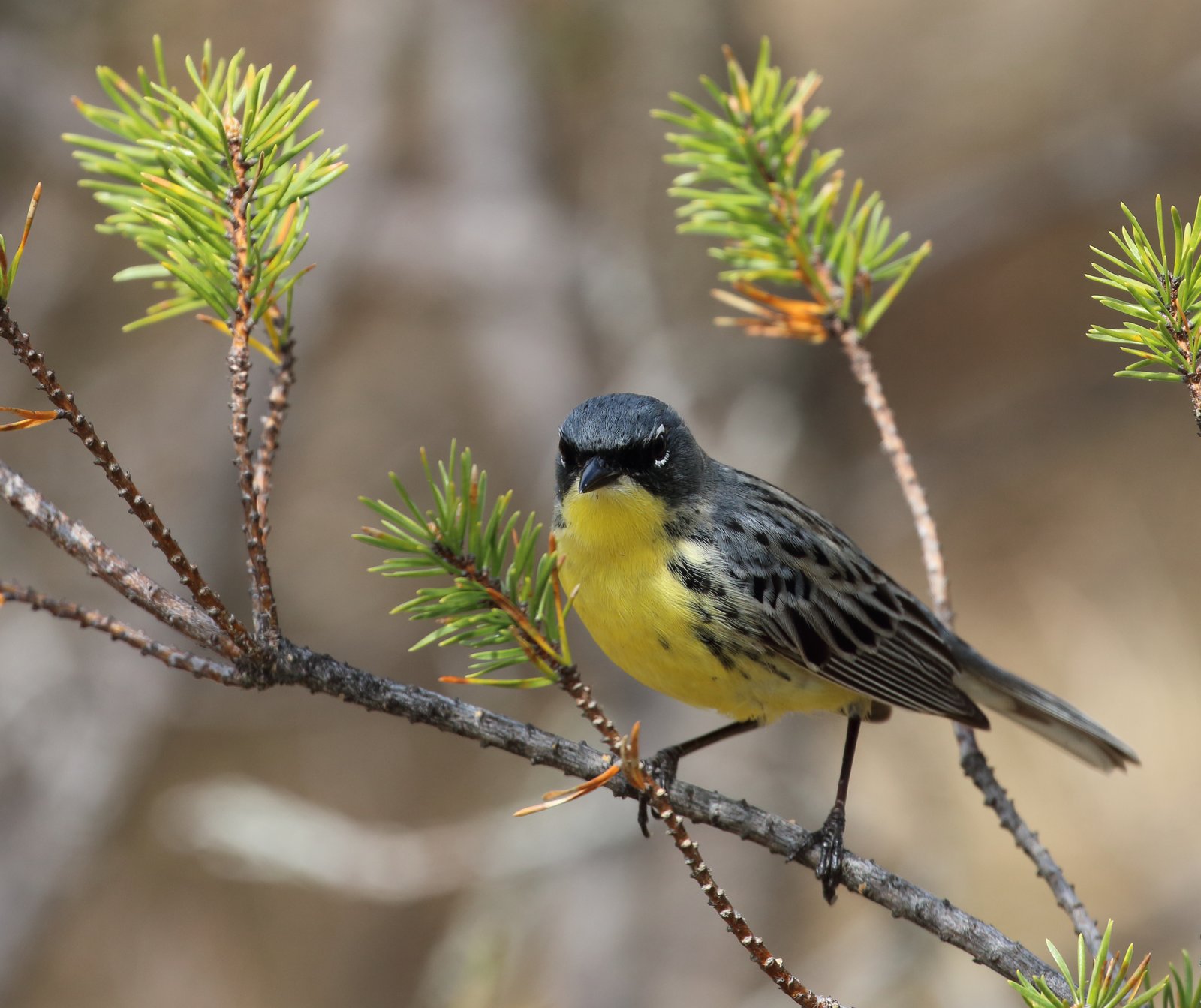
Kirtland's Warbler is one of the rarest warblers of North America. It breeds almost exclusively in young jack pine stands in Michigan, with small numbers in Wisconsin and Ontario, and winters almost entirely in the Bahamas. After a low of fewer than two hundred singing males in the 1970s and 1980s, the population has recovered through intensive management.
Voice
The song, rarely heard in winter, is a loud, bubbling chip-chip-chip-too-too-weet-weet, audible at more than 400 m on the breeding grounds. The call is a low chip.
Recording: Sue Riffe — CC BY-NC-SA 4.0 · converted to mono · xeno-canto
Identification
14–15 cm, fairly large for a warbler, and constantly pumping its tail. The male is blue-grey above with black streaks on the back, has black lores and a broken white eye-ring. Underparts are yellow, with black spots and streaks on the breast sides and flanks; the undertail is white. Females and young birds are browner above, without black lores and less contrastingly marked.
Confusion species
Palm Warbler Setophaga palmarum, a common winter visitor in the Bahamas, also pumps its tail constantly, but is smaller and browner, with a pale supercilium and yellow undertail. Prairie Warbler Setophaga discolor is smaller and olive-green above, with a yellow face marked with black. Magnolia Warbler Setophaga magnolia has a yellow rump and a white band across the middle of the tail.
Habitat
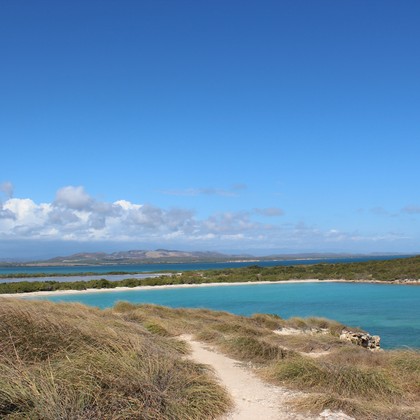
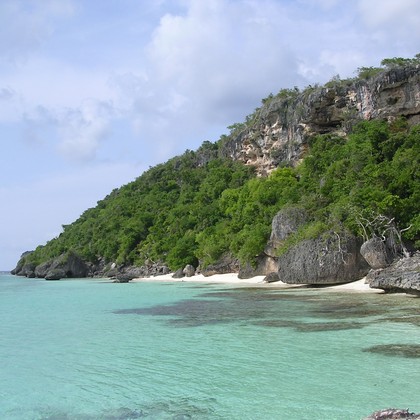
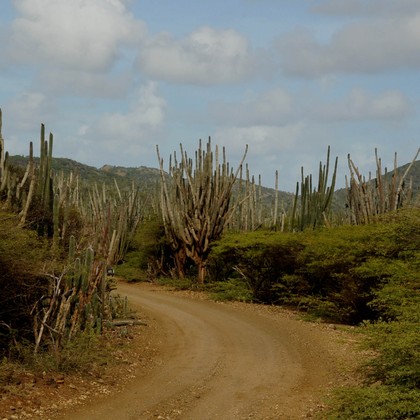
In winter low, dense shrubbery and young coastal coppice with small openings, often on ground previously disturbed by clearing, grazing or fire. Besides insects it eats many berries of shrubs such as Lantana involucrata, Erithalis fruticosa and Chiococca alba.
Where the bird is most at home, classified by the vegetation types of the Caribbean.
Range and movements
Winters mainly in the central Bahamas, with Eleuthera, Cat Island and San Salvador as the best-known islands, and in small numbers in the Turks and Caicos Islands. A few records exist from Cuba and Hispaniola. Outside the region it breeds in Michigan, Wisconsin and Ontario and migrates through the south-eastern United States.
- Passage (Mar–Apr, Oct–Nov)
- dark = core range, pale = thinly spread
How and when to look
Eleuthera and Cat Island offer the best chances, in shrubbery with ripe berries, from November to March. The constant tail-pumping and the low chip help to locate the bird; waiting at a fruiting shrub is often more productive than searching.
Conservation status
Near Threatened according to the IUCN. The population grew from fewer than two hundred singing males to more than two thousand pairs through the planting and management of young pine forest and control of the brood-parasitic Brown-headed Cowbird. In 2019 the species was removed from the United States list of endangered species. Continued management of the breeding grounds and conservation of shrubland in the Bahamas remain necessary.
Scientific name
Setophaga kirtlandii | (Baird, 1852)
Baird described the species in 1852 as Sylvicola kirtlandii; because it was later moved to another genus, the author and year stand in brackets. The genus Setophaga was introduced in 1827 by Swainson. Setophaga is Greek, from sēs, sētos 'moth' and -phagos '-eating': 'moth-eater'. kirtlandii honours the American physician and naturalist Jared Potter Kirtland (1793–1877). The specimen the first description was based on came from near Cleveland, Ohio (USA).