All species › Passerines › New World warblers › Elfin Woods Warbler
Elfin Woods Warbler | Setophaga angelae
Elfenwoudzanger | Reinita de bosque enano
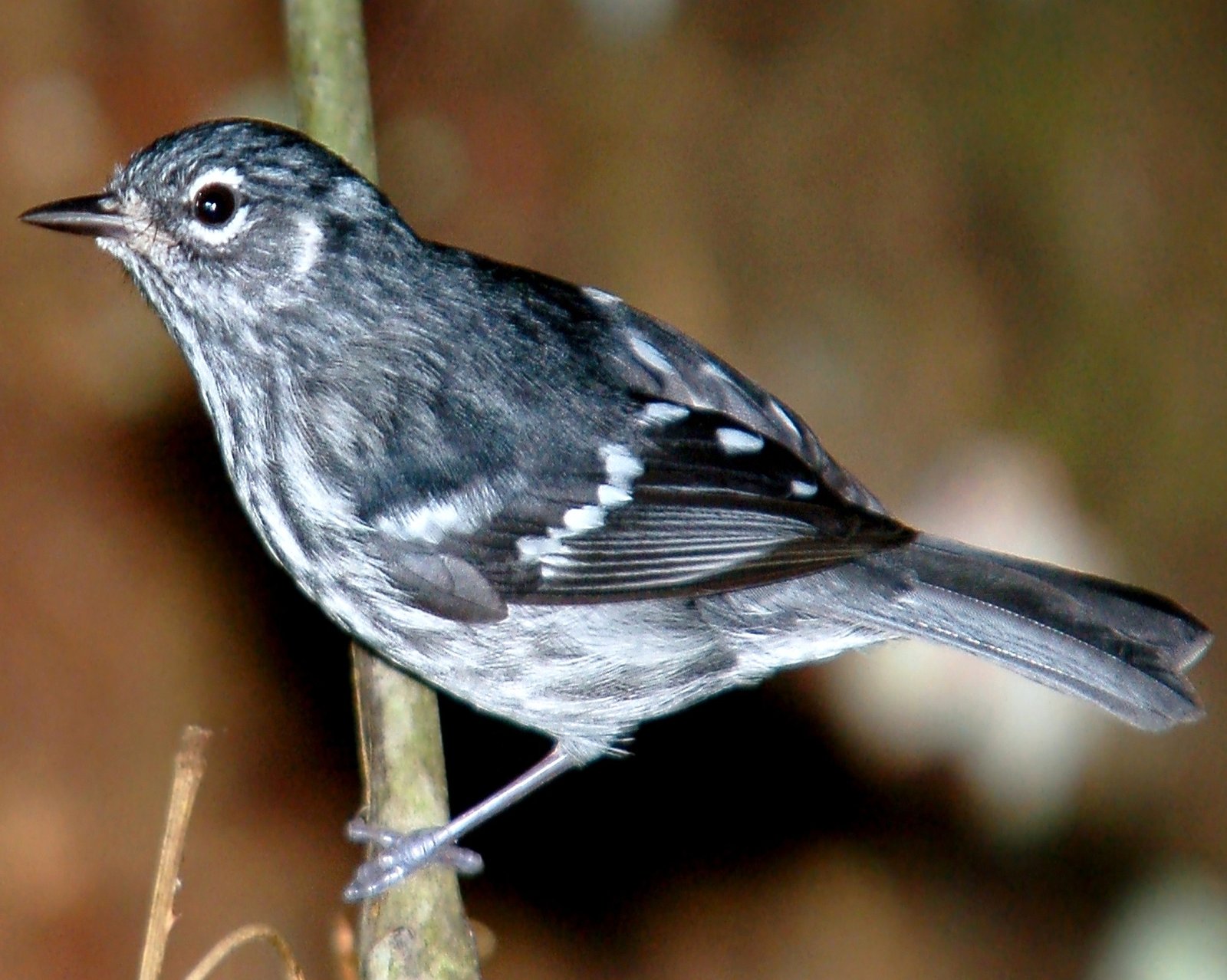
The Elfin Woods Warbler is a small black-and-white warbler of the montane forests of Puerto Rico. It was discovered only in 1968, in the elfin forest of the Luquillo Mountains, and described in 1972, making it one of the most recently discovered bird species in the Caribbean.
Voice
The song is a series of short, rapidly uttered, rather unmusical notes on one pitch, swelling in volume and ending in double-syllabled notes. The call is a short, metallic chip.
Recording: GABRIEL LEITE — CC BY-NC-SA 4.0 · converted to mono · xeno-canto
Identification
12–13 cm, small and slender. Upperparts are mainly black with white markings; there is a white supercilium, an incomplete white eye-ring and a white patch on the ear-coverts and neck side. The wing shows two white wing-bars, the outer tail feathers have white spots. Underparts are white with black streaks. The sexes are alike. Juveniles keep a grey-green back for about a year and are less contrastingly marked.
Confusion species
Black-and-white Warbler Mniotilta varia, a winter visitor, is larger, has a white central crown stripe and creeps along trunks and branches. Blackpoll Warbler Setophaga striata, a passage migrant, has a plain black cap and white cheeks in spring and an olive-green plumage in autumn. Adelaide's Warbler Setophaga adelaidae is grey and yellow.
Habitat
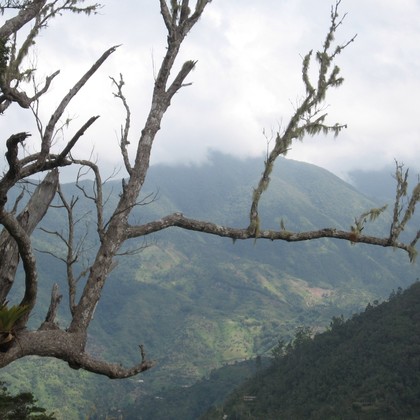
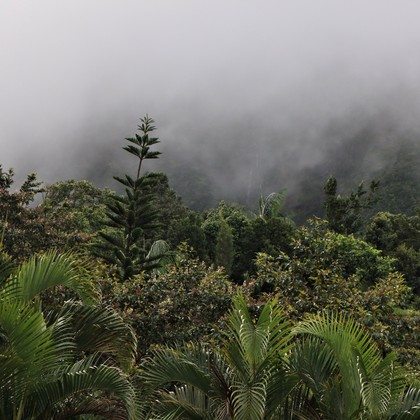
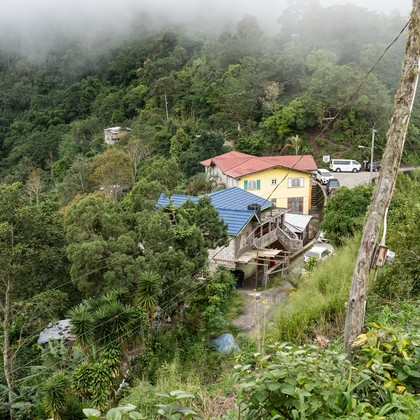
Elfin and cloud forest on the summits, between about 640 and 1030 m, and moist montane forest, secondary forest and shade-coffee plantations lower on the slopes, from about 370 m. It forages in the middle levels and canopy, often among vines and dense foliage, for insects and spiders, and joins mixed flocks.
Where the bird is most at home, classified by the vegetation types of the Caribbean.

Range and movements
Only on Puerto Rico, in Maricao Forest in the west, which holds the largest population, and El Yunque in the Luquillo Mountains in the east. It has probably disappeared from Carite and Toro Negro forests. The species does not occur outside Puerto Rico.
- Resident
- dark = core range, pale = thinly spread
How and when to look
Maricao Forest, along the road through the forest and the trails early in the morning. Mixed flocks with Puerto Rican Tanagers, todies and wintering warblers are a good lead; the bird often feeds among vines and dense foliage.
Conservation status
Endangered (EN). Its range is small and fragmented. The population was estimated at about 600 mature birds in 2000 and more recently at at least 1800. Threats are forest loss to roads, trails and communication towers, forest fires, hurricanes and predation. In the United States it has been legally protected as a threatened species since 2016.
Scientific name
Setophaga angelae | (Kepler & Parkes, 1972)
Kepler & Parkes described the species in 1972 as Dendroica angelae; because it was later moved to another genus, the author and year stand in brackets. The genus Setophaga was introduced in 1827 by Swainson. Setophaga is Greek, from sēs, sētos 'moth' and -phagos '-eating': 'moth-eater'. angelae honours Angela Kepler, who discovered the species in Puerto Rico in 1971 with her husband Cameron Kepler. The specimen the first description was based on came from Sierra de Luquillo (El Yunque), Puerto Rico.