All species › Cranes, rails and allies › Rails and crakes › King Rail
King Rail | Rallus elegans
Koningsral | Rascón real
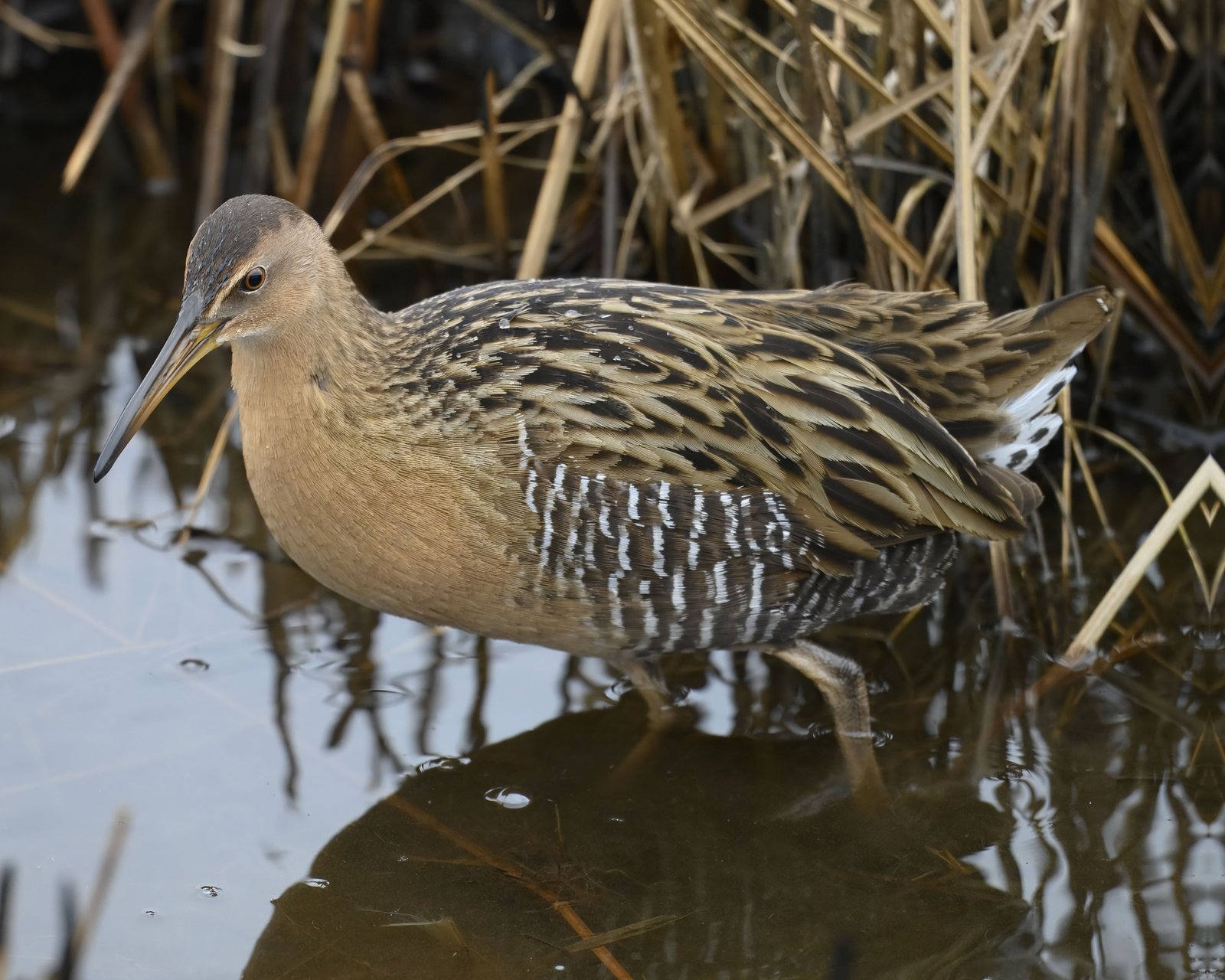
The King Rail is a large, warmly coloured rail of freshwater marshes, with a rusty neck and breast and a long, slightly curved bill. In the Caribbean it occurs only in Cuba, home to its own subspecies, Rallus elegans ramsdeni. It is the freshwater counterpart of the Clapper Rail, which lives in mangroves and salt marshes along the coast.
Voice
A series of loud, even grunting notes, kek-kek-kek-kek or jupe-jupe-jupe, lower and slower than in Clapper Rail and accelerating less. Also short grunting and clicking calls, mainly at dusk and at night.
Recording: John A. Middleton Jr. — CC BY-NC-SA 4.0 · converted to mono · xeno-canto
Identification
38–48 cm; the male is larger than the female. The bill is long, slightly decurved and brownish with an orange-yellow base to the lower mandible. The upperparts are brown with blackish feather centres and rusty edges, giving a clearly streaked pattern. Cheek grey-brown, throat white, a narrow pale supercilium. Neck and breast are warm cinnamon to rusty brown. Flanks and belly are black with sharp white bars; the undertail is white. The legs are grey-brown to orangey. Juveniles are darker and more vaguely marked. It walks cautiously through dense vegetation and seldom flies, with legs dangling.
Confusion species
Clapper Rail Rallus crepitans is on average smaller and greyer, with grey cheeks, a drab breast and less contrasting upperparts, and lives almost only in mangroves and salt marshes. Where both meet in brackish marshes intermediate birds may occur. Spotted Rail Pardirallus maculatus is smaller and densely spotted white. Zapata Rail Mustelirallus cerverai is smaller and slate-grey, with a yellow bill with a red base.
Habitat
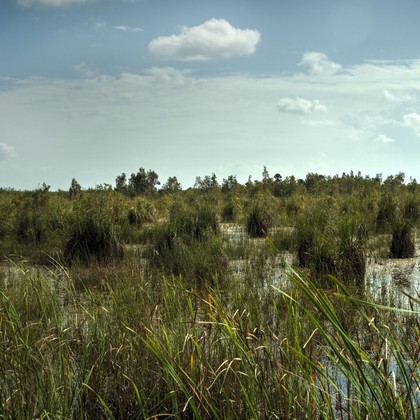
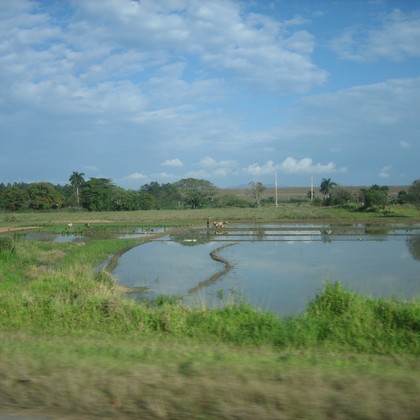
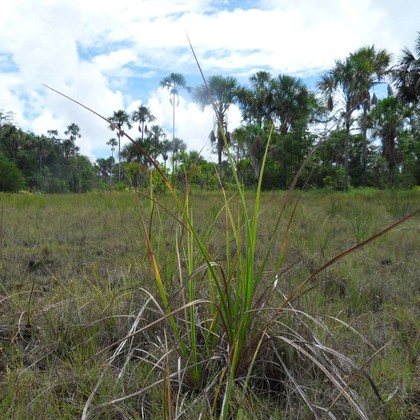
Freshwater marshes with cattail, sawgrass and reeds, flooded grassland, canal banks and rice fields; locally also brackish marshes behind the coast. It feeds in shallow water and at the edge of vegetation on crustaceans, aquatic insects, small fish, frogs and seeds. The nest is a cup of plant material hidden in dense vegetation above the water.
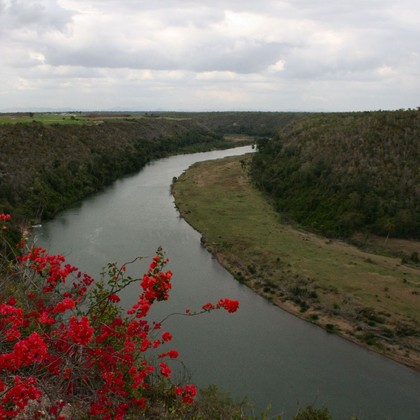
Where the bird is most at home, classified by the vegetation types of the Caribbean.
Range and movements
Within the region only in Cuba, including the Isla de la Juventud, where the species is widespread in lowland marshes and rice fields, including the Zapata Swamp. Only isolated reports are known from Jamaica and Puerto Rico. Beyond the region in the eastern United States, from the Great Lakes to Florida and the Gulf Coast, and locally in Mexico; northern birds move south in winter.
- Resident
- dark = core range, pale = thinly spread
How and when to look
In Cuba in the Zapata Swamp and in lowland rice fields, for example along small dykes and ditch edges where vegetation borders open water. The birds show most often in the early morning and evening; the call, frequently answered by a second bird, gives away their position.
Conservation status
Near Threatened globally: the species has declined sharply in North America through the loss of freshwater marshes. Little is known in numbers about the Cuban population; it depends on marshes and rice fields, which are under pressure from drainage, burning and pesticide use.
Scientific name
Rallus elegans | Audubon, 1834
Audubon described the species in 1834 and placed it straight away in the genus where it still stands. The genus Rallus was introduced in 1758 by Linnaeus. Rallus is the name English ornithologists such as Willughby and Albin already used for the water rail before Linnaeus; the precise origin of the word is uncertain. elegans is Latin for 'elegant, fine', after the richly coloured plumage. The specimen the first description was based on came from Charleston, South Carolina.