All species › Woodpeckers and allies › Woodpeckers › Hispaniolan Woodpecker
Hispaniolan Woodpecker | Melanerpes striatus
Hispaniolaspecht | Carpintero de La Española
The Hispaniolan Woodpecker is the only large woodpecker on Hispaniola. It is noisy and social and, unusually for a woodpecker, often nests in colonies: dozens of pairs may have nest holes in a single tree. Because it eats cacao and other fruit, it is regarded as a pest in the Dominican Republic.

Voice
A varied repertoire: loud, rolling series, yapping, squeaking and nasal calls, often from several birds at once around a nest tree. It drums only rarely.
Recording: Albert Lastukhin & Max Lastukhin — CC BY-NC-SA 4.0 · converted to mono · xeno-canto
Identification
22–28 cm. Mantle and wings are densely striped and barred black and golden-yellow; the rump is greenish-yellow, the uppertail coverts red and the tail black. The face is greyish with a pale eye, the upper neck striped black and white. The male has a red crown and nape, the female a black crown and only a red nape. The male has a distinctly longer bill than the female.
Confusion species
Antillean Piculet Nesoctites micromegas, the only other endemic woodpecker on Hispaniola, is much smaller, olive-green and streaked below, without red and without a yellow-barred back. Yellow-bellied Sapsucker Sphyrapicus varius, a winter visitor, is smaller and has a white wing stripe.
Habitat
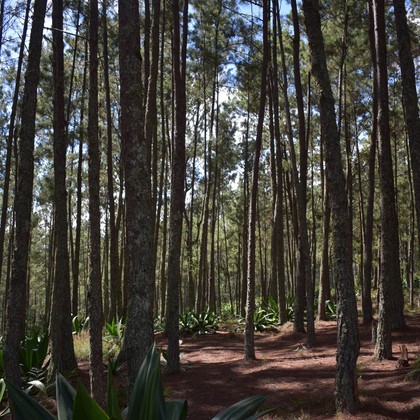
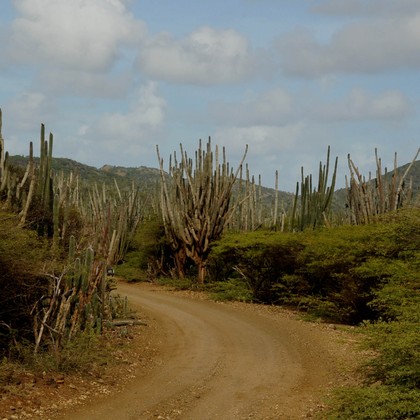
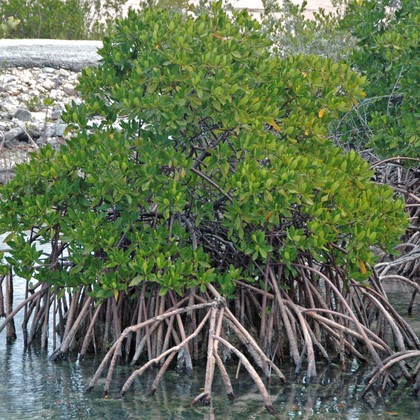
Almost any landscape with trees: dry and moist forest, pine forest, cactus scrub, mangroves and swamp forest, palm groves, plantations, farmland with trees and town parks. It eats insects and their larvae and a lot of fruit and seeds. Males more often hammer and probe the wood, while females forage more along thin branches. Nest colonies are often in dead palms or other large trees.
Where the bird is most at home, classified by the vegetation types of the Caribbean.




Range and movements
Only on Hispaniola, in both Haiti and the Dominican Republic, from sea level high into the mountains. The species does not occur outside Hispaniola.
- Resident
- dark = core range, pale = thinly spread
How and when to look
Almost anywhere on Hispaniola, including Santo Domingo and hotel and town parks. A colony tree with many holes and calling birds flying to and fro is noticeable from a distance.
Conservation status
Not threatened. The species is very common and benefits from open, man-altered landscapes; locally it is persecuted for damage to cacao and fruit.
Scientific name
Melanerpes striatus | (Müller, 1776)
Müller described the species in 1776 as Picas striatus; because it was later moved to another genus, the author and year stand in brackets. The genus Melanerpes was introduced in 1832 by Swainson. Melanerpes is Greek, from melas 'black' and herpēs 'creeper': 'black creeper'. striatus is Latin for 'striped', after the finely barred back. The specimen the first description was based on came from Hispaniola ('Santo Domingo').