All species › Woodpeckers and allies › Woodpeckers › Puerto Rican Woodpecker
Puerto Rican Woodpecker | Melanerpes portoricensis
Puerto Ricaanse specht | Carpintero de Puerto Rico
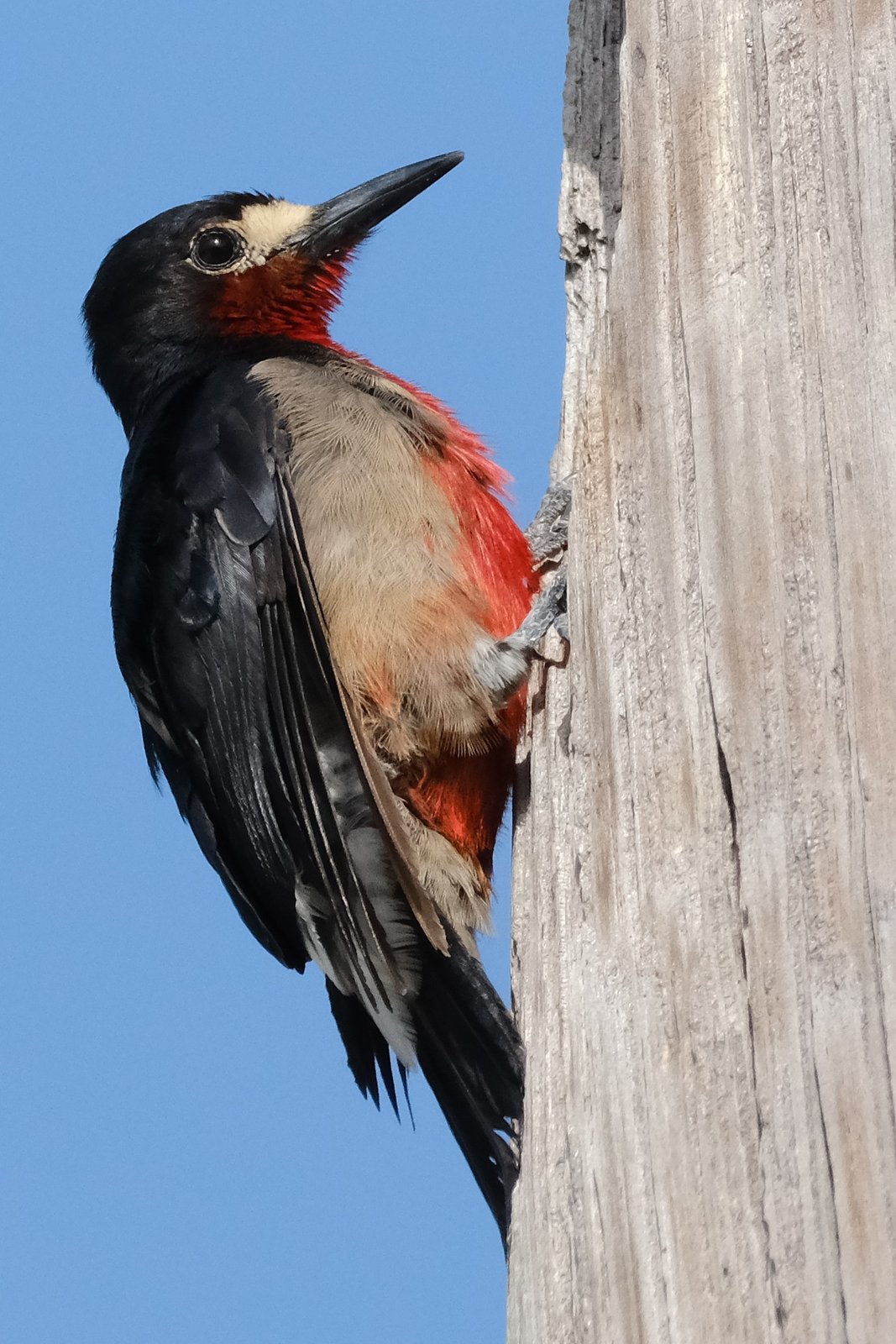
The Puerto Rican Woodpecker is the only woodpecker that breeds on Puerto Rico. It is common and occurs in almost every landscape with trees, including town parks and gardens. Its old nest holes are important for other cavity nesters, such as Puerto Rican Flycatcher Myiarchus antillarum and the endangered Yellow-shouldered Blackbird Agelaius xanthomus.
Voice
A repeated wek and series of rapid, rolling wek-wek-wek calls; also various grating and chattering sounds around the nest. It drums occasionally.
Recording: GABRIEL LEITE — CC BY-NC-SA 4.0 · converted to mono · xeno-canto
Identification
23–27 cm. The upperparts are black with a bluish gloss, with a white rump. A white band runs across the forehead from eye to eye. Throat and breast are red, the flanks and belly brownish to tawny. The female is duller, with less red on throat and breast, and has a distinctly shorter bill than the male.
Confusion species
No other woodpecker breeds on Puerto Rico. Yellow-bellied Sapsucker Sphyrapicus varius is a scarce winter visitor; it is smaller, with a white wing stripe and a black-and-white head pattern.
Habitat
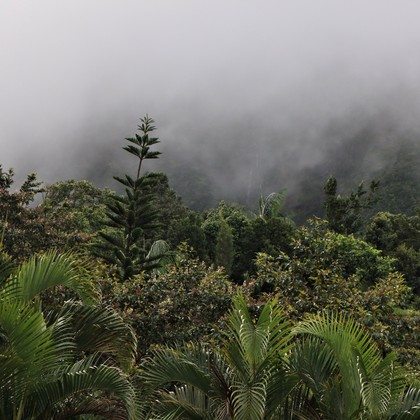
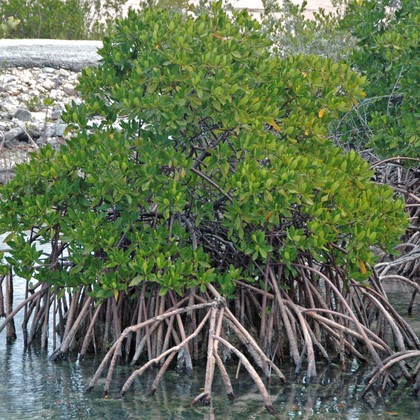
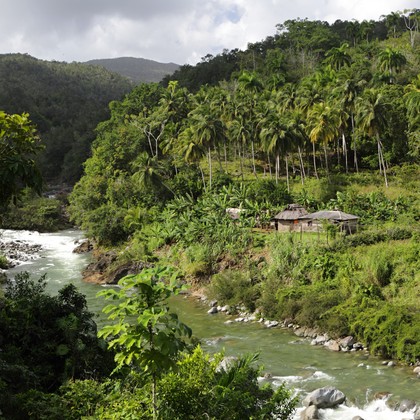
Forest of all types and altitudes, from coastal woodland and mangroves to montane rainforest, and also coffee plantations, palm groves, parks and gardens. It eats mainly insects, such as ants and beetle larvae; fruit makes up about a quarter of the diet. Occasionally it takes a scorpion, gecko or frog. The male excavates the nest hole; the clutch is 1–6 white eggs.
Where the bird is most at home, classified by the vegetation types of the Caribbean.




Range and movements
Only on Puerto Rico: common on the main island, rare on Vieques. The species does not occur outside Puerto Rico.
- Resident
- dark = core range, pale = thinly spread
How and when to look
Almost anywhere on Puerto Rico with trees, including San Juan, and in forest areas such as El Yunque and the Guánica dry forest. The birds are often seen on dead branches and palm trunks.
Conservation status
Not threatened. The species is common and adapts to man-altered landscapes with trees.
Scientific name
Melanerpes portoricensis | (Daudin, 1803)
Daudin described the species in 1803 as Picus portoricensis; because it was later moved to another genus, the author and year stand in brackets. The genus Melanerpes was introduced in 1832 by Swainson. Melanerpes is Greek, from melas 'black' and herpēs 'creeper': 'black creeper'. portoricensis means 'of Puerto Rico', the island to which the species is endemic. The specimen the first description was based on came from Puerto Rico.