All species › Passerines › Crows and jays › Hispaniolan Palm Crow
Hispaniolan Palm Crow | Corvus palmarum
Hispaniolapalmkraai | Cuervo palmero
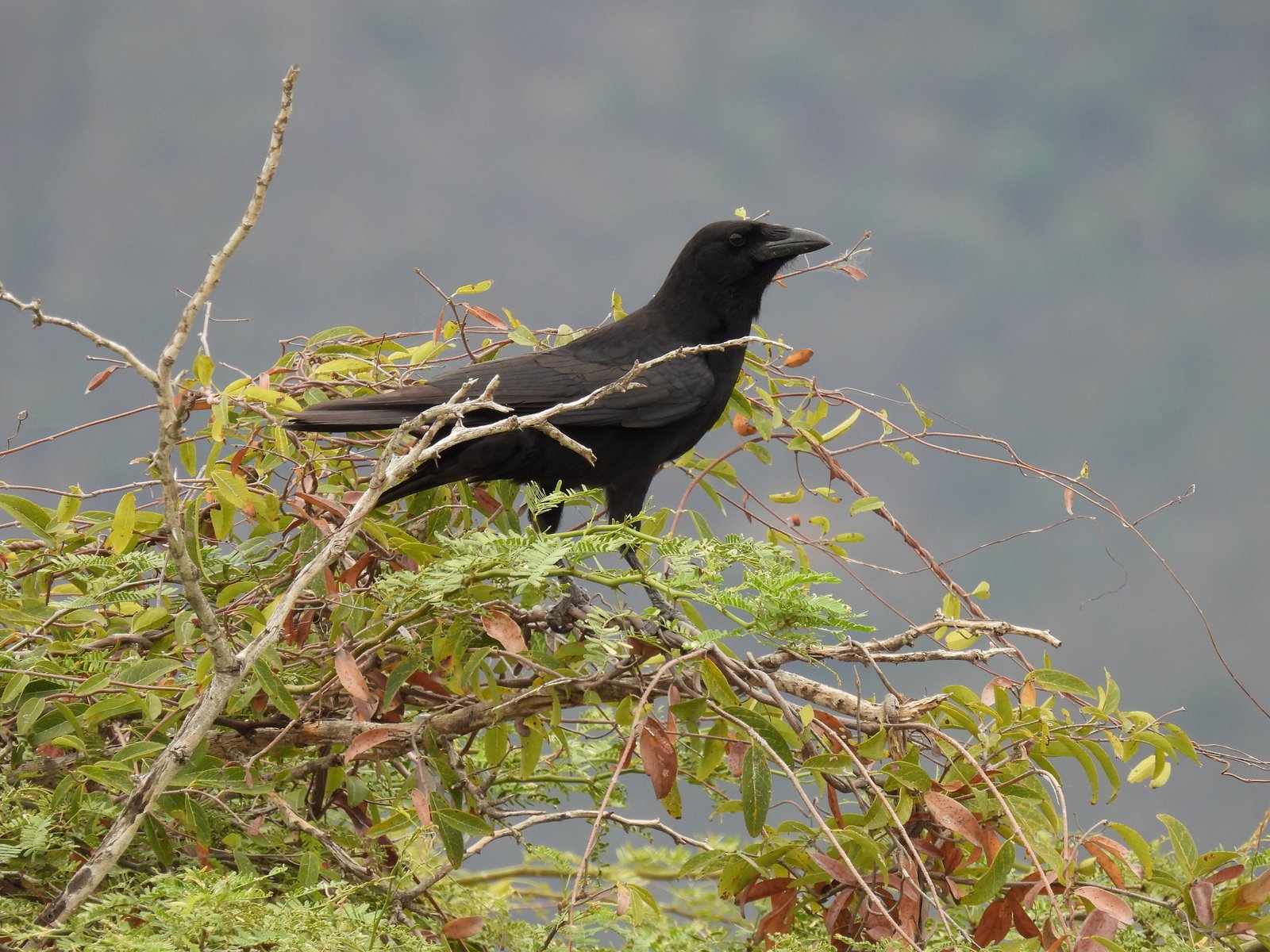
The Hispaniolan Palm Crow is a medium-sized, all-black crow of Hispaniola, chiefly of the mountain pine forests. It was long treated together with Cuban Palm Crow as one species; since 1997 most classifications treat the two as separate species, but the IUCN still lumps them. A characteristic habit is flicking the tail downwards while calling.
Voice
A harsh, nasal aaar and a two-note cao-cao, the source of the Spanish name cao. While calling, the bird flicks its tail downwards.
Recording: Johan Chaves — CC BY-NC-SA 4.0 · shortened to the first 60 s, mono · xeno-canto
Identification
34–38 cm, with a fairly short black bill and well-developed nasal bristles. All black; in fresh plumage with much blue-purple gloss on the mantle and wing coverts, in worn plumage dull brownish black. The iris is dark brown, the legs black. Males are slightly larger than females; juveniles are duller.
Confusion species
White-necked Crow Corvus leucognaphalus is clearly larger, with a longer, heavier bill and a red iris; it gives varied, bubbling calls and often soars high over the forest. Greater Antillean Grackle Quiscalus niger is much smaller and slimmer, with a yellow iris and a keeled tail.
Habitat
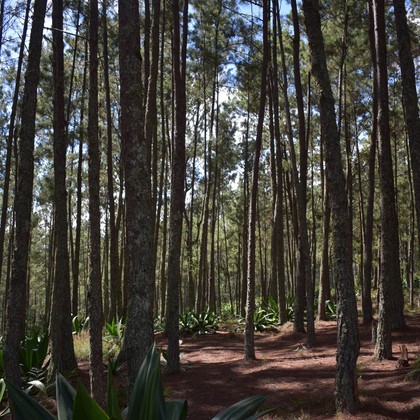
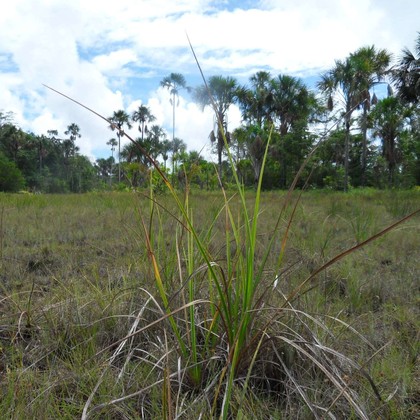
Mainly mountain pine forest, also dry to humid broadleaf forest, arid scrub and hill country, and in Haiti also evergreen lowland forest and farmland with palms. From sea level to about 3,000 m, mostly between 750 and 2,000 m. It eats fruit, seeds and invertebrates, on the ground and in trees.
Where the bird is most at home, classified by the vegetation types of the Caribbean.



Range and movements
Only on Hispaniola, in several areas of Haiti and in the west of the Dominican Republic, mainly in the mountains such as the Sierra de Bahoruco and the Cordillera Central. It does not occur outside Hispaniola.
- Resident
- dark = core range, pale = thinly spread
How and when to look
The pine forests of the Sierra de Bahoruco and the Cordillera Central in the Dominican Republic offer the best chances. The nasal aaar and the downward tail flick while calling separate it from White-necked Crow, which may occur in the same areas.
Conservation status
The IUCN treats Hispaniolan and Cuban Palm Crows as one species and considers it not threatened. In the Dominican Republic the species is nationally listed as endangered because of deforestation, hunting and sport shooting.
Scientific name
Corvus palmarum | Württemberg, 1835
Württemberg described the species in 1835 and placed it straight away in the genus where it still stands. The genus Corvus was introduced in 1758 by Linnaeus. Corvus is the Latin word for 'raven'. palmarum is Latin for 'of the palms', after the palm-rich landscapes this crow inhabits. The specimen the first description was based on came from vicinity of the Cordillera Central (Cibao), Dominican Republic.