All species › Waders, gulls and terns › Plovers and lapwings › Grey Plover
Grey Plover | Pluvialis squatarola
Zilverplevier | Chorlito gris
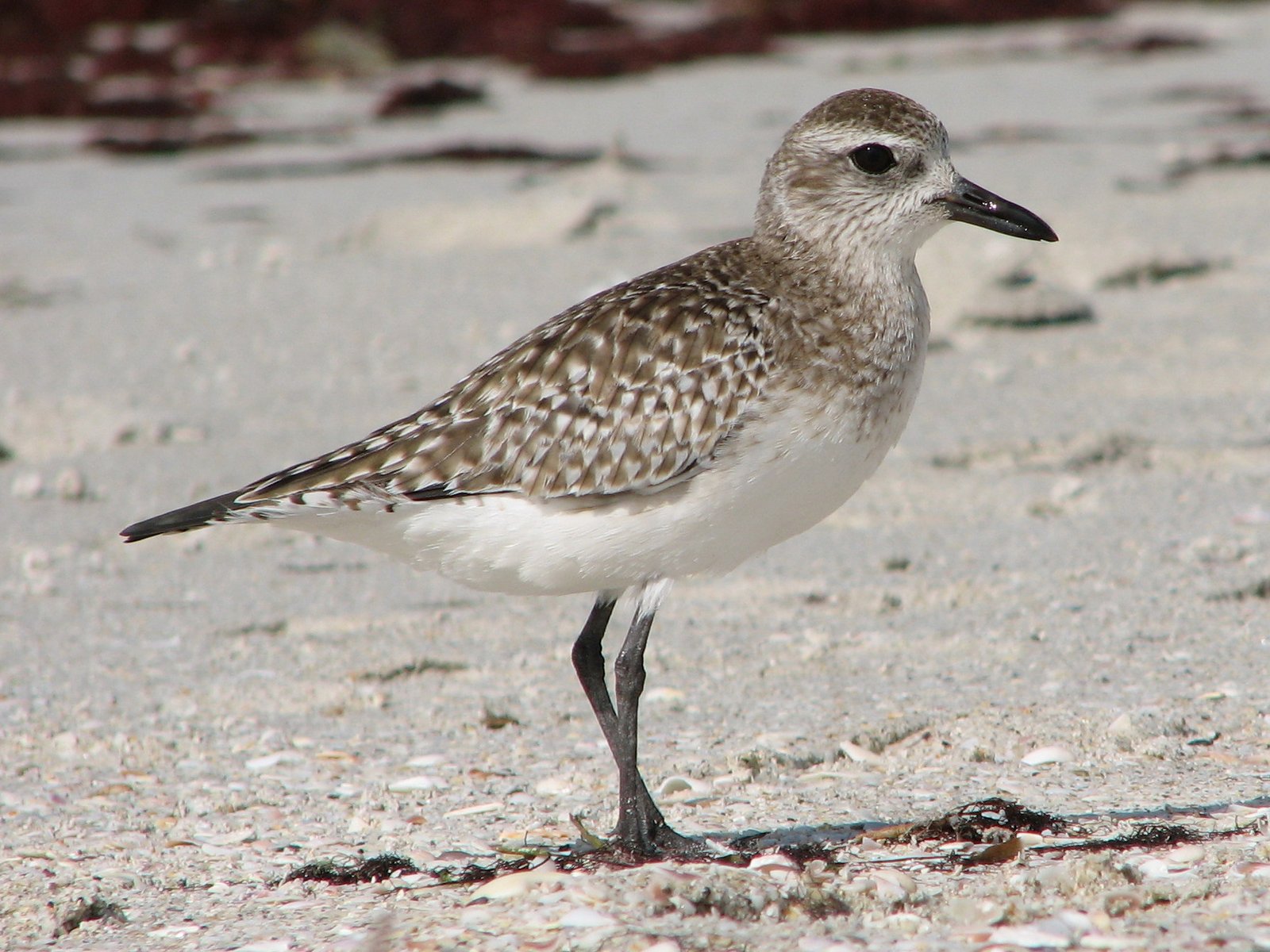
The Grey Plover is the largest plover in the region, a heavy grey shorebird with a short, thick bill and large dark eyes. It breeds on the Arctic tundra and is a widespread winter visitor and passage migrant in the Caribbean on tidal flats, salt pans and beaches. It usually stands alone or in small, loose groups, spread out over the mud.
Voice
A plaintive, three-note whistle that dips in the middle and rises again, like tlee-oo-ee, carrying far over the flats and often given on take-off. Also a shorter ploo-ee.
Recording: Thierry THOMAS — CC BY-NC-SA 4.0 · converted to mono · xeno-canto
Identification
27–30 cm. In winter plumage grey with fine pale and dark spotting on the upperparts, a faintly streaked grey breast and a white belly; the head shows a pale supercilium of low contrast. Juveniles are more evenly spotted, with a pale yellow wash on back and wing. In spring birds about to head north acquire the black face, breast and belly of breeding plumage, with a white border along head and neck and a silver-grey chequered back. In flight distinctive: a white wing bar, a white rump and above all the black axillaries under the wing, visible in every plumage.
Confusion species
American Golden Plover Pluvialis dominica is smaller and slimmer, with a smaller head and bill, browner or golden-tinged upperparts and a more prominent pale supercilium; in flight it lacks the black axillaries and white rump, and the underwing is uniformly grey. Red Knot Calidris canutus is similarly grey, but has a longer, straight bill and shorter legs and feeds in dense flocks with an even probing action.
Habitat
Tidal flats, mudbanks, salt pans and shallow lagoons, sandy beaches and the edges of mangroves. It feeds in typical plover fashion: a few steps, a pause to look around, then a peck at worms, crustaceans and small molluscs. At high tide birds gather on higher sandbars, embankments or dry salt pans.
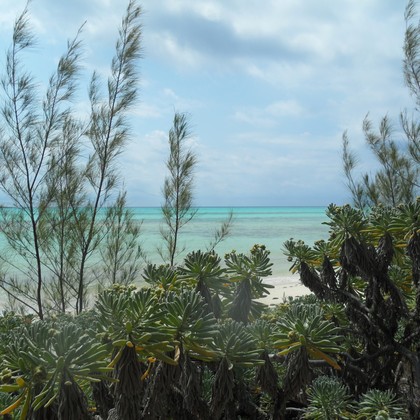
Where the bird is most at home, classified by the vegetation types of the Caribbean.



Range and movements
Winter visitor and passage migrant in almost the whole region: the Bahamas, the Turks and Caicos Islands, Cuba, Jamaica, Hispaniola, Puerto Rico, the Cayman Islands, the Virgin Islands, the Lesser Antilles, the ABC Islands, Trinidad and Tobago and San Andrés. Fairly common at suitable coastal sites on most islands, most numerous where extensive flats and salt pans occur. Beyond the region it breeds around the Arctic, in Alaska, Arctic Canada and northern Russia, and winters along coasts over almost the entire world.
- Resident
- Summer visitor (c. Oct–Mar)
- Winter visitor (c. Apr–Sep)
- Passage (Mar–Apr, Oct–Nov)
- dark = core range, pale = thinly spread
How and when to look
Salt pans and tidal flats at low tide, such as the salt pans of Bonaire and Curaçao, the coastal plains of Cuba and Puerto Rico and the mudflats of Trinidad. Flocks are best counted at high-tide roosts. At a distance the silhouette helps: large, upright and heavily built, with a short, stout bill.
Conservation status
Vulnerable. The world population is declining, mainly through loss and disturbance of tidal flats along the flyways. Within the region suitable salt pans and coastal plains are under pressure from coastal development, and on some islands of the Lesser Antilles shorebirds were traditionally hunted.
Scientific name
Pluvialis squatarola | (Linnaeus, 1758)
Linnaeus described the species in 1758 as Tringa Squatarola; because it was later moved to another genus, the author and year stand in brackets. The genus Pluvialis was introduced in 1760 by Brisson. Pluvialis is Latin for 'relating to rain', from pluvia 'rain', from the old belief that these plovers flocked when rain was imminent. squatarola is a Latinised form of sgatarola, a Venetian name for some kind of plover. The specimen the first description was based on came from Sweden.