All species › Hummingbirds and swifts › Swifts › Fork-tailed Palm Swift
Fork-tailed Palm Swift | Tachornis squamata
Braziliaanse palmgierzwaluw | Vencejillo tijereta
The Fork-tailed Palm Swift is a small, very slender swift of the South American lowlands that occurs in the region only in Trinidad. It is closely tied to palms, especially the moriche palm Mauritia flexuosa, in which it also nests. Birds in Trinidad and the Guianas are assigned to the dark subspecies semota.
Voice
In flight a trilling trrrrreee, a buzzy dzzzzz and a thin, buzzing note, often from groups around the nest palms.
Recording: Jacob Wijpkema — CC BY-NC-SA 4.0 · converted to mono · xeno-canto
Identification
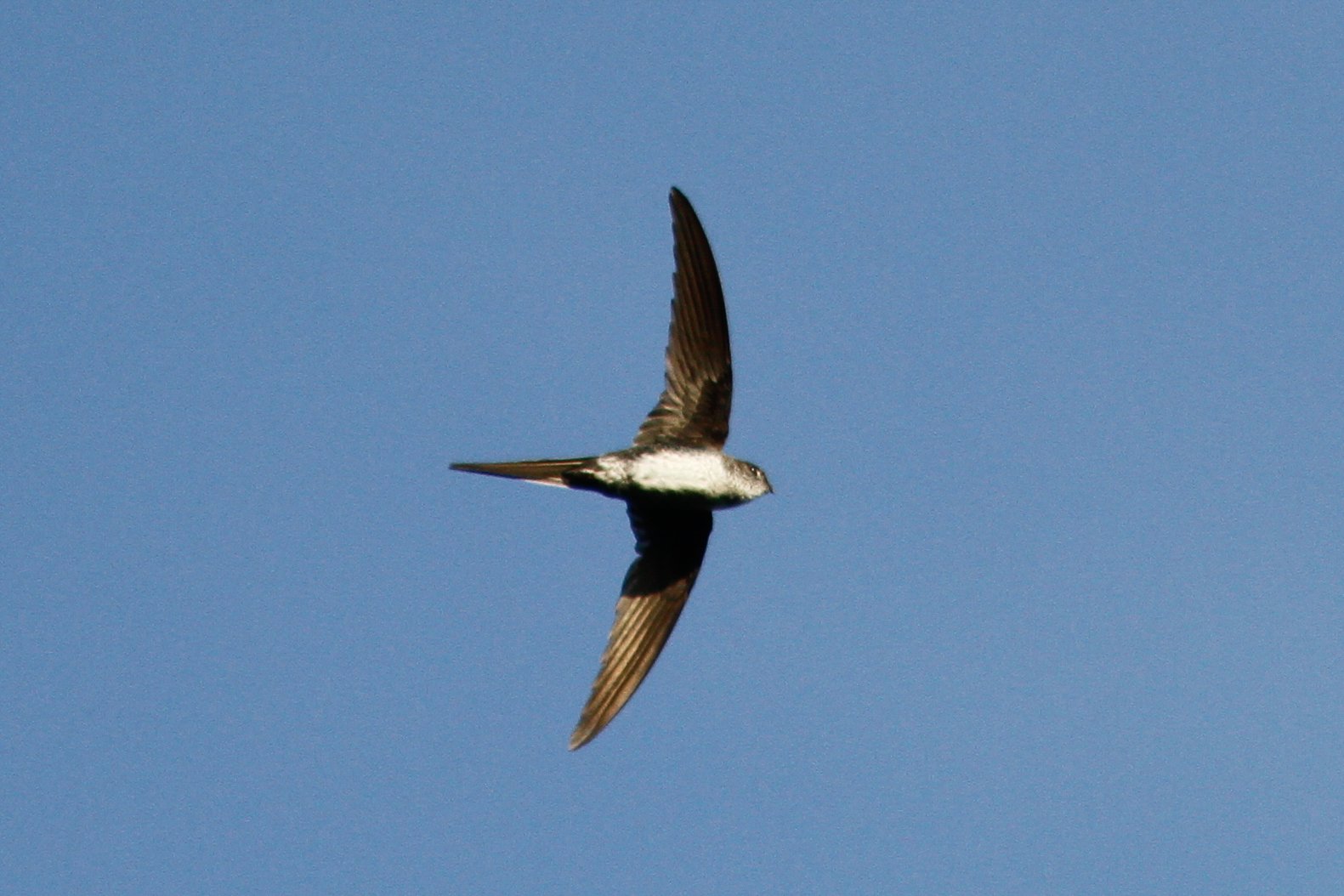
13 cm, but lightly built, with long, narrow wings and a long, deeply forked tail that is usually held closed, projecting behind the bird as a thin spike. The upperparts are blackish brown with a greenish gloss and narrow pale feather edges. The cheeks are grey-brown, the underparts dirty white with brown spotting, giving a scaly pattern. The sexes are alike. In flight it looks like a narrow cross with a pointed tail.
Confusion species
Lesser Swallow-tailed Swift Panyptila cayennensis also has a long, usually closed forked tail, but is larger and black, with a sharply defined white throat and breast and white patches on the rear flanks. The Chaetura swifts in Trinidad, such as Short-tailed Swift Chaetura brachyura and Grey-rumped Swift Chaetura cinereiventris, are stockier, with a short, rounded tail and dark underparts. Swallows have broader wings and a gliding flight.
Habitat
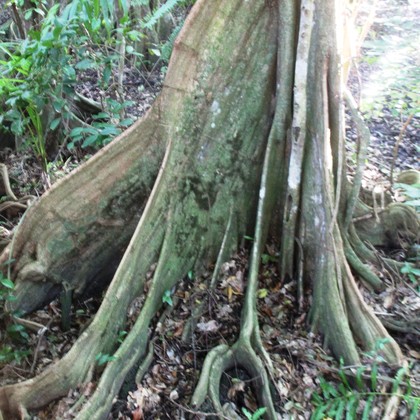
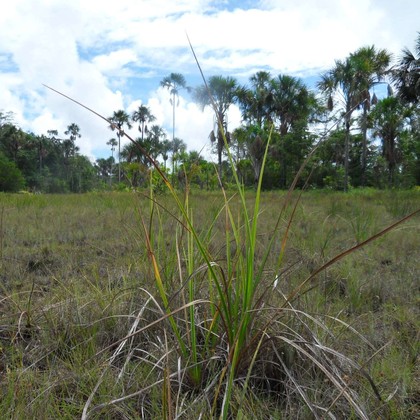
Lowlands with palms: palm swamps and wet savannas with moriche palms, flooded grasslands, riverine forest and rainforest edges, and also villages and plantations with palms. It usually hunts small insects low over the open ground around the palms. The nest is an untidy, elongated clump of feathers, glued together with saliva and attached to the underside of a dead palm frond.
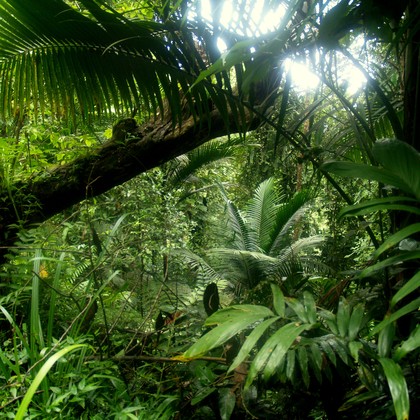
Where the bird is most at home, classified by the vegetation types of the Caribbean.


Range and movements
In the region only in Trinidad, where it is locally common in the lowlands, especially in the east and centre of the island. Not known as a resident in Tobago. Outside the region in northern South America: Venezuela, Colombia, the Guianas, Amazonian Brazil, Ecuador, Peru and Bolivia.
- Resident
- dark = core range, pale = thinly spread
How and when to look
Best seen at stands of moriche palms, as in the Aripo Savanna and along the edges of Nariva Swamp, and at palms in open lowland country. The birds often fly low and restlessly around the palm crowns and are most active early in the morning and towards dusk.
Conservation status
Not threatened. The species has a very large range and is locally common. It depends on palms; the loss of palm swamps through drainage and clearance may cause local declines.
Scientific name
Tachornis squamata | (Cassin, 1853)
Cassin described the species in 1853 as Cypselus squamatus; because it was later moved to another genus, the author and year stand in brackets. The genus Tachornis was introduced in 1847 by Gosse. Tachornis is Greek, from takhus 'fast' and ornis 'bird': 'fast bird'. squamata is Latin for 'scaly', after the scaly pattern of pale feather fringes. The specimen the first description was based on came from Guyana.