All species › Passerines › Vireos › Flat-billed Vireo
Flat-billed Vireo | Vireo nanus
Platsnavelvireo | Vireo de La Española
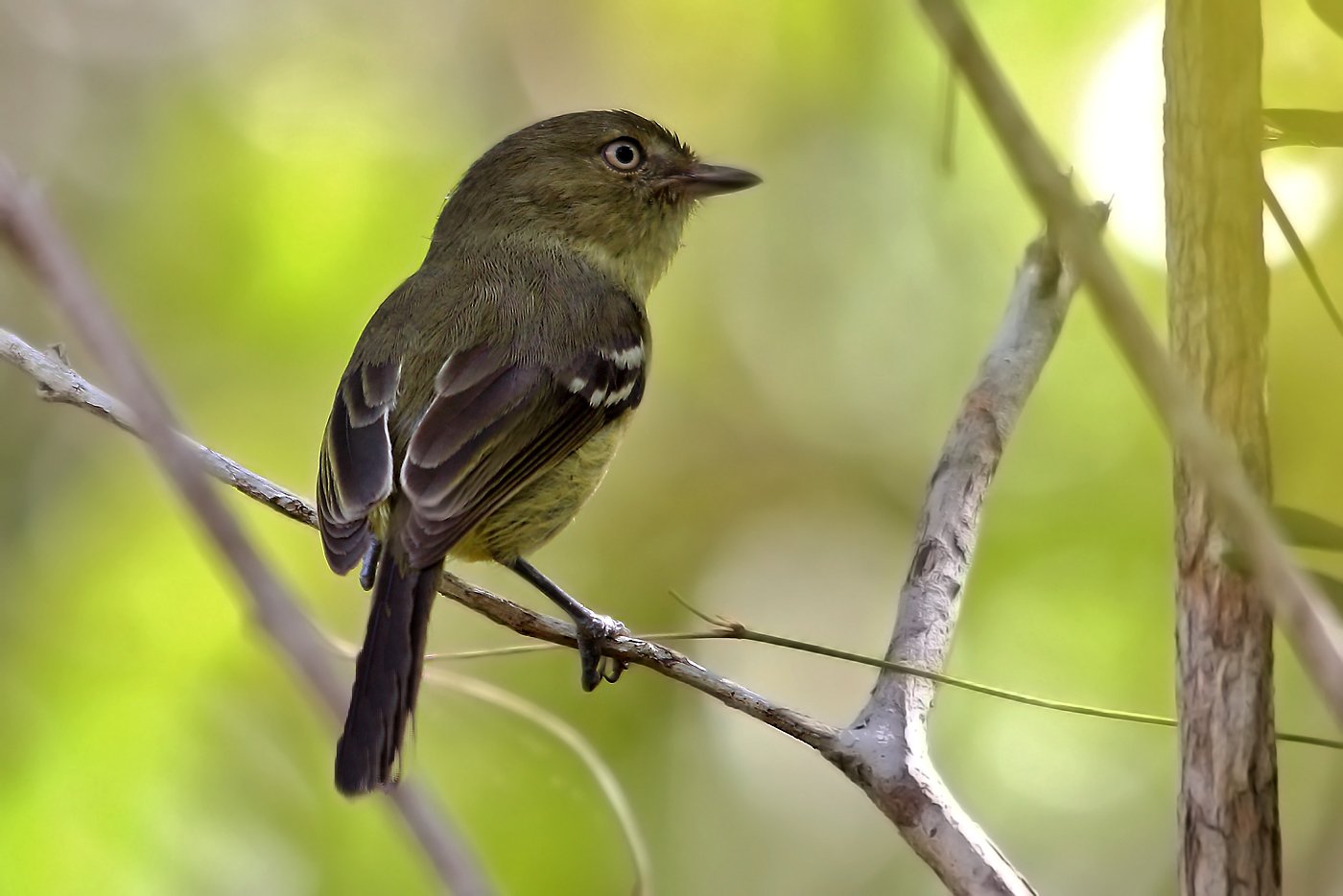
The Flat-billed Vireo is a small vireo found only on Hispaniola and Gonâve Island. It is named after its broad, flat, triangular bill, an unusual shape among vireos. It is a bird of dry scrub in the lower parts of the island, with a patchy distribution around the coasts.
Voice
The song is a rapid, high, chattering weet-weet-weet-weet, often repeated. There is also a harsh scolding note.
Recording: Ross Gallardy — CC BY-NC-SA 4.0 · converted to mono · xeno-canto
Identification
12–13 cm, small, with a relatively long tail. Forehead, crown and nape are greenish grey, the cheeks dark grey, with a dull olive-yellow eye-ring. The upperparts are greenish grey; the wing coverts are blackish grey with off-white tips forming two wing bars. The tail is dull blackish grey with whitish tips to the outer feathers. Throat and breast are greyish yellow, belly and undertail brighter yellow. The bill is broad and flat, with a dark upper and pale pinkish lower mandible. The iris is white to grey and the legs blue-grey. The sexes are alike.
Confusion species
Thick-billed Vireo Vireo crassirostris occurs within Hispaniola only on Île de la Tortue; it has a dark iris, a yellow supraloral line and no white tail tips. Black-whiskered Vireo Vireo altiloquus is larger, without wing bars, with a white supercilium and a dark malar stripe. Green-tailed Warbler Microligea palustris has a thin, pointed bill, a grey head and a red iris, and lacks wing bars.
Habitat
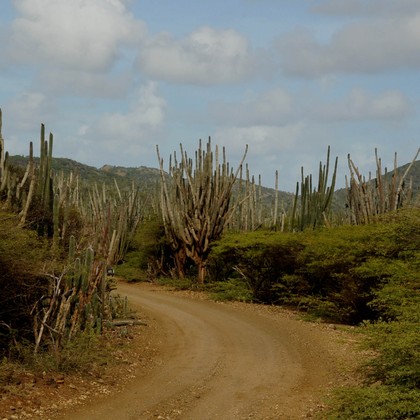
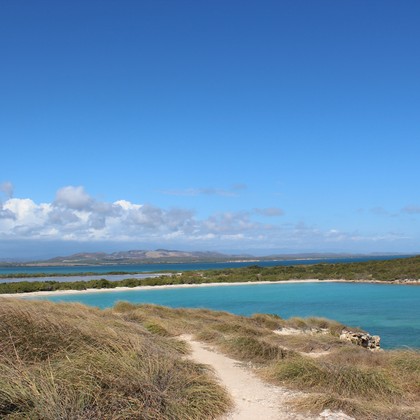
Mainly semi-arid scrub and thorn scrub, dry lowland forest and coastal scrub; to a lesser extent moister forest in the hills. From sea level to about 1,200 m. It searches dense, low vegetation for insects, often staying hidden.
Where the bird is most at home, classified by the vegetation types of the Caribbean.



Range and movements
Only on Hispaniola, in both Haiti and the Dominican Republic, and on Gonâve Island. The distribution is patchy and lies mainly around the edges of the island: the main populations are along the north and west coasts and in the Neiba Valley in the south-west of the Dominican Republic. The species does not occur outside Hispaniola.
- Resident
- dark = core range, pale = thinly spread
How and when to look
Best chances are in the dry scrub of the south-western Dominican Republic, for example around the Neiba Valley. The repeated high song gives the bird away; after that, patience is needed to see it in the dense bushes. A small vireo with a white iris and white tail tips on Hispaniola is this species.
Conservation status
Not threatened, but local and uncommon. The species has lost much habitat in recent decades through clearance of dry forest and scrub for farming and charcoal.
Scientific name
Vireo nanus | (Lawrence, 1875)
Lawrence described the species in 1875 as Empidonax nanus; because it was later moved to another genus, the author and year stand in brackets. The genus Vireo was introduced in 1808 by Vieillot. Vireo was used by Latin authors for a small, green, migratory bird, probably the Eurasian golden oriole, though the European greenfinch has also been suggested. nanus is Latin for 'dwarf', after the small size of this vireo. The specimen the first description was based on came from Dominican Republic.