All species › Pelicans, herons and ibises › Ibises and spoonbills › Eurasian Spoonbill
Eurasian Spoonbill | Platalea leucorodia
Lepelaar | Espátula común
The Eurasian Spoonbill is a white spoonbill of Europe, Asia and Africa. Birds from western Europe migrate to West Africa in autumn, and from there an occasional bird has crossed the Atlantic to the Caribbean. Such records are known from Trinidad and Tobago and from several islands of the Lesser Antilles, but remain rare.
Voice
Almost silent, especially away from the breeding grounds. At the colony low grunts and bill clattering.
Recording: Sonothèque ADVL — CC0 · converted to mono · xeno-canto
Identification
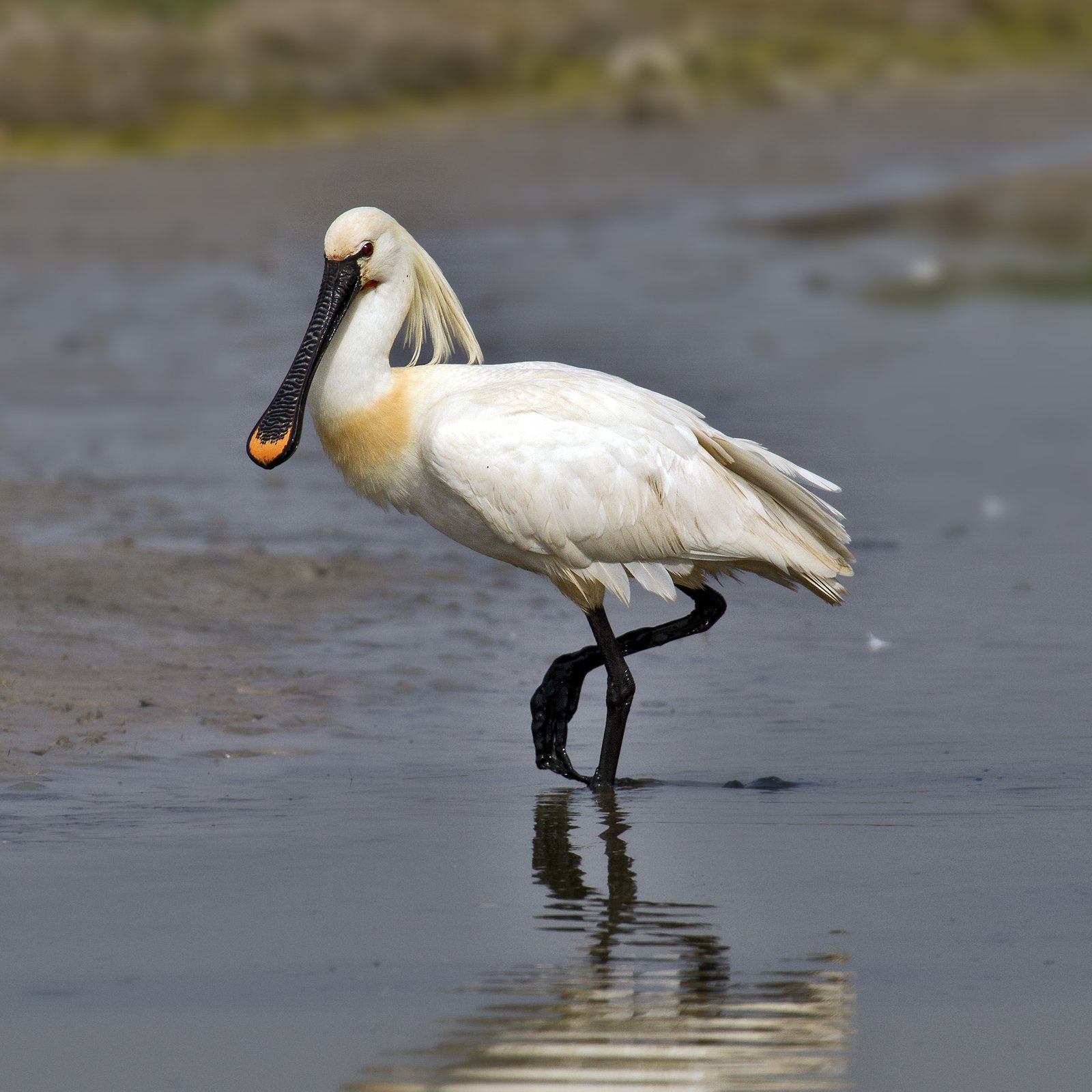
70–95 cm, a large, all-white bird with a long, flat bill that widens at the tip into a spoon. Adults have a black bill with a yellow tip, a bare yellow throat patch and black legs. In the breeding season they carry a long, drooping crest on the back of the head and an ochre-yellow band at the base of the neck. Immatures have a flesh-coloured to pale bill that gradually darkens, no crest, and black tips to the primaries that stand out in flight. It flies with the neck outstretched on rapid beats interspersed with short glides.
Confusion species
Young Roseate Spoonbills Platalea ajaja can be almost white, but always show a pink wash, a barer head and pink to red legs. White herons, such as Great Egret Ardea alba, have a pointed, straight bill and fly with the neck retracted. American White Ibis Eudocimus albus is smaller, with a red, curved bill and red legs. Wood Stork Mycteria americana is larger, with a dark bare head, a heavy, curved bill and much black in the wing.
Habitat
In the region mainly on tidal mud, in shallow lagoons and salt pans, by mangroves and in freshwater marshes, often with herons. It feeds while wading in shallow water, sweeping the bill from side to side for small fish, shrimps and aquatic insects.
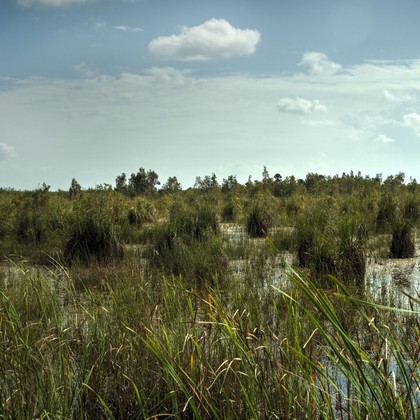
Where the bird is most at home, classified by the vegetation types of the Caribbean.



Range and movements
Records are known from Trinidad and Tobago, Barbados, Saint Lucia, Martinique and Guadeloupe; there are no records from the Greater Antilles or the north of the region. These involve single birds, sometimes staying for a long time. Outside the region the species breeds patchily in Europe, Asia and North Africa, with the largest western European numbers in the Netherlands and Spain; western European birds winter mainly along the coasts of West Africa.
How and when to look
Any white spoonbill in the Lesser Antilles or on Trinidad and Tobago deserves a second look: bill and leg colour and the lack of pink separate it from a young Roseate Spoonbill. A colour ring may reveal its origin.
Conservation status
Not threatened. In western Europe the species has increased thanks to the protection of breeding sites. In the Caribbean it occurs only as a chance visitor.
Scientific name
Platalea leucorodia | Linnaeus, 1758
Linnaeus described the species in 1758 and placed it straight away in the genus where it still stands. He introduced the genus Platalea in that same work. Platalea is the Latin word for the spoonbill, going back to Greek platus 'broad, flat', after the bill. leucorodia comes from Greek leukerōdios 'spoonbill', formed from leukos 'white' and erōdios 'heron'. The specimen the first description was based on came from Sweden.