All species › Passerines › New World blackbirds › Cuban Blackbird
Cuban Blackbird | Ptiloxena atroviolacea
Cubaanse zwarte troepiaal | Totí
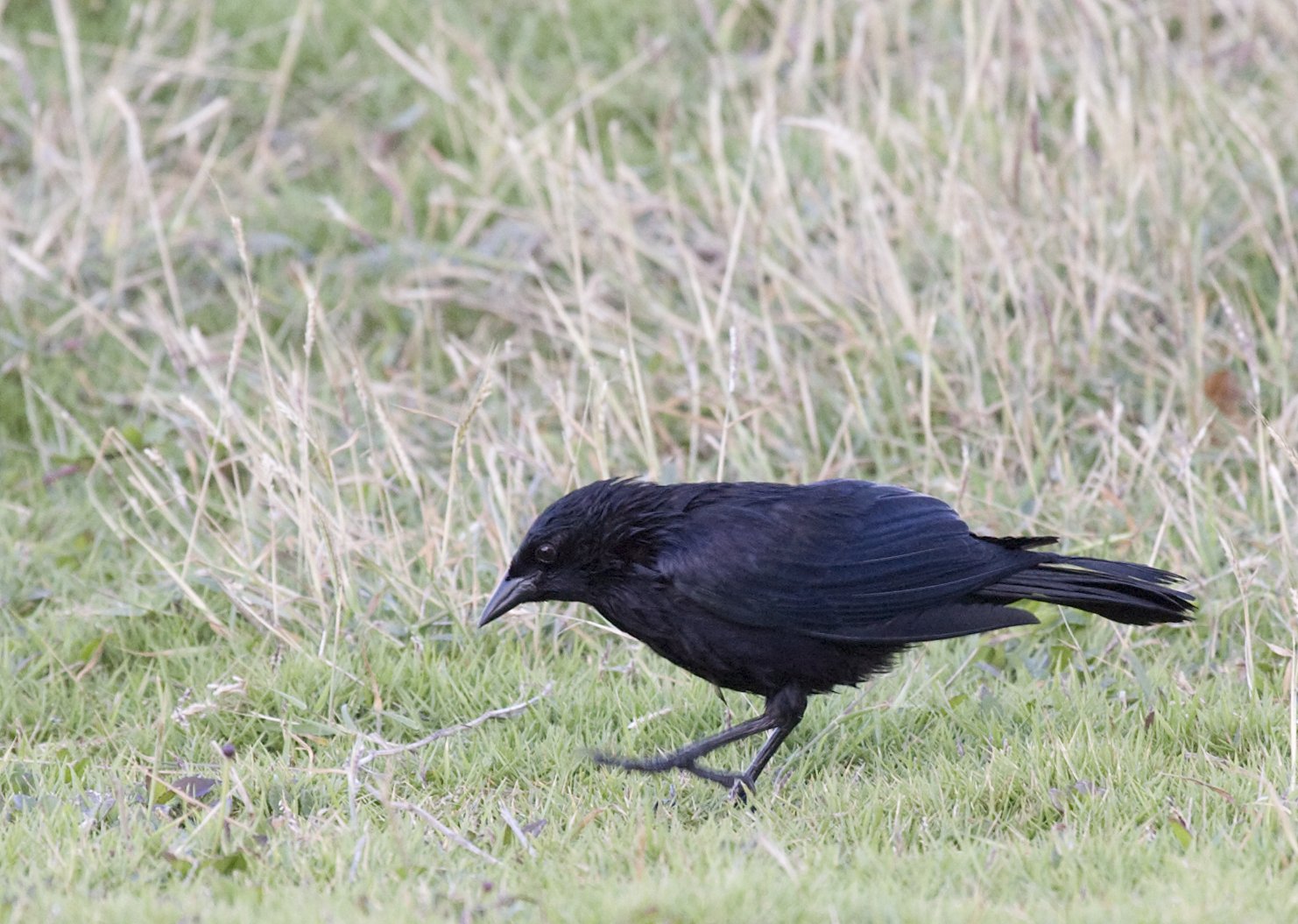
The Cuban Blackbird is one of Cuba's commonest endemics, known on the island as totí. It lives in noisy groups in forest, farmland and villages and is often one of the first birds visitors see. It forms a genus of its own, Ptiloxena.
Voice
A loud, repeated, metallic tee-o, which gives the name totí, and series such as chok-chok-chok, lee-lee-lee. Groups keep up a varied chatter.
Recording: FREDERIC Lionel — CC BY-NC-SA 4.0 · converted to mono · xeno-canto
Identification
25–28 cm, sturdy, with a strong, pointed black bill, a medium-length square tail and black legs. The male is entirely black with a blue and purple gloss on the upperparts and a greenish gloss on the wings. The female is similar but less glossy. The iris is dark brown in both sexes. Juveniles are a duller brownish black, without gloss.
Confusion species
Greater Antillean Grackle Quiscalus niger, called chinchilín in Cuba, is slimmer, with a yellow iris and a long, keel-shaped tail; the Cuban Blackbird has a dark eye and a flat tail. Shiny Cowbird Molothrus bonariensis is smaller, with a short, conical bill. Tawny-shouldered Blackbird Agelaius humeralis is smaller and slimmer, with a tawny shoulder patch often visible only in flight.
Habitat
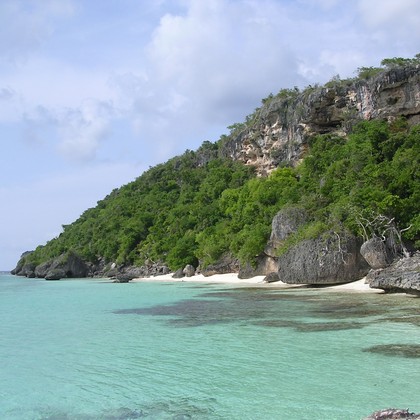
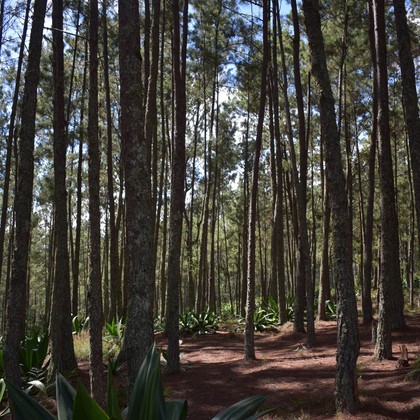
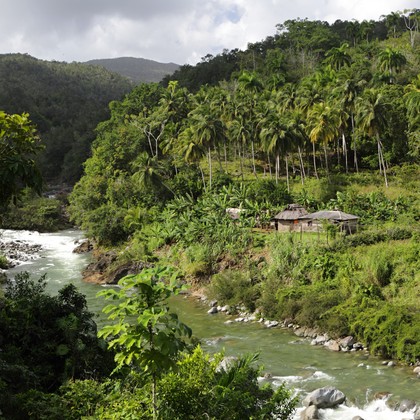
Almost every wooded landscape, from dry lowland and coastal forest to semi-evergreen and pine forest, as well as farmland, palm savanna, gardens, villages and town edges, from sea level to about 950 m. It eats insects, small vertebrates, seeds and fruit, both on the ground and in trees. The nest is a cup of plant fibres, hair and feathers built by both parents.
Where the bird is most at home, classified by the vegetation types of the Caribbean.




Range and movements
Only on the main island of Cuba and on a number of cays off the north and south coasts. Reports from the Isla de la Juventud are not backed by photographs or sound recordings. It does not occur outside Cuba.
- Resident
- dark = core range, pale = thinly spread
How and when to look
Found almost everywhere in Cuba, for example around Playa Larga and the Zapata swamps, in Viñales and at farms and hotels. The dark eye and flat tail separate it from the chinchilín, with which it often occurs.
Conservation status
Not threatened. The species is numerous and has adapted well to farmland and settlements.
Scientific name
Ptiloxena atroviolacea | (d'Orbigny, ACVMD, 1839) (GBIF: Dives atroviolaceus)
D'Orbigny, ACVMD described the species in 1839 as Quiscalus atroviolaceus; because it was later moved to another genus, the author and year stand in brackets. The genus Ptiloxena was introduced in 1892 by Chapman. Ptiloxena is Greek, from ptilon 'feather' and xenos 'strange': 'strange-feathered'. atroviolacea is Latin for 'dark violet', from ater 'black' and violaceus 'violet-coloured', after the violet gloss. The specimen the first description was based on came from Cuba.