All species › Passerines › New World blackbirds › Boat-tailed Grackle
Boat-tailed Grackle | Quiscalus major
Bootstaarttroepiaal | Zanate marismeño
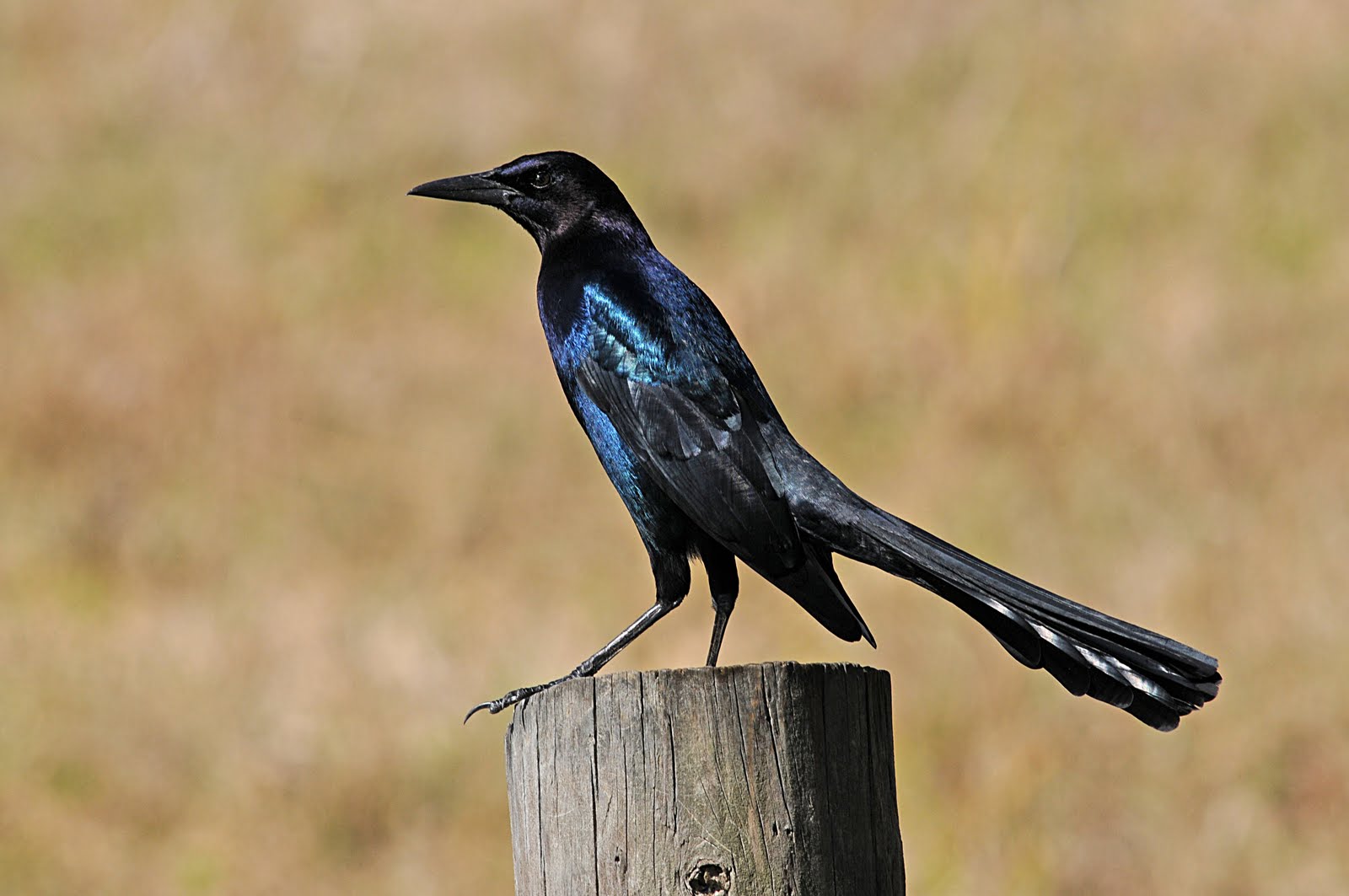
The Boat-tailed Grackle is a large grackle of the coasts of the south-eastern United States, including all of Florida. It is missing from the classic Caribbean literature, but since the start of this century it has been seen on New Providence in the Bahamas, and reports there have increased sharply since 2015. How the birds arrived has not been established.
Voice
A loud, rasping jeeb and various grating, chattering and squeaky notes; rattling series krrt-krrt-krrt in display. Unlike Great-tailed Grackle it lacks clear whistles and clacking sounds.
Recording: Bobby Wilcox — CC BY-NC-SA 4.0 · converted to mono · xeno-canto
Identification
26–43 cm, with a large difference between the sexes: males 37–43 cm, females 26–33 cm. Long, pointed bill and a long, keel-shaped tail, held in a V by the male. The male is glossy black with a blue-purple sheen; the female is warm brown, with a paler, buffy throat and breast and darker wings and tail. Birds from Florida, the likely source of the Bahamas birds, have a dark iris; elsewhere in the range the iris is yellow. The head is fairly rounded.
Confusion species
Great-tailed Grackle Quiscalus mexicanus is very similar but has a flatter crown, a yellow iris and an even longer tail; females are greyer brown with a paler supercilium. Greater Antillean Grackle Quiscalus niger does not occur in the Bahamas, is much smaller and has a yellow iris. Brown-headed Cowbird Molothrus ater and Shiny Cowbird Molothrus bonariensis are small, with short, conical bills.
Habitat
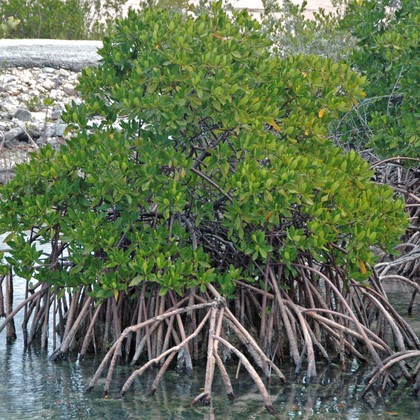
In its native range salt marshes, coastal marshes and the shores of lakes and canals, but also car parks, parks and town centres. On New Providence mainly in and around Nassau: parks, waterfronts, harbours and shopping centres. It eats almost anything: insects, crabs, small fish, seeds and scraps. It nests in colonies in reeds, shrubs and trees over or near water.
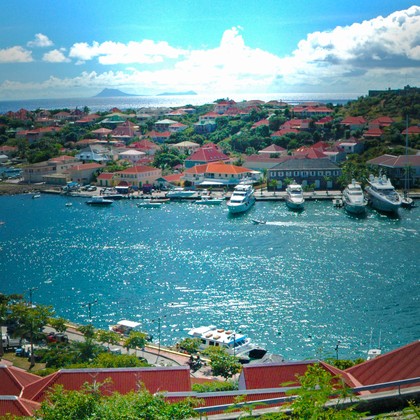
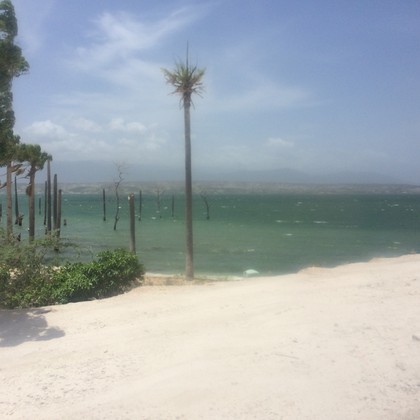
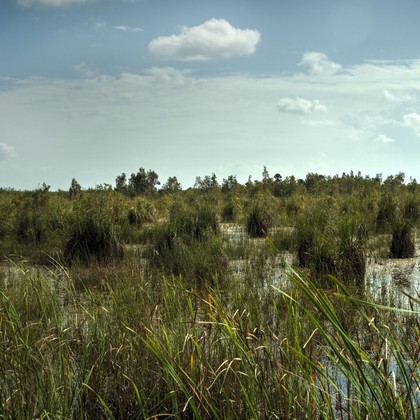
Where the bird is most at home, classified by the vegetation types of the Caribbean.

Range and movements
On New Providence, where most reports date from 2016 onwards and birds are present all year; single reports from Grand Bahama and Eleuthera. Reports from Sint Eustatius probably refer to Carib Grackles. Outside the region along the coasts of the United States from New York to eastern Texas and throughout Florida.
- Resident
- dark = core range, pale = thinly spread
How and when to look
In Nassau at waterfronts, parks and large car parks. A male is identified by its size and V-shaped tail. An established Boat-tailed Grackle in the Bahamas is new for the region, so records with photographs and sound recordings are valuable.
Conservation status
Not threatened. Common in its native range and spreading along the Atlantic coast. Its status on New Providence deserves further study.
Scientific name
Quiscalus major | Vieillot, 1819
Vieillot described the species in 1819 and placed it straight away in the genus where it still stands. The genus Quiscalus was introduced in 1816 by Vieillot. Quiscalus goes back to Linnaeus's species name Gracula quiscula; where he got the word is uncertain, possibly from Taíno quisqueya, a name for Hispaniola. major is Latin for 'greater', after its size compared with related grackles. The specimen the first description was based on came from New Orleans, Louisiana.