All species › Passerines › Vireos › Blue-headed Vireo
Blue-headed Vireo | Vireo solitarius
Brilvireo | Vireo solitario
The Blue-headed Vireo breeds in mixed forests in Canada and the eastern United States and winters mainly in the south-eastern United States, Mexico and northern Central America. The Caribbean lies at the edge of that winter range: only in the north-west, in the Bahamas, Cuba and the Cayman Islands, do a few birds turn up each year. Until 1997 it was treated together with the western Cassin's and Plumbeous Vireos as a single species, Solitary Vireo.
Voice
In winter mainly a hoarse, rattling scold. The song is an unhurried series of short, clear phrases with pauses between them, similar to Black-whiskered Vireo but softer and higher; rarely heard in winter quarters.
Recording: Jim Berry — CC BY-NC-SA 4.0 · shortened to the first 60 s, mono · xeno-canto
Identification
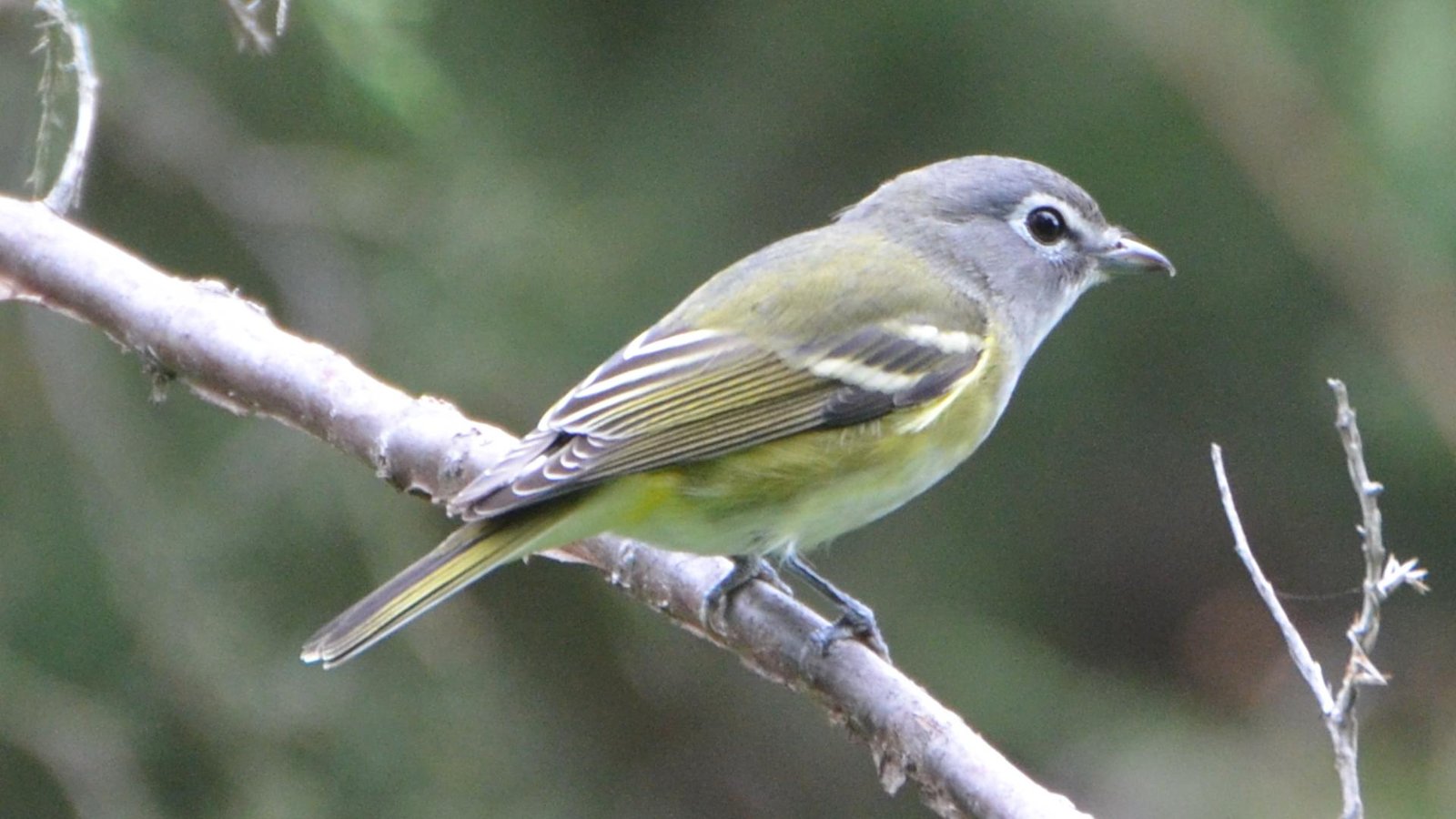
12.5–15 cm. The head is blue-grey with distinctive white spectacles formed by the eye-ring and a supraloral line, sharply contrasting with the dark lores. The back is olive-green and the throat bright white. The underparts are white with yellow flanks. The wings are dark with two clear yellowish-white wing bars and yellowish edges to the flight feathers. The iris is dark and the bill fairly thick. The sexes are nearly alike; first-winter birds often have a slightly greener head.
Confusion species
Yellow-throated Vireo Vireo flavifrons has a similar pattern of spectacles and wing bars, but a yellow throat and breast and an olive-green head. White-eyed Vireo Vireo griseus has yellow spectacles, a greener head and, in adults, a white iris. Cuban Vireo Vireo gundlachii is brownish grey, with faint pale spectacles and no blue-grey head.
Habitat
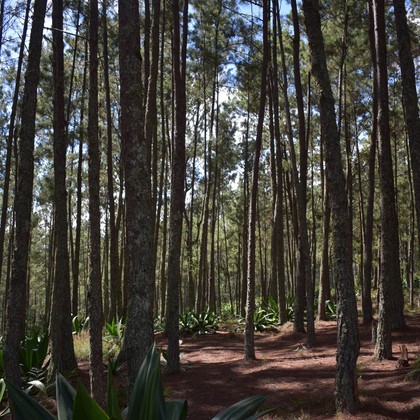
In the Caribbean mixed and pine forest, dry and moist broadleaf forest and coastal woodland, usually in the mid-storey and canopy. It searches branches and leaves unhurriedly for insects and also eats berries in winter. It often joins mixed flocks of warblers.
Where the bird is most at home, classified by the vegetation types of the Caribbean.



Range and movements
A rare winter visitor to the Bahamas, especially the northern islands, Cuba and the Cayman Islands, mostly from October to March. There are hardly any records from other islands. Breeds from Canada to the Appalachians and winters from the south-eastern United States to Mexico and northern Central America.
- Winter visitor (c. Apr–Sep)
- Passage (Mar–Apr, Oct–Nov)
- dark = core range, pale = thinly spread
How and when to look
Best chances are in the pine forests of the northern Bahamas and western Cuba, among flocks of migrants. In a vireo with a grey head and white throat, the white spectacles and yellow flanks are decisive.
Conservation status
Not threatened. The population is large and stable to increasing.
Scientific name
Vireo solitarius | (Wilson, 1810)
Wilson described the species in 1810 as Muscicapa solitaria; because it was later moved to another genus, the author and year stand in brackets. The genus Vireo was introduced in 1808 by Vieillot. Vireo was used by Latin authors for a small, green, migratory bird, probably the Eurasian golden oriole, though the European greenfinch has also been suggested. solitarius is Latin for 'solitary', after Wilson's impression of a retiring bird living alone in the woods. The specimen the first description was based on came from near Philadelphia, Pennsylvania (USA).