All species › Parrots › Parrots › Blue-and-yellow Macaw
Blue-and-yellow Macaw | Ara ararauna
Blauwgele ara | Guacamayo azuliamarillo
The Blue-and-yellow Macaw is one of the largest parrots in the Americas: blue above, golden yellow below, with a long pointed tail. In the Caribbean its only native population was on Trinidad, in the palm swamp of Nariva. That population had all but disappeared by the 1970s; between 1999 and 2003 wild-caught birds from Guyana were released there. Puerto Rico also holds a small feral breeding population.
Voice
A loud, raw, grating raa-aa or kraaah, mainly in flight and audible at long range. Pairs often call alternately. At roosts and while feeding also shorter growling and cackling notes.
Recording: JAYRSON ARAUJO DE OLIVEIRA — CC BY-NC-SA 4.0 · converted to mono · xeno-canto
Identification
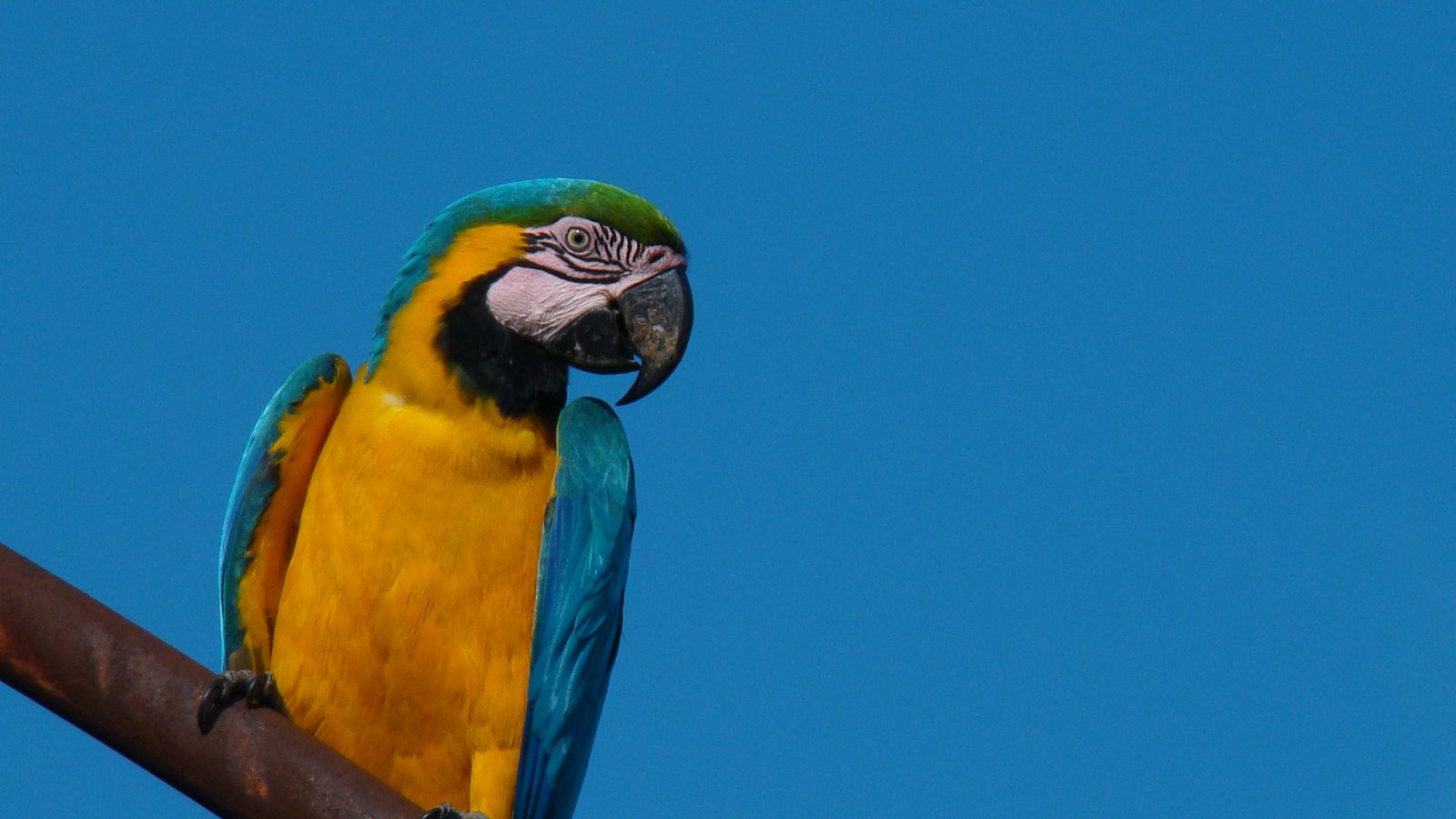
81–91 cm, much of it tail. Upperparts, wings and upper tail are bright blue, the forehead green. Throat, breast and belly are golden yellow, the underside of wings and tail yellowish olive. The face is bare and white, with thin lines of black feathers; below the chin is a black throat band. The heavy, curved bill is black. The sexes are alike. Flight is on slow, shallow beats, usually in pairs or small groups, the long tail trailing like a spike.
Confusion species
No other macaw in the region is blue and yellow. Red-and-green Macaw Ara chloropterus is as large but mainly red. Red-bellied Macaw Orthopsittaca manilatus, which shares the palm swamp on Trinidad, is much smaller and green, with a yellow face and a red belly patch. Escaped individuals of other large macaws and hybrids occur.
Habitat
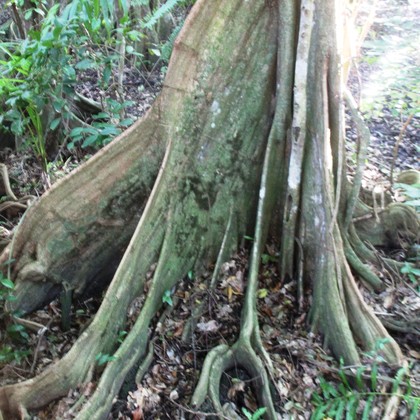
On Trinidad the swamp forest and moriche palms of Nariva, where the birds nest in dead palm trunks and feed on palm fruit. On Puerto Rico urban areas with parks, large gardens and forest remnants. It eats seeds, nuts, fruit and flowers; on the mainland it also eats soil at clay banks along rivers.
Where the bird is most at home, classified by the vegetation types of the Caribbean.



Range and movements
Trinidad: native in Nariva Swamp, all but extirpated in the twentieth century by trapping and habitat loss; the released Guyanese birds breed there again, but the IUCN still formally regards the species as extirpated on Trinidad. Puerto Rico: feral breeding population of escaped cage birds, mainly in the San Juan metropolitan area (San Juan, Guaynabo, Bayamón, Trujillo Alto). Scattered records elsewhere in the region are escapes. Outside the region from eastern Panama and Colombia through Venezuela, the Guianas and the Amazon basin to Bolivia, Paraguay and southern Brazil; a feral population lives in Florida.
- Resident
- dark = core range, pale = thinly spread
How and when to look
On Trinidad in the morning and late afternoon over Nariva Swamp, when birds fly between roosts and feeding areas. On Puerto Rico in the university botanical garden at Río Piedras and in Julio Enrique Monagas National Park in Bayamón. The call usually gives the birds away before their silhouette does.
Conservation status
Not threatened globally, but declining through trapping for trade and habitat loss. On Trinidad its survival depends on protection of Nariva and on curbing poaching. The Puerto Rican birds are an alien population.
Scientific name
Ara ararauna | (Linnaeus, 1758)
Linnaeus described the species in 1758 as Psittacus Ararauna; because it was later moved to another genus, the author and year stand in brackets. The genus Ara was introduced in 1799 by De Lacépède. Ara comes from Tupí, where ará is an onomatopoeic name for the macaws. ararauna is the Tupí name for this macaw, probably from ará 'macaw' and una 'dark'. The specimen the first description was based on came from Pernambuco, Brazil.