All species › Passerines › New World warblers › Black-throated Green Warbler
Black-throated Green Warbler | Setophaga virens
Gele zwartkeelzanger | Reinita dorsiverde
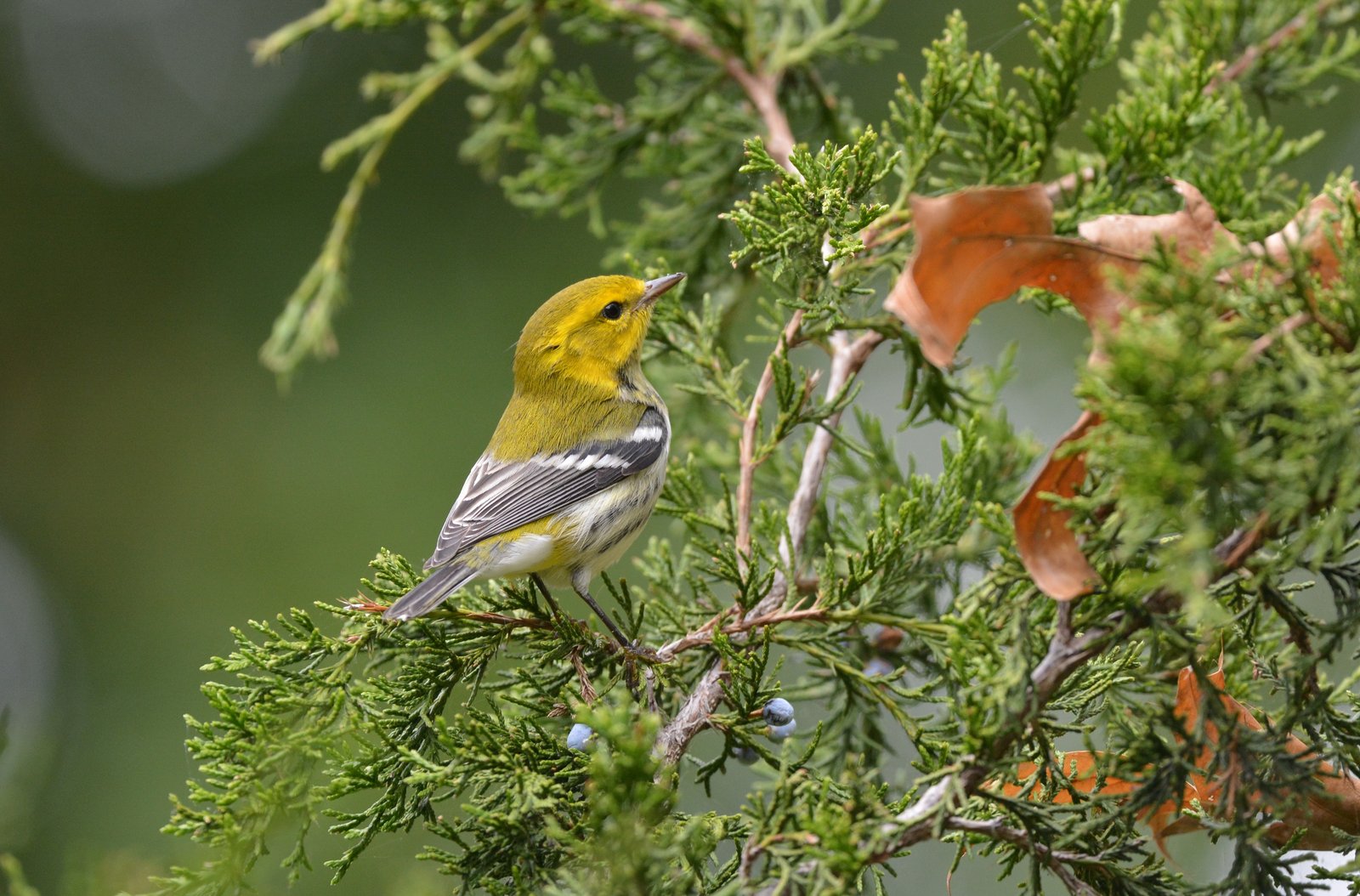
The Black-throated Green Warbler is an olive-green wood-warbler with a yellow face, breeding in coniferous and mixed forest in Canada and the eastern United States. In the Greater Antilles and the Bahamas it is one of the regular winter visitors to forest, especially in the mountains, where it moves with mixed flocks of warblers and vireos.
Voice
The call is a soft, sharp tsip. The song, also heard on the islands in spring, is buzzy and lazy, in two types: zee-zee-zoo-zee and zoo-zee-zoo-zoo-zee.
Recording: Bobby Wilcox — CC BY-NC-SA 4.0 · converted to mono · xeno-canto
Identification
11–12 cm, with a fine, pointed bill. Crown and back olive-green, the face bright yellow with a faint olive eye-line and cheek border. Two white wing bars; the belly is white, with a yellow wash near the vent, and the outer tail feathers are largely white. The male has a black throat and upper breast and black streaks on the flanks. The female has a yellow or whitish throat with a black patch or band on the breast. Young birds in autumn are duller, with little black on the throat.
Confusion species
Townsend's Warbler Setophaga townsendi, a very rare vagrant, has a dark cheek patch within a yellow face, a streaked back and a yellow breast. Female and young Blackburnian Warbler Setophaga fusca have a dark cheek patch, streaked upperparts and a yellow to orange-yellow throat. Olive-capped Warbler Setophaga pityophila of Cuba and the Bahamas has an olive-yellow crown, a yellow throat and no black on the breast.
Habitat
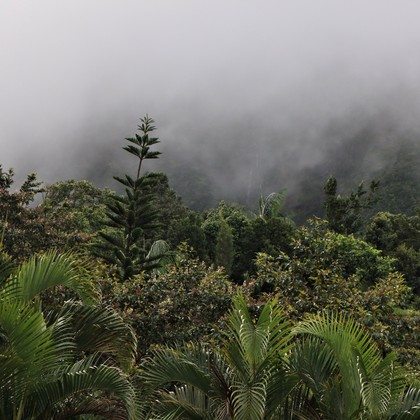
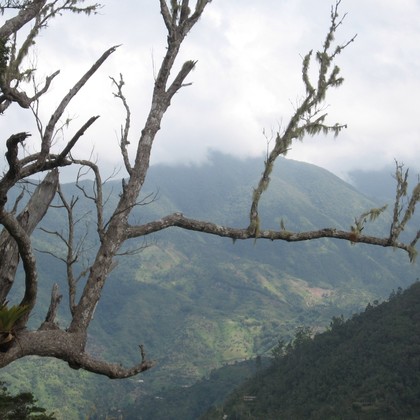
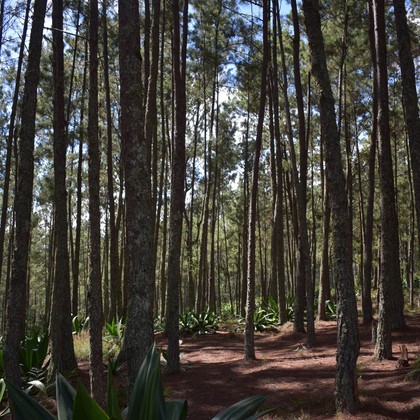
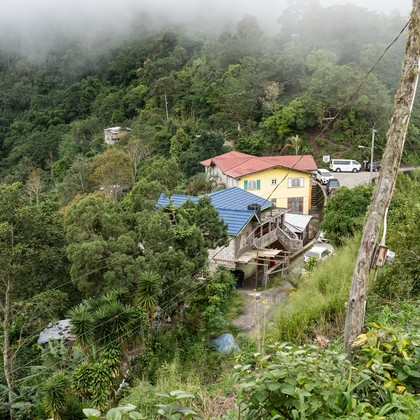
In the region almost all forest types, but especially montane rainforest, cloud forest and pine forest in the mountains of Cuba, Jamaica and Hispaniola; also moist and semi-evergreen forest, limestone forest and dry lowland forest, and shaded coffee plantations. It forages actively in the middle and upper levels for insects and spiders, often on outer branches, and joins mixed flocks.
Where the bird is most at home, classified by the vegetation types of the Caribbean.



Range and movements
A common winter visitor in the Bahamas, Cuba, the Cayman Islands, Jamaica and Hispaniola (Haiti and the Dominican Republic); scarcer in Puerto Rico, the Virgin Islands and the Turks and Caicos Islands. Rare in the Lesser Antilles, with most records from Guadeloupe and Antigua, and in the ABC Islands. Breeds from southern Canada and the north-eastern United States south along the Appalachians, and winters from south Texas and south Florida through Mexico and Central America to Panama, and in the Greater Antilles. The map shows a few year-round and breeding-season records in the region; the species does not breed there.
- Resident
- Summer visitor (c. Oct–Mar)
- Winter visitor (c. Apr–Sep)
- Passage (Mar–Apr, Oct–Nov)
- dark = core range, pale = thinly spread
How and when to look
Mixed flocks in the montane forest of Jamaica (Blue Mountains), the Cordillera Central of the Dominican Republic or Topes de Collantes in Cuba almost always hold one or more Black-throated Greens in winter. The yellow face stands out when the bird peers down through the foliage.
Conservation status
Not threatened. The breeding population is large and broadly stable. Deforestation in the mountains of Hispaniola and elsewhere in the wintering range reduces its habitat.
Scientific name
Setophaga virens | (Gmelin, 1789)
Gmelin described the species in 1789 as Motacilla virens; because it was later moved to another genus, the author and year stand in brackets. The genus Setophaga was introduced in 1827 by Swainson. Setophaga is Greek, from sēs, sētos 'moth' and -phagos '-eating': 'moth-eater'. virens is Latin for 'green', after the olive-green upperparts. The specimen the first description was based on came from Philadelphia, Pennsylvania (USA).