All species › Waders, gulls and terns › Gulls and terns › Black Skimmer
Black Skimmer | Rynchops niger
Amerikaanse schaarbek | Rayador americano
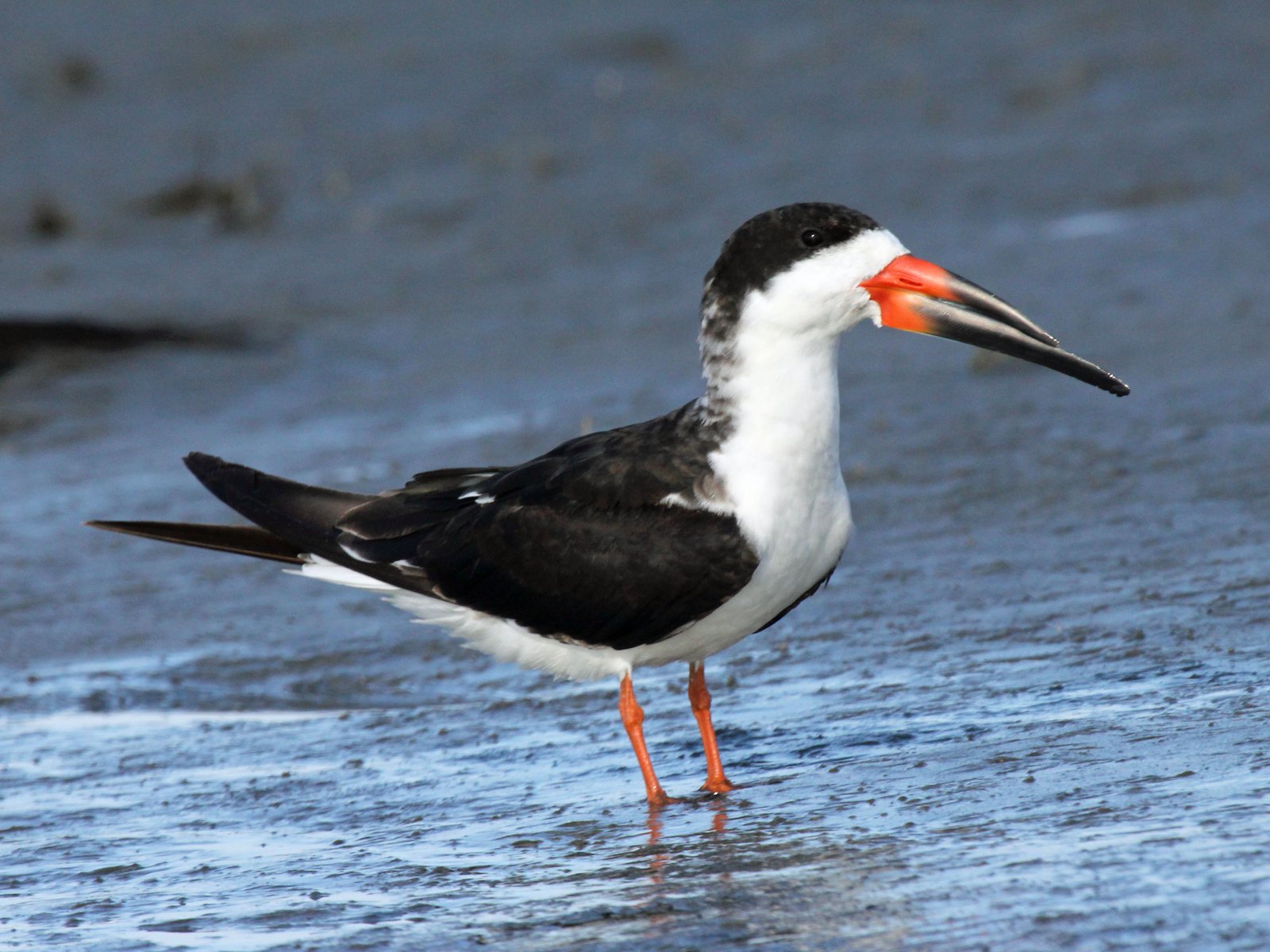
The Black Skimmer is the only skimmer in the Americas and one of the few birds whose lower mandible is markedly longer than the upper. It flies low over calm water, slicing the surface with the lower mandible; when this touches a small fish, the bill snaps shut. It does not breed in the Caribbean, but flocks rest and feed on lagoons, sandbars and river mouths.
Voice
A nasal, barking kaup or kak-kak-kak, often in chorus from a resting or flushed flock, also at night.
Recording: Manuel Grosselet — CC BY-NC-SA 4.0 · converted to mono · xeno-canto
Identification
40–50 cm, with long, narrow wings and a short, slightly forked tail. Upperparts black, forehead and underparts white. The bill is long, laterally compressed and red with a black outer half; the lower mandible projects well beyond the upper. The short legs are red. Males are clearly larger and heavier-billed than females. Outside the breeding season the back is browner and a white band crosses the hindneck. Juveniles are brown with pale fringes above and have a shorter, dull red bill. North American birds (R. n. niger) have a white underwing and a white trailing edge to the wing; the South American R. n. cinerascens, which visits Trinidad, has a darker underwing and less white in the wing.
Confusion species
The bill shape and feeding action rule out confusion. At a distance a resting flock can recall terns such as Royal Tern Thalasseus maximus, which has an orange bill and pale grey back. Laughing Gull Leucophaeus atricilla has a black head in breeding plumage, but a grey back and a short bill.
Habitat
Sheltered lagoons, salt ponds, river mouths, mudflats and sandbars where the water is calm and shallow enough for skimming; on Trinidad also along the mangrove and swamp coast. It feeds mainly at dusk and at night, when the water is calmest. By day birds rest packed together on sandbars and beaches, often lying flat, with terns and gulls.
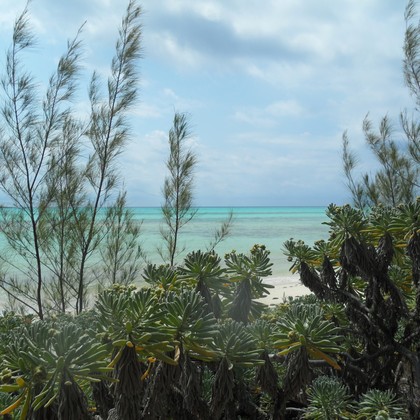
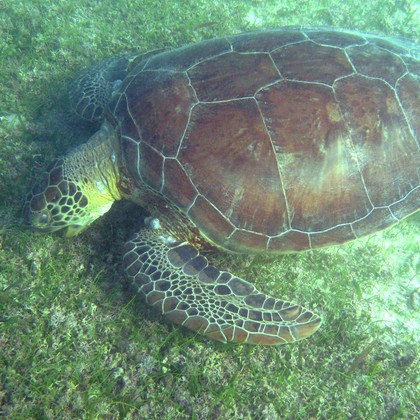
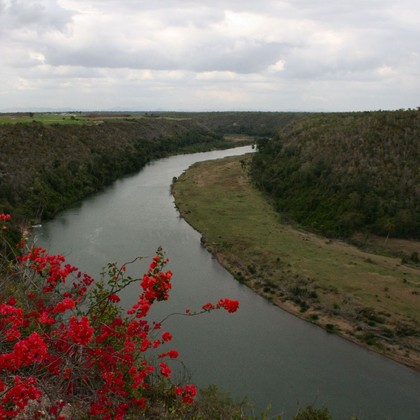
Where the bird is most at home, classified by the vegetation types of the Caribbean.


Range and movements
Present year-round on Trinidad, with the largest flocks on the west and south-west coasts, and on Aruba, Bonaire and Curaçao. Mainly in winter on Cuba, the Bahamas and, more scarcely, Puerto Rico. Rare elsewhere, including Grenada, the Cayman Islands, Jamaica, Hispaniola, Guadeloupe and Barbados. Beyond the region it breeds along the east coast of the United States to Texas, on the Pacific coast from Mexico to Ecuador and along the coasts and large rivers of South America to Argentina.
- Resident
- Summer visitor (c. Oct–Mar)
- Winter visitor (c. Apr–Sep)
- Passage (Mar–Apr, Oct–Nov)
- dark = core range, pale = thinly spread
How and when to look
Best looked for at high tide and towards evening along the Trinidad coast and at the lagoons and salt ponds of the ABC Islands. A resting flock stands out by its low, prone posture and bright red bills; skimming is mostly seen at dusk.
Conservation status
Not threatened. The world population is large, but breeding colonies on beaches and sandbars in North and South America are vulnerable to disturbance by recreation, flooding and predators and have declined regionally.
Scientific name
Rynchops niger | Linnaeus, 1758
Linnaeus described the species in 1758 and placed it straight away in the genus where it still stands. He introduced the genus Rynchops in that same work. Rynchops comes from the Greek rhunkhos, 'bill', and ōps, 'face' — a 'bill-face', for the striking bill with its much longer lower mandible. niger is Latin for 'black' — for the black upperparts. The specimen the first description was based on came from coast of South Carolina, USA.