All species › Passerines › Tanagers › Bicolored Conebill
Bicolored Conebill | Conirostrum bicolor
Tweekleurige spitssnavel | Conirrostro bicolor
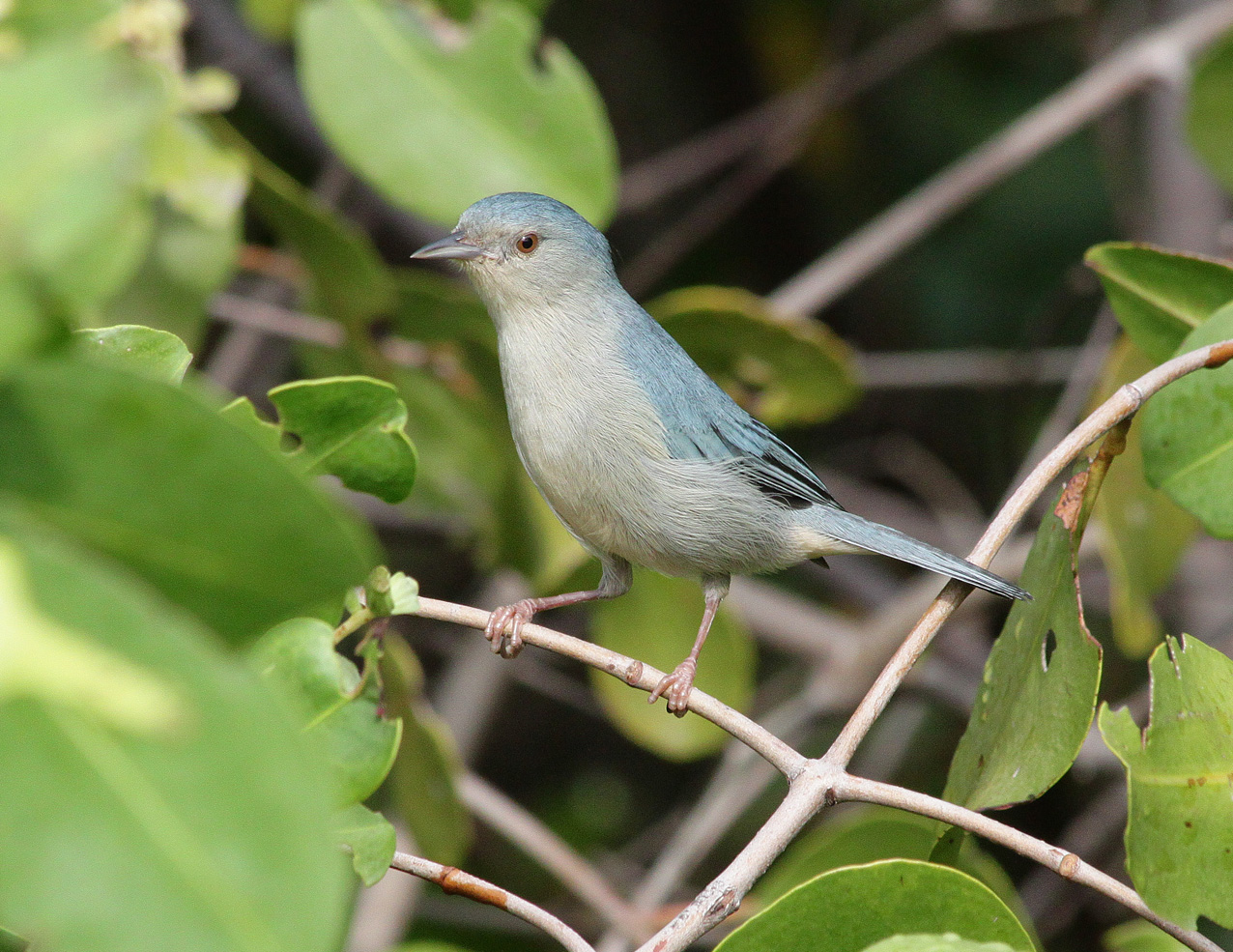
The Bicolored Conebill is a small, inconspicuous tanager that in the region lives almost exclusively in the mangroves of Trinidad. Despite its name it has a fine, pointed bill and behaves more like a warbler than a typical tanager, moving actively among the leaves in search of small insects.
Voice
The call is a thin, high tseep. The song is a soft, rapid series of thin notes that is often lost among the other sounds of the mangrove.
Recording: Marcelo Jordani Feliti — CC BY-NC-SA 4.0 · converted to mono · xeno-canto
Identification
11–12 cm, small, with a short tail and a sharply pointed, slightly conical bill. Adults are grey-blue above and grey with a buff wash below. The primaries are bluish with brown edges. The eye is red, the legs pink. The sexes are alike; the female is sometimes slightly duller. Juveniles are greenish above and pale yellow below, with a dark eye; some birds breed while still in this immature plumage.
Confusion species
Bananaquit Coereba flaveola has a dark head with a white eyebrow, a decurved bill and a yellow breast and rump. Female Blue Dacnis Dacnis cayana is bright green with a bluish head. Mangrove Warbler Setophaga petechia is yellower than a young conebill and has yellow edges to the wing feathers. An adult is readily identified by its plain grey-blue plumage and red eye.
Habitat
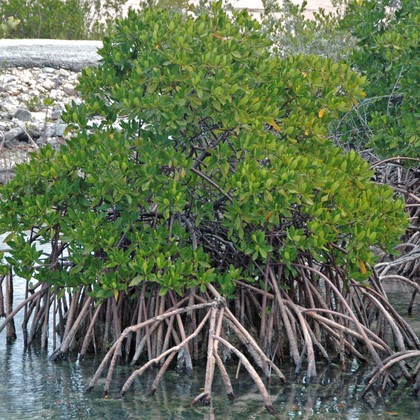
Mangroves and other coastal swamp forest, especially where red and black mangrove grow densely. Outside the region a second population lives on islands in the Amazon, where it uses young riverside vegetation. It forages in pairs or small groups, often with other species, in the canopy and middle storey of the mangrove, taking small insects and other invertebrates.
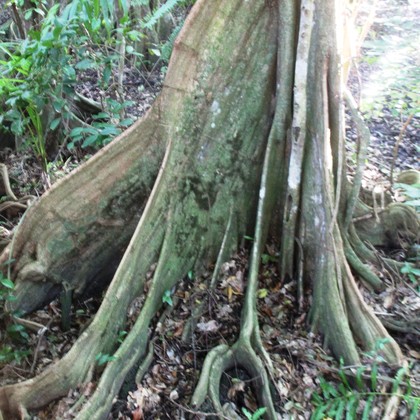
Where the bird is most at home, classified by the vegetation types of the Caribbean.
Range and movements
In the region only on Trinidad, in the mangroves of the west coast, above all the Caroni Swamp; there are also reports from other mangrove areas on the island. It is absent from Tobago. Elsewhere along the coast of northern South America, from Colombia and Venezuela to the Guianas and Brazil, and along the Amazon to north-eastern Peru.
- Resident
- dark = core range, pale = thinly spread
How and when to look
Late-afternoon boat trips through the Caroni Swamp give the best chance, especially along channels where the mangrove grows right to the water. The birds are small and active and often reveal themselves first by their thin call.
Conservation status
Near Threatened. The species depends on mangroves and riverside vegetation and is declining through the clearance, draining and pollution of mangroves along the coast of South America. On Trinidad the Caroni Swamp is protected, but the mangrove there is also under pressure.
Scientific name
Conirostrum bicolor | (Vieillot, 1809)
Vieillot described the species in 1809 as Sylvia bicolor; because it was later moved to another genus, the author and year stand in brackets. The genus Conirostrum was introduced in 1838 by D'Orbigny, ACVMD & de Lafresnaye. Conirostrum is Latin, from conus 'cone' and rostrum 'bill', after the fine, sharply conical bill. bicolor is Latin for 'two-coloured', after the blue-grey upperparts and pale buff underparts. The specimen the first description was based on came from Cayenne, French Guiana (designated later).