All species › Passerines › New World warblers › American Yellow Warbler
American Yellow Warbler | Setophaga aestiva
Gele zanger | Reinita amarilla
The American Yellow Warbler is the migratory, northern half of what was long treated as a single species, the Yellow Warbler. Since the split on the basis of DNA, plumage and song, the breeding birds of North America are listed as American Yellow Warbler Setophaga aestiva and the resident birds of mangroves and islands as Mangrove Warbler Setophaga petechia. In the Caribbean the American Yellow Warbler is only a visitor, and in winter it overlaps with Mangrove Warbler everywhere.
Voice
The call is a full, sharp chip; the flight call a thin, slightly buzzy zee. The song, a bright series of whistles with a rising ending, rendered as sweet sweet sweet I'm so sweet, is seldom heard in winter.
Recording: Ray Cooke — CC BY-NC 4.0 · shortened to the first 60 s, mono · xeno-canto
Identification
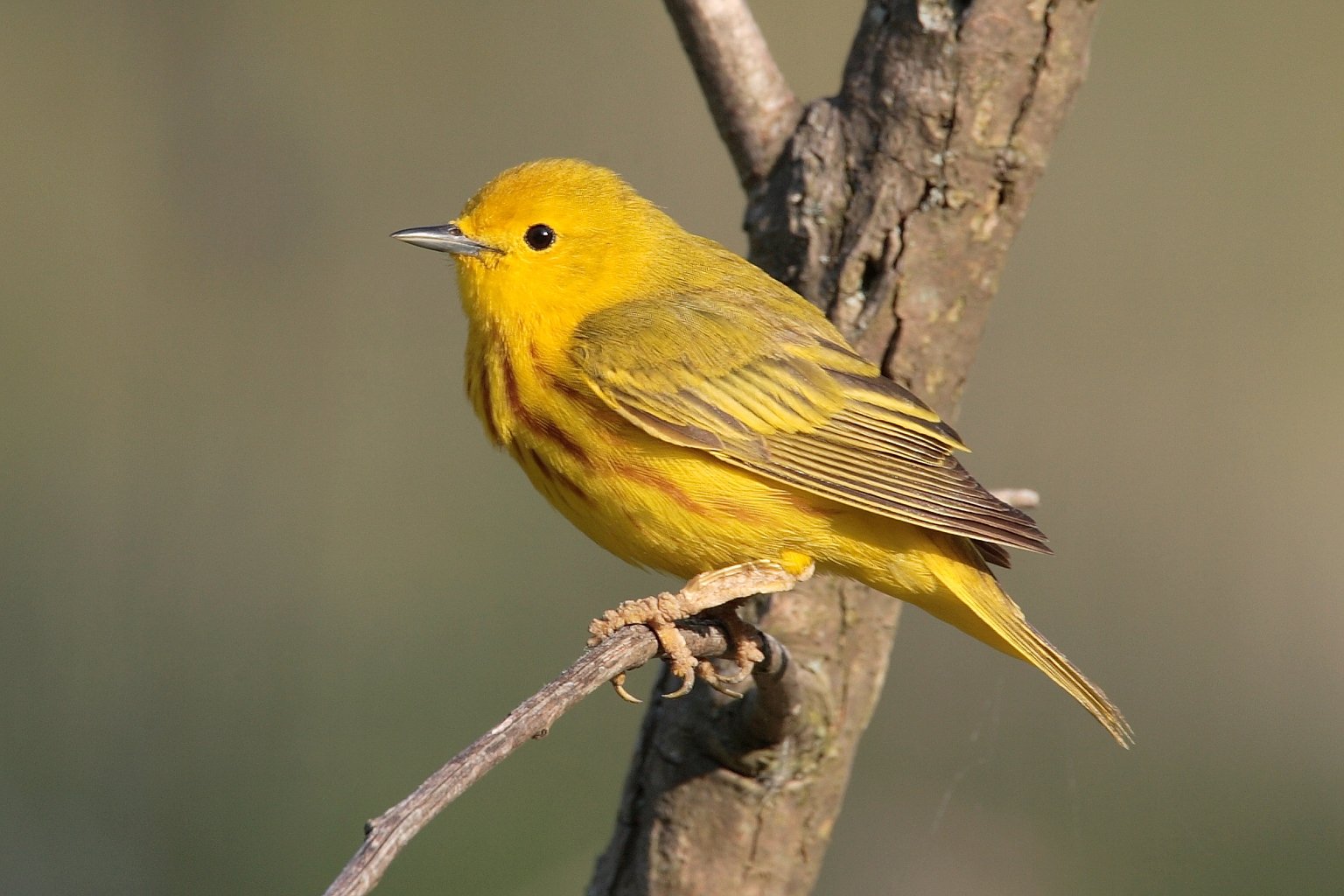
12–13 cm, short-tailed, with a large dark eye in a plain yellow face and a fairly stout bill. The male is yellow with an olive-green back and crown and reddish streaks on the breast and flanks; the head has no rufous hood. The female is duller, unstreaked or faintly streaked. Young birds in autumn can be greyish olive with hardly any yellow. Flight feathers and coverts are edged yellow and the tail has yellow, not white, spots.
Confusion species
Mangrove Warbler Setophaga petechia is the most similar; males of many island forms have a rufous-tinged crown or a rufous hood, and residents stay in the mangroves all year. An all-yellow male without rufous on the head, away from mangroves and between August and May, is probably this species, but not always certainly so. Wilson's Warbler Cardellina pusilla has a long, dark tail without yellow spots; Prothonotary Warbler Protonotaria citrea has blue-grey wings.
Habitat
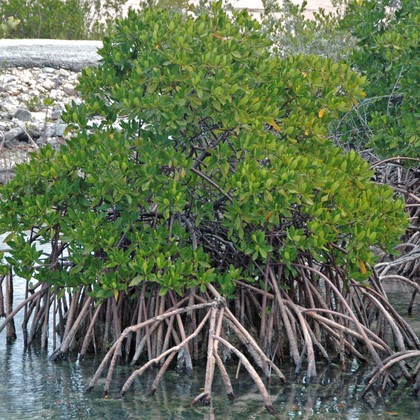
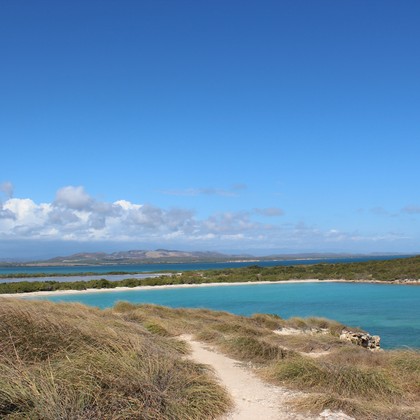
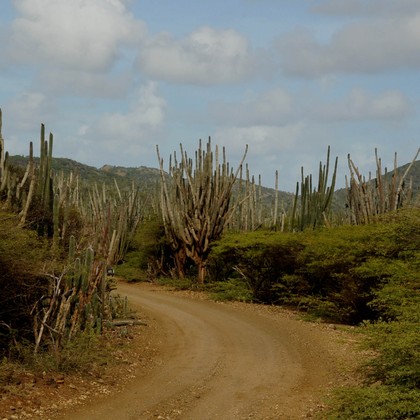
In winter in scrub, forest edge, coastal woodland and mangrove, also gardens, parks and dry thorn scrub. It forages actively in the lower and middle levels for insects and spiders and often joins other migrant warblers.
Where the bird is most at home, classified by the vegetation types of the Caribbean.

Range and movements
Passage migrant and winter visitor throughout the region, with most reports from the Bahamas, Cuba, the Cayman Islands, Jamaica, Hispaniola and Puerto Rico. In Trinidad and Tobago, where Mangrove Warbler does not occur as a resident, the species is a regular winter visitor. In the Lesser Antilles, the ABC Islands and San Andrés its status is poorly known, as migrants there disappear among resident Mangrove Warblers. Breeds from Alaska and Canada to northern Mexico and winters from Mexico to northern South America.
- Winter visitor (c. Apr–Sep)
- Passage (Mar–Apr, Oct–Nov)
- dark = core range, pale = thinly spread
How and when to look
Most likely during autumn migration in August and September, when American Yellow Warblers also turn up away from mangroves in gardens and scrub. In Trinidad and Tobago any yellow warbler in winter is this species.
Conservation status
Not threatened. The population is very large and the breeding range extensive; local declines in North America are linked to the loss of riverside willow scrub and to brood parasitism by cowbirds.
Scientific name
Setophaga aestiva | (Gmelin, 1789)
Gmelin described the species in 1789 as Motacilla aestiva; because it was later moved to another genus, the author and year stand in brackets. The genus Setophaga was introduced in 1827 by Swainson. Setophaga is Greek, from sēs, sētos 'moth' and -phagos '-eating': 'moth-eater'. aestiva is Latin, from aestivus 'summery', after the bird as a summer visitor in the north. The specimen the first description was based on came from Quebec City, Canada.