All species › Birds of prey › Hawks, eagles and kites › Western Marsh Harrier
Western Marsh Harrier | Circus aeruginosus
Bruine kiekendief | Aguilucho lagunero occidental
Europe's largest and heaviest harrier, inseparable from extensive reedbeds. Male and female look very different: a three-toned male against a chocolate-brown female with a cream hood.
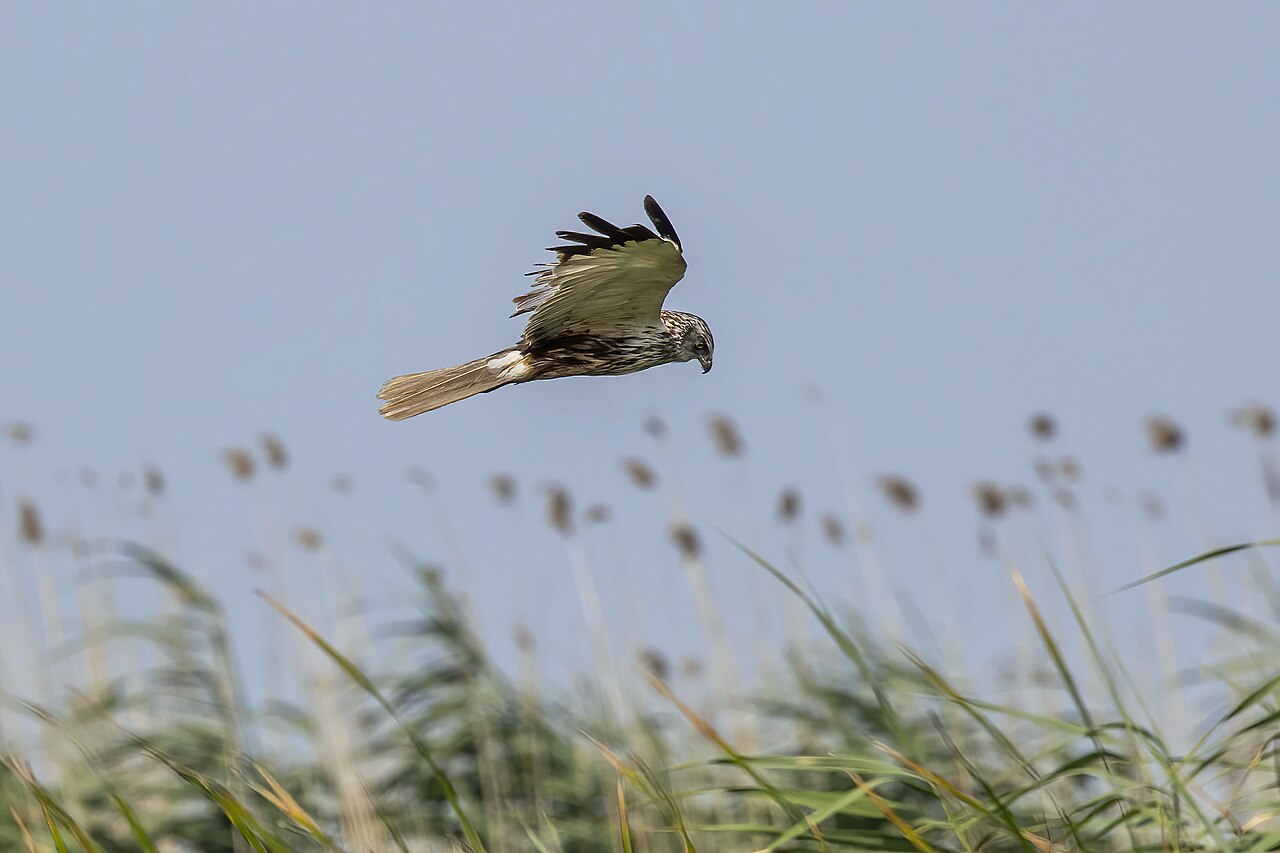
Click a thumbnail to switch the photo above.
Voice
Mostly silent. Over the breeding marsh in April and May the displaying male gives a high nasal kweea, and the female a whining pee-yah at food passes. Young beg querulously from the reeds throughout the summer.
Recording: Sternanita2 — CC BY-SA 4.0 · Wikimedia Commons
Identification
Quarters low over reed on distinctly raised wings held in a shallow V, rocking slowly, and looks heavier and broader-winged than the other harriers. Male: brown back, grey wing panels and grey tail, black primaries. Female and juvenile chocolate-brown with cream crown, throat and leading edge; some juveniles are almost wholly dark.
Confusion species
Hen and Montagu's Harriers are slimmer, lighter in build and always show a white rump, which Marsh Harrier lacks. Dark juveniles are confused with young White-Tailed Eagle or Black Kite: note the much smaller head, the narrower wings and the pale crown and throat of the harrier.
Habitat
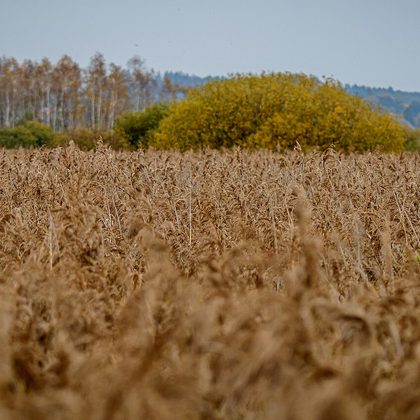
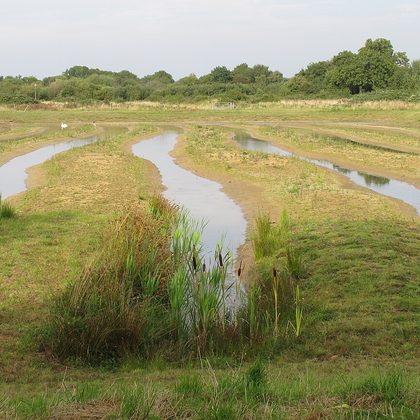
Large reedbeds and silting-up marshes, but nowadays also reed fringes along ditches, young polders and even oilseed rape and cereal fields. Hunts low and searching over reed, rough grassland and field margins, turning abruptly and dropping onto voles, young birds and eggs.
Where the bird is most at home, classified with EUNIS — the European standard for habitats.


Range and movements
Breeds from Iberia to Scandinavia and east across eastern Europe and northern Asia. The marshes along the southern North Sea coast hold a large share of the north-west European population; in the Mediterranean numerous in the Guadalquivir marismas and the Ebro delta, partly year-round. Northern birds winter in the Sahel and around the Mediterranean.
- Resident
- Breeding (summer)
- Winter
- Passage
- dark = core range, pale = thinly spread
How and when to look
April to August, early morning or the last hour before sunset, from a dike or viewpoint overlooking reed. Look for the rocking V-shaped flight low over the crop; in April the wild switchback display over the nest gives the territory away.
Conservation status
Not globally threatened (IUCN: Least Concern). Strongly recovered since organochlorine pesticides were banned and new wetlands were created. Scrub encroachment and drying of reedbeds, fox predation, poisoning on the wintering grounds and turbine collisions in open polders remain pressures.
Scientific name
Circus aeruginosus | (Linnaeus, 1758)
Linnaeus described the species in 1758 as Falco aeruginosus; because it was later moved to another genus, the author and year stand in brackets. The genus Circus was introduced in 1799 by De Lacépède. Circus is from the Ancient Greek kirkos, a bird of prey named for its circling flight. aeruginosus is Latin for 'rusty', from aerugo 'rust, verdigris'. The specimen the first description was based on came from Sweden.