All species › Grebes › Grebes › Horned Grebe
Horned Grebe | Podiceps auritus
Kuifduiker | Zampullín cuellirrojo
A small, compact grebe that swims through the winter in crisp black and white on sheltered coastal waters. In breeding plumage it carries a rufous neck and flanks and two broad golden horns.

Click a thumbnail to switch the photo above.
Voice
On the breeding grounds a high, nasal, vibrating dje-djeeerr, often in duet and accelerating into a rattling trill, along with a short shrill eek. In winter it is virtually silent, so the voice belongs to April to June in the north, at small lakes and bog pools.
Recording: Dag Österlund — CC BY-NC-SA 4.0 · Wikimedia Commons
Identification
Small and compact, with a flat crown peaking behind the eye and a straight bill with a pale tip. Breeding birds have a rufous neck and flanks, a black head with broad orange-yellow supercilia flaring back as horns, and a red eye. In winter it is clean black and white: a sharply cut, snow-white cheek, a black cap ending above eye level and a white neck.
Confusion species
Eared Grebe is the only real pitfall. Horned Grebe is settled by the straight, pale-tipped bill, the flat crown with its peak behind the eye and the clean-cut white cheek; Eared Grebe shows a fine uptilted bill, a high crown peaking in front of the eye and a smudgy grey cheek. The neck is whiter on Horned Grebe.
Habitat
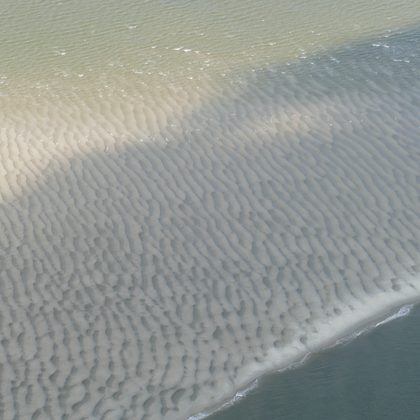
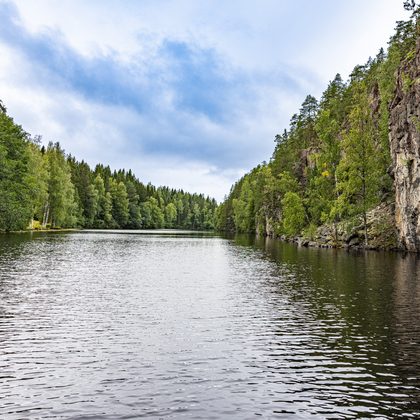
Breeds on shallow, fish-rich lakes and pools with marginal vegetation in the boreal zone, Iceland and the Scottish Highlands. Winters at sea, on sheltered bays, sea arms, harbours and estuaries with calm water, diving close inshore for shrimps, small fish and aquatic insects.
Where the bird is most at home, classified with EUNIS — the European standard for habitats.

Range and movements
Breeds in Iceland, the Scottish Highlands, Fennoscandia and the Baltic region. Along the southern North Sea coast it is a scarce winter visitor to the Grevelingen, the Veerse Meer, harbours along the Wadden Sea and the IJsselmeer, usually singly. In Iberia small numbers winter along the Cantabrian coast and in the Galician rias, while inland records are rare.
- Resident
- Breeding (summer)
- Winter
- Passage
- dark = core range, pale = thinly spread
How and when to look
November to February in calm, clear weather, when the water is mirror-flat and a small black-and-white grebe stands out at once. Work harbour moles, locks and sheltered shores, scanning from the dyke in the morning before the wind gets up.
Conservation status
Globally assessed as Vulnerable after sharp declines in Iceland and the Scottish Highlands. Fish stocking, predation by American mink and gulls, fluctuating water levels and the loss of marginal vegetation hit the breeding sites. In the wintering areas oil pollution and drowning in gill nets add to the pressure.
Scientific name
Podiceps auritus | (Linnaeus, 1758)
Linnaeus described the species in 1758 as Colymbus auritus; because it was later moved to another genus, the author and year stand in brackets. The genus Podiceps was introduced in 1787 by Latham. Podiceps is Latin, from podex, genitive podicis, 'rear end', and pes 'foot', after the legs set far back on the body. auritus is Latin for 'eared', from auris 'ear', after the golden tufts behind the eye in breeding plumage. The specimen the first description was based on came from Sweden.