All species › Passerines › Chats, Old World flycatchers and allies › Northern Wheatear
Northern Wheatear | Oenanthe oenanthe
Tapuit | Collalba gris
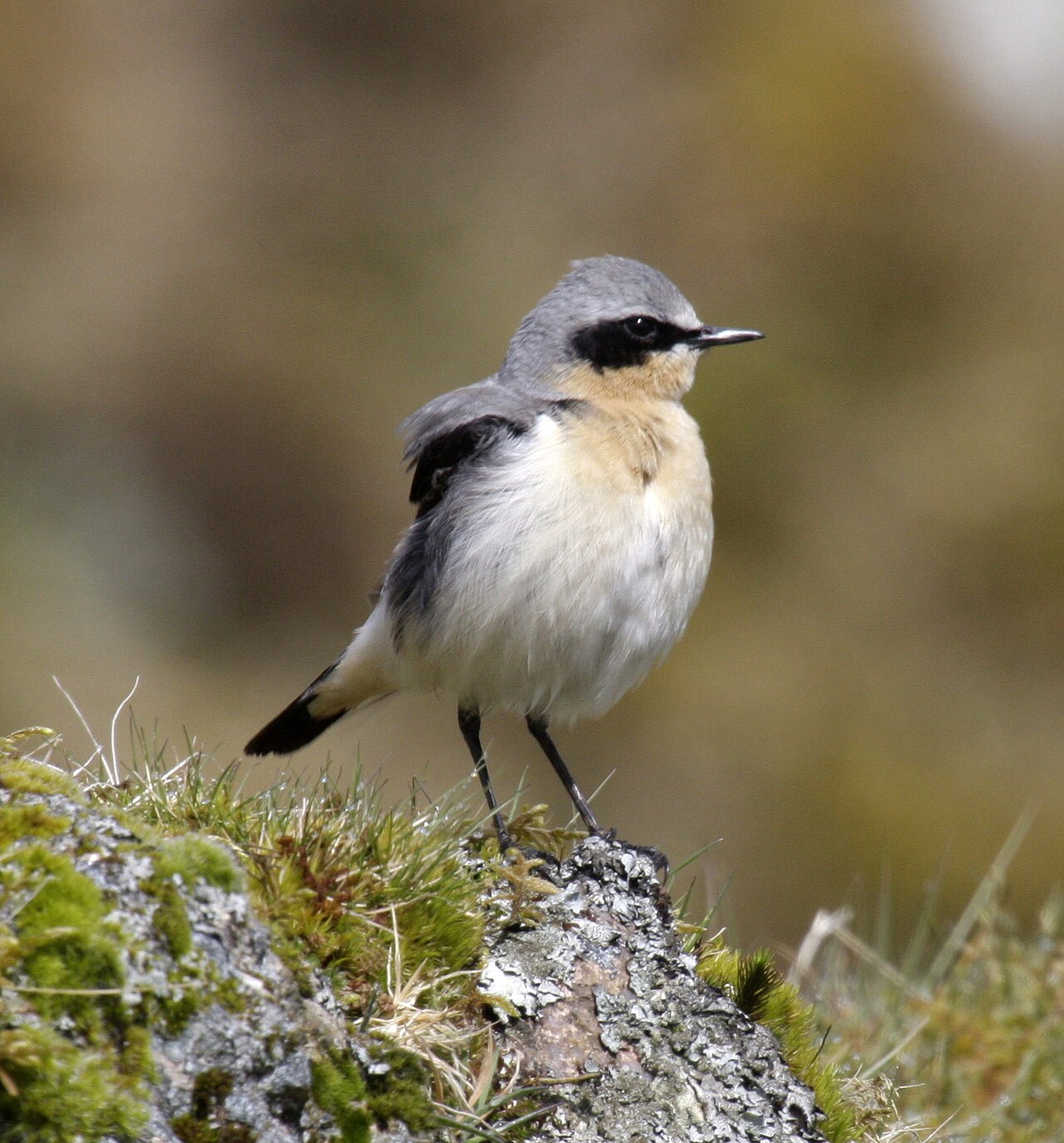
The Northern Wheatear is a bird of bare, stony ground that breeds in this region only in the far north — in Alaska and in the eastern Canadian Arctic and Greenland — and leaves the continent altogether in autumn. The first thing anyone notices is the white rump with the black inverted T on the tail, flashing at every departure. No songbird of this size travels so far: the winter is spent in Africa.
Voice
From a stone, or in a short song flight, comes a hurried, scratchy little tune in which clear whistles and dry rattles run together, with imitations worked in — snatches of the waders and pipits that breed on the same stretch of tundra. The call is a hard chack chack, like two pebbles knocked together, often preceded by a whistled hweet. When the bird is uneasy this becomes a sustained rattle that carries far over open ground. Autumn migrants are largely silent, and then the call is usually all there is to hear.
Recording: Stanislas Wroza — CC BY-NC-SA 4.0 · Soppavann, Finland · xeno-canto
Identification
In breeding plumage the male has a blue-grey back, a black mask from the bill to behind the eye, black wings and a breast washed orange-buff. The female is warm brown where the male is grey, with a fainter mask and brown wings. In every plumage the rump and the tail base are white, with a broad black terminal band and black central tail feathers together forming an inverted T — the mark by which this bird is known. Juveniles and autumn birds are sandy and ochre, with cream fringes to the wing feathers. The stance is upright on long black legs, with much bobbing and bowing, and the flight is low and jerky from stone to stone.
Confusion species
American Pipit is as slender but walks with a pumping tail, is finely streaked and shows white tail sides instead of a white rump. Horned Lark shares the open ground but wears a yellow and black patterned face and has black sides to the tail. Snow Bunting in winter plumage is as sandy, but shows large white panels in the wing and has a conical bill. Doubt rarely lasts: the moment the bird flies, the white rump with its black T settles the question.
Habitat
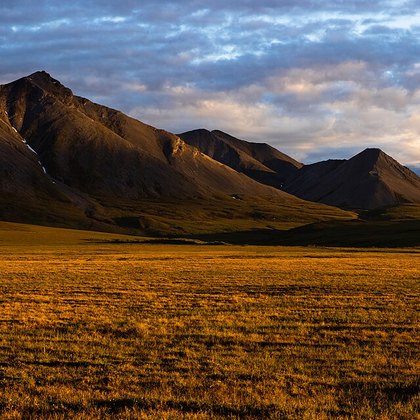
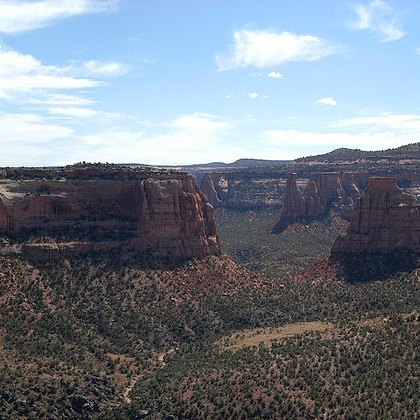
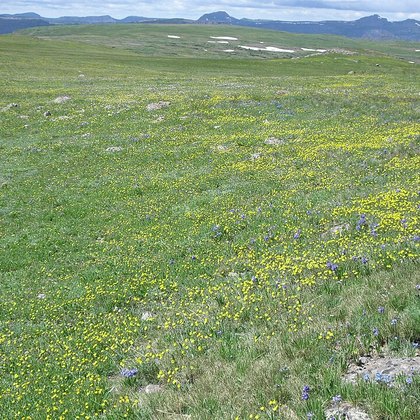
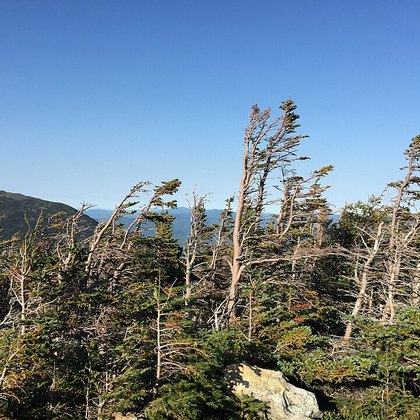
Short, open, stony country: dry tundra with rock outcrops and boulder fields, scree slopes, gravel flats and grazed mountain grassland. Anything tall and dense is avoided; there has to be bare ground to hunt over and a lookout stone to watch from. The nest goes into a crevice — among stones, in an abandoned rodent burrow or under a boulder — with a narrow passage to the cup deep inside. On migration it turns up on bare coast, field edges and airfields.
Where the bird is most often found, arranged by the USNVC — the vegetation classification of the United States and Canada — and CMECS for sea and coast.

Range and movements
Two separate populations breed in this region: one in Alaska and northwestern Canada, and one in the eastern Canadian Arctic, with Greenland as its stronghold. Both leave the continent entirely. Alaskan birds fly west across Siberia and Arabia to eastern Africa, nearly fifteen thousand kilometres one way; birds from Baffin Island and Greenland cross the North Atlantic by way of Iceland or in a single flight and reach Africa through western Europe. The wintering grounds therefore lie outside the guide area and are not shown on the map. A few autumn birds appear along the Atlantic coast of the United States and Canada every year, but that is not a fixed route.
- Breeding (summer)
- Winter
- Passage
- dark = core range, pale = thinly spread
Where and when to look
Look for it in June on stony tundra or at a mountain pass: it perches on the highest stone around and moves in short low flights that show the white rump again and again. Anyone who meets it in autumn on a close-mown airfield or a bare pasture will notice mainly the upright stance, the bowing and the ease with which it flies on. When in doubt, simply wait until the bird takes off.
Conservation
The world population is large and the species is listed as Least Concern (LC). In Europe numbers fell by two thirds between 1980 and 2009, through rank growth on pastures, changes in land use and the loss of rabbit burrows as nest sites. Far less is known of the Alaskan and Greenland populations; they are small, scattered and hard to count, and the long migration leaves them dependent on conditions far outside the breeding grounds.
Scientific name
Oenanthe oenanthe | (Linnaeus, 1758)
Linnaeus described the species in 1758 as Motacilla oenanthe, among the wagtails; because it was later moved to another genus, author and year stand in parentheses. The genus Oenanthe was introduced by Vieillot in 1816 and goes back to Greek oinanthē, from oinos 'wine' and anthos 'blossom': a classical name for a bird said to appear when the vine flowered and to vanish when the grapes ripened. The species name repeats that of the genus. The type locality is Sweden: Linnaeus wrote 'in sunny stony places of Europe', which Hartert restricted to Sweden in 1910.