All species › Passerines › New World warblers › Northern Waterthrush
Northern Waterthrush | Parkesia noveboracensis
Noordse waterlijster | Chipe charquero
The Northern Waterthrush is a New World warbler that does not flit in the canopy but walks over the mud of wooded swamps, with the rear body bobbing constantly. It breeds right across the boreal zone from Alaska to Newfoundland and winters from southern Florida and the Antilles to northern South America.
Voice
The song is a loud, hard three-part series that drops in pitch and speeds up: sweet sweet sweet, swee swee, chew-chew-chew. It carries far over still water and is often given from a branch above the shore, including in the middle of the day. The call is a sharp, metallic spwik with a hard k at the end, louder and flatter than most warbler calls; on migration it is often the only thing you hear of the bird.
Recording: Cassin Finch — CC BY-NC-SA 4.0 · LaBonte Park (near Laramie), Albany County, Wyoming, United States · xeno-canto
Identification
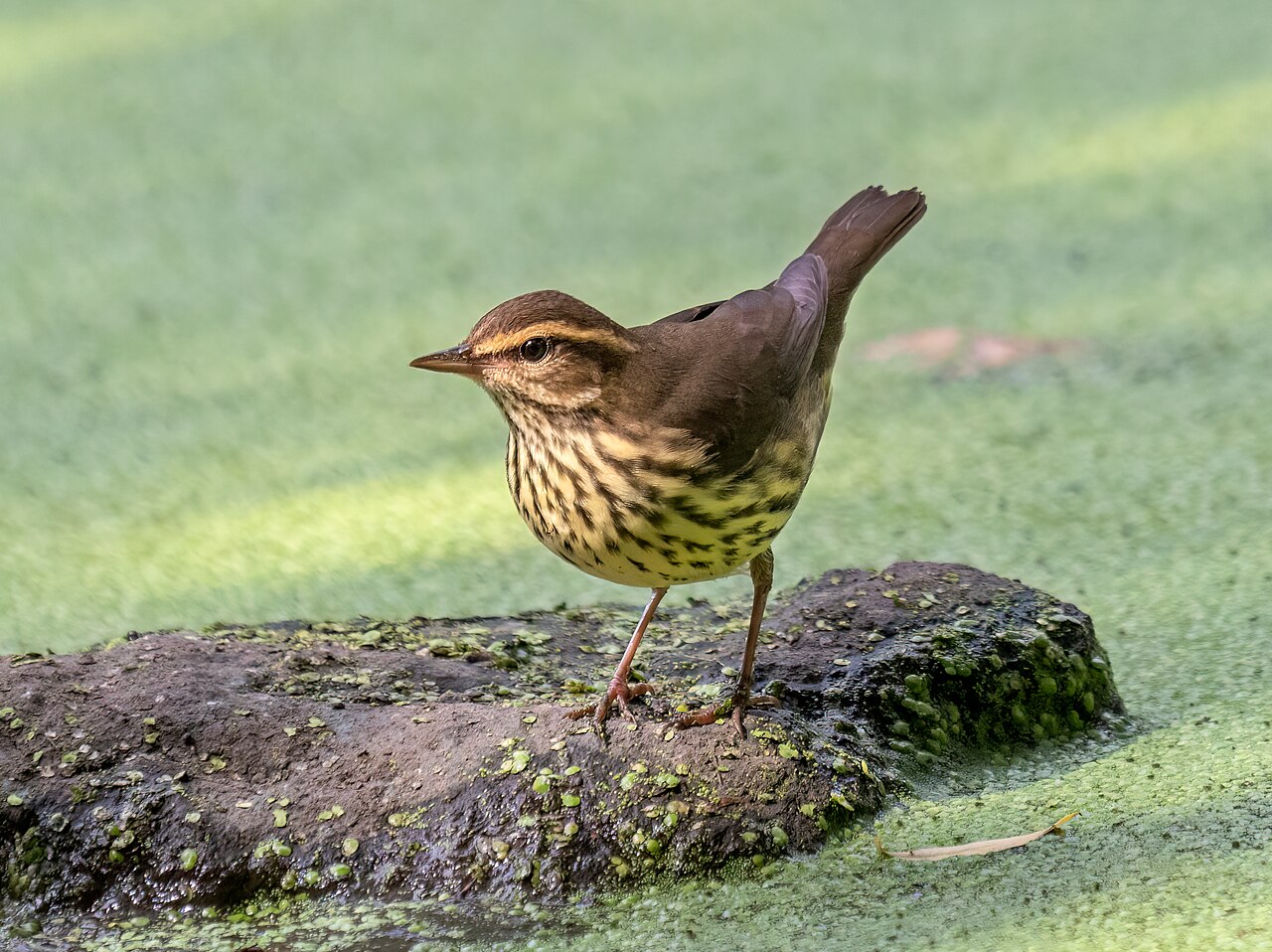
Uniform dark olive-brown above, dingy white to pale yellow below with dense dark streaking that reaches onto the throat. A narrow eyebrow stripe runs over the eye, tapering towards the rear and usually yellowish or off-white rather than pure white. The legs are dark flesh-coloured. The most usable feature is behaviour: the bird walks with short steps through shallow water and over wet leaves, bobbing tail and rear body continuously like a Spotted Sandpiper. Male and female look alike.
Confusion species
Louisiana Waterthrush is larger, with a broad eyebrow stripe that widens towards the rear and is pure white, an unstreaked white throat, bright pink legs and buff flanks. On Northern Waterthrush the eyebrow is narrow and even, the throat finely spotted and the ground colour uniform. Ovenbird also walks on the ground, but has an orange crown stripe between black borders, a white eye-ring instead of an eyebrow stripe, and does not bob its rear body.
Habitat
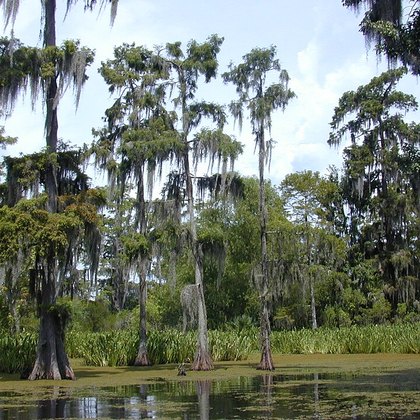
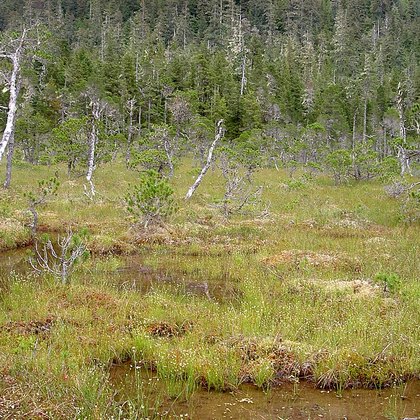
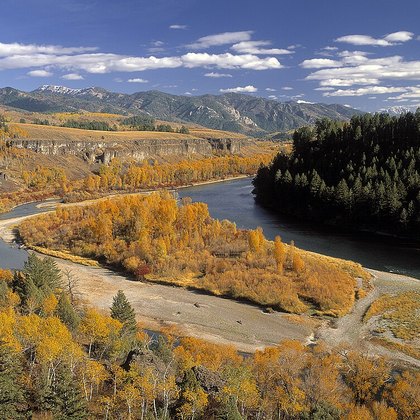
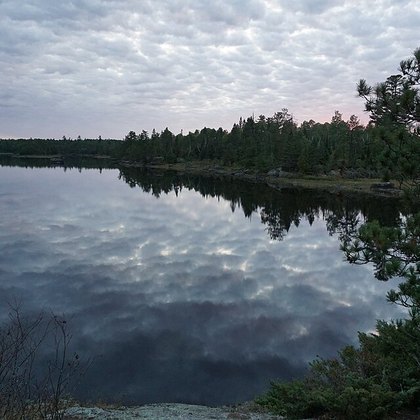
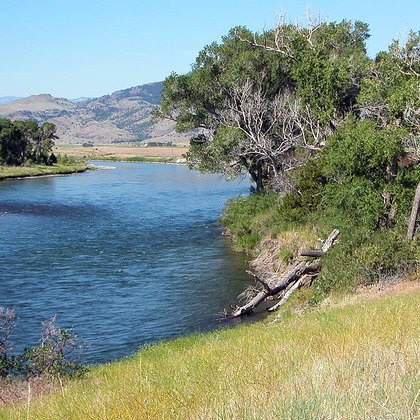
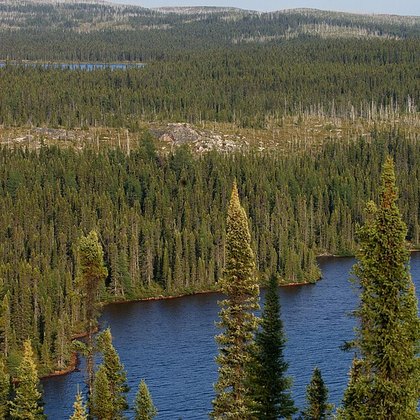
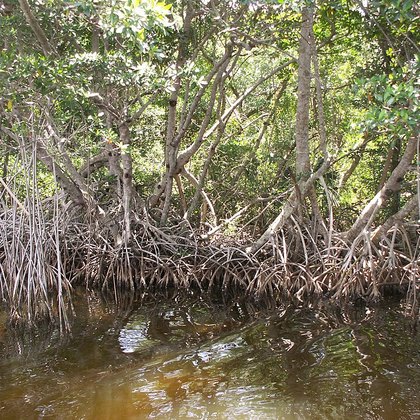
Breeds beside standing or slow water: swamp forest of black spruce and alder, bogs and muskeg (boggy spruce peatland typical of boreal Canada), beaver ponds and thickly vegetated pond margins. Where Louisiana Waterthrush takes flowing streams in hill country, this species belongs to the still, flat water of the north. The nest sits hidden among the roots of a fallen tree or in a niche in a stream bank. In winter it is mainly in mangrove and in damp scrub along coasts and lagoons.
Where the bird is most often found, arranged by the USNVC — the vegetation classification of the United States and Canada — and CMECS for sea and coast.
Range and movements
The breeding range runs from western and central Alaska and Yukon east through all of boreal Canada to Newfoundland, and in the United States south to the mountains of Washington and Montana, the Great Lakes, New England and northern Pennsylvania. From August birds move broadly through the east and centre of the continent; the return in May is late. It winters from southern Florida, the Bahamas and the Greater Antilles through the coastal lowlands of Mexico and Central America to Colombia, Venezuela and Ecuador.
- Resident
- Breeding (summer)
- Winter
- Passage
- dark = core range, pale = thinly spread
Where and when to look
Look for it in May along the edge of a wooded pool and watch for movement at the waterline rather than for colour — the bobbing rear body gives it away sooner than the streaking. On migration the hard spwik call from a dense bankside shrub is often the only trace.
Conservation
Partners in Flight puts the breeding population at about 17 million birds and the Breeding Bird Survey shows an increase of some 54 per cent since 1970; the species is listed as Least Concern (LC) and rated of low conservation concern. The boreal breeding range is vast and largely intact, but drainage of peatland and extraction in the boreal zone are a longer-term pressure. On the wintering grounds the loss of mangrove is the main one.
Scientific name
Parkesia noveboracensis | (Gmelin, 1789)
Gmelin described the species in 1789 as Motacilla noveboracensis; because it was later moved to another genus, author and year stand in parentheses. The genus Parkesia was introduced in 2008 by George Sangster and is named after the American ornithologist Kenneth Carroll Parkes. The species name noveboracensis means 'of New York', from Novum Eboracum, the Latin form of the city's name; Eboracum was the Roman name for York in England. The English name refers to the walking along water and the thrush-like streaking, although it is not a thrush.