All species › Passerines › Munias, parrotfinches, waxbills and allies › Java Sparrow
Java Sparrow | Padda oryzivora
Rijstvogel | Capuchino arrocero de Java
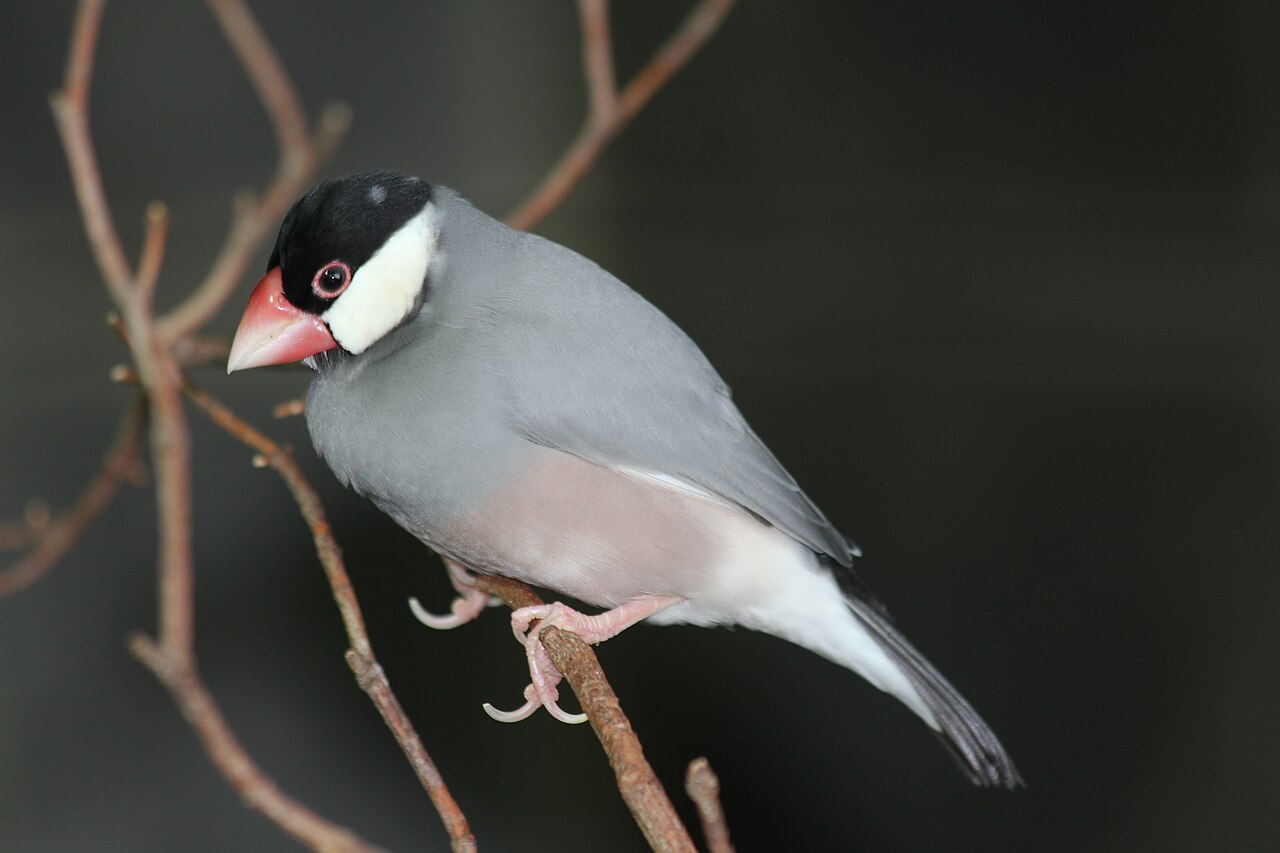
The Java Sparrow is the largest estrildid finch in the guide area: a stocky grey bird with a black head, a white cheek patch and a heavy pink-red bill. In its native Java and Bali the cage-bird trade has reduced it sharply and it is listed as Endangered, while the introduced population in Hawaii is increasing.
Voice
The call is a short, hard chup or tack, given continuously by a feeding flock and speeding up as the birds flush. The male's song is a series of the same notes, accelerating and ending in a lower rolling passage, delivered in an upright posture with the tail quivering. Outside song both sexes use a trilled call whose speed and volume vary with context: faster and louder in aggression, slower between members of a pair.
No recording with a suitable Creative Commons licence has been found for this species yet; what to listen for is described below.
Identification
Adults are plain blue-grey on back, wings and breast, with a pink to wine-coloured belly and white undertail coverts. The head is black with a large, sharply outlined white cheek patch, and the eye is set in a bare red ring. The bill is large, deep and pink-red with a paler edge; the legs are pink. The sexes are alike. Juveniles are brown above and dingy white below, with a plain brownish head lacking the cheek patch and a dark bill — unlike the adult.
Confusion species
Adults are distinctive in the guide area: no other Hawaiian seed-eater combines this size with a black-and-white head and a red bill. Juveniles are another matter: they recall young Scaly-breasted Munias and other munias, but are noticeably larger and heavier built with a much stouter bill. In case of doubt the accompanying adults in the same flock settle it.
Habitat
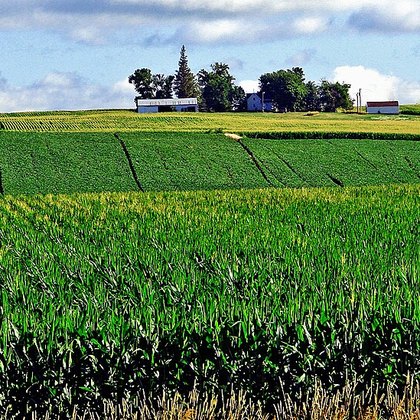
Open grassy country and cultivation, originally above all rice fields and their margins. In Hawaii it is a bird of the Honolulu suburbs: parks, campuses, golf courses, hotel lawns, hedges and coastal flats with exotic grasses, reaching the hill country wherever open ground occurs. It nests in cavities, in the dense crowns of palms and in buildings. It avoids closed native forest.
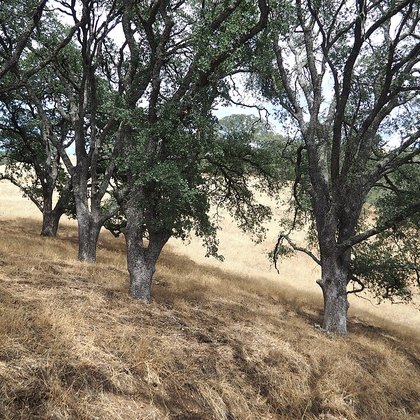
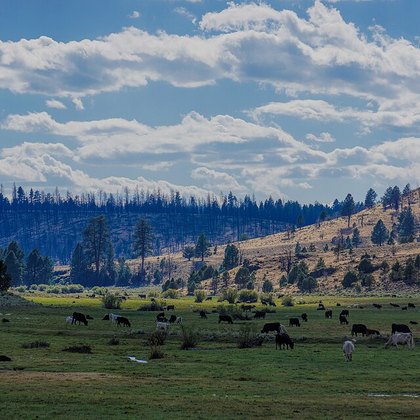
Where the bird is most often found, arranged by the USNVC — the vegetation classification of the United States and Canada — and CMECS for sea and coast.


Range and movements
Native only to Java, Bali and Bawean in Indonesia, where it is now scarce and fragmented. The cage-bird trade has carried it to many places outside that range. In the guide area there are two introduced populations: Hawaii, where it established itself on Oʻahu from the 1960s and has since increased greatly in numbers and area, with smaller numbers on Kauaʻi, Maui and Hawaii Island; and Puerto Rico, where it occurs mainly around San Juan. Single birds elsewhere in North America are escaped cage birds without an established population.
- Resident
Where and when to look
On Oʻahu flocks feed on mown grass in the parks of Honolulu and along the Ala Wai, often with Scaly-breasted Munias and House Sparrows. Walk a city park early in the morning and listen for the hard chup, watching for the bulky red-billed silhouettes crossing from grass to tree in short direct flights.
Conservation
The Red List treats the species as Endangered (EN): in its native Java and Bali decades of trapping for the cage-bird trade have cut the population to a small number, and the remaining groups are fragmented. Loss of rice field and persecution as a crop pest have contributed. The species is on CITES Appendix II. Outside that range the picture is the opposite: the introduced populations in Hawaii and Puerto Rico are increasing, and those birds do not count towards the assessment of the species.
Scientific name
Padda oryzivora | (Linnaeus, 1758)
Linnaeus described the species in 1758 as Loxia oryzivora; because it was later moved to another genus, author and year stand in parentheses. The species name oryzivora is from Latin oryza 'rice' and vorare 'to devour', hence 'rice-eater', after its food in the Javan rice fields. The genus name Padda goes back to a local name for the bird, related to Malay padi 'rice in the husk'. Linnaeus gives the type locality as 'Asia and Ethiopia', which is read as Java. The Dutch name renders the same link with rice.