All species › Waders, gulls and terns › Skimmers, noddies, terns and gulls › Ivory Gull
Ivory Gull | Pagophila eburnea
Ivoormeeuw | Gaviota marfileña
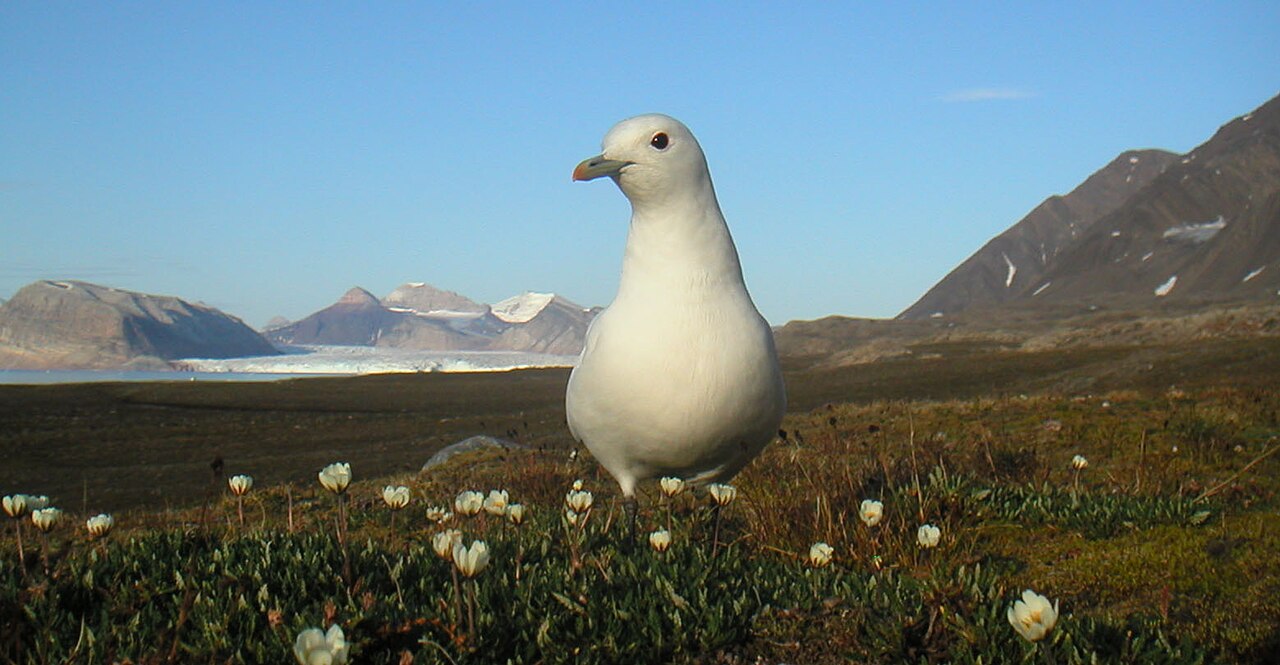
The Ivory Gull is the only gull in the world that is entirely white as an adult: snow-white feathering, a black eye, black legs and a blue-grey bill with a yellow tip. It lives all year at the edge of the pack ice, walking behind polar bears and eating what they leave. Its genus name means ice-lover, and that is precisely its problem: the ice is going.
Voice
The flight call is a harsh, shrill keeeer that suggests a tern rather than a gull and carries far across the ice. At the colony there is an elaborate rattling series during display, and a plaintive squeal when a bird begs for food. If an Arctic fox or a polar bear approaches, a short barking warning note goes round and the whole colony lifts off. Around a carcass, where birds gather, the noise is almost continuous.
Recording: Stein Ø. Nilsen — CC BY-NC-SA 4.0 · South-East Svalbard, Norway · xeno-canto
Identification
Adults are spotless white from head to tail, with no grey on the mantle and no black in the wingtip — a combination no other gull shows. The eye is large and jet black in a bare dark eye-ring, the bill is blue-grey with a yellow tip, and the legs are short and black with heavy claws that give the bird grip on ice. Male and female look alike. First-year birds are the same bird with dirt on it: sooty speckling over face and throat, black spots on the tips of the wing and tail feathers and a dull grey bill; how much black they show varies greatly between individuals. The flight is light and pigeon-like, with quick beats, and on the ice it walks a great deal, shorter in the leg and rounder in the body than an ordinary gull.
Confusion species
Glaucous Gull (Larus hyperboreus) and Iceland Gull (Larus glaucoides) also lack black in the wingtip, but are far larger, with a pale grey mantle, pink legs and a heavy yellow bill with a red spot; at long range the Ivory Gull remains the only one that is equally white all over. Wholly white, bleached or albinistic individuals of other gulls do occur and are the classic mistake: those birds have pink or yellow legs, and the bill is never blue-grey with a yellow tip. Ross's Gull (Rhodostethia rosea) lives in the same ice but is much smaller, with a wedge tail and red legs. A heavily spotted young Ivory Gull is sometimes taken for a young Black-legged Kittiwake (Rissa tridactyla), but lacks the black zigzag across the wing.
Compare gulls: legs, head, bill and wing tip side by side
Habitat
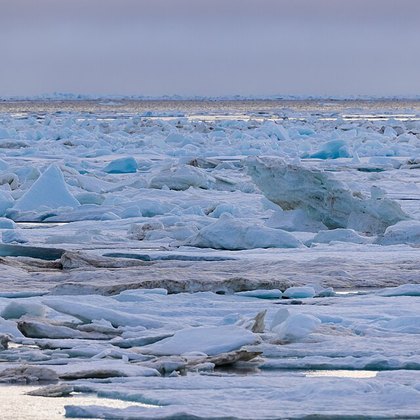
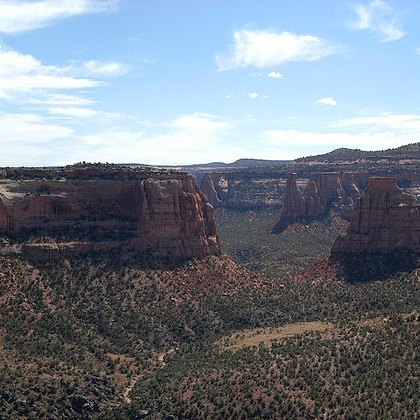
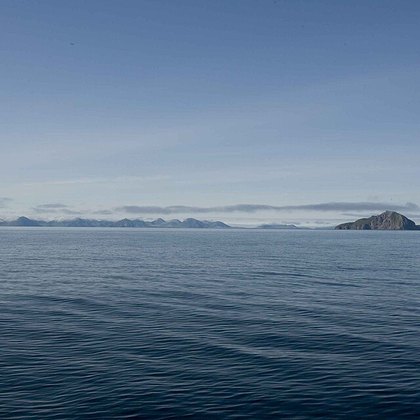
Its life is spent on and around drifting ice: the pack-ice edge, the cracks and open patches known as polynyas, and the ice around glacier fronts. Unlike other gulls it rarely settles on the water in the Arctic winter, because the plumage then freezes up; it prefers to stand on a floe. It breeds on cliff ledges, on rock outcrops standing out of the ice cap and on flat gravel islands in the polar desert, always where foxes cannot reach and often tens of kilometres from the coast. It feeds at the ice edge: small fish and crustaceans from the water, and beyond that whatever polar bears and seals leave behind, down to droppings and afterbirth.
Where the bird is most often found, arranged by the USNVC — the vegetation classification of the United States and Canada — and CMECS for sea and coast.

Range and movements
It breeds on the high Arctic islands: in North America only in Nunavut, with Seymour Island as the largest colony and scattered sites on Ellesmere, Devon, Cornwallis and northern Baffin, and elsewhere in Greenland, on Svalbard, Franz Josef Land and the Russian polar archipelagos. It does not breed in Alaska. It winters at the ice edge: in the east from Davis Strait down to off Labrador and northern Newfoundland, in the west in the northern Bering Sea. Further south every record is an event; there are vagrants as far as California, Georgia and the British Isles, usually young birds in hard winters.
- Breeding (summer)
- Winter
- Passage
- dark = core range, pale = thinly spread
Where and when to look
The best chance in North America is the coast of Newfoundland and Labrador from January to March, when the drift ice comes south and a bird sometimes turns up in a harbour or at a fish plant; at Gambell on St. Lawrence Island in Alaska it can be seen at the ice edge in late spring. Check every all-white gull on legs and bill: short and black, blue-grey with a yellow tip, and nothing else. Anyone sailing far north should check every polar bear through binoculars — where a bear feeds, an Ivory Gull is often waiting.
Conservation
The world population was estimated in 2012 at nineteen to twenty-seven thousand birds, and the species is red-listed as Near Threatened (NT). In Canada, where it is listed as endangered, breeding numbers fell by about eighty per cent in the twenty years to 2006, and after 2007 several colonies were counted lower again. The main cause is the loss of sea ice, which carries its whole way of life: less ice means longer flights to food and more failed nests. To that are added poisons that build up in the food chain, hunting in Greenland, and mineral exploration near the colonies.
Scientific name
Pagophila eburnea | (Phipps, 1774)
Constantine John Phipps described the species in 1774 as Larus eburneus, from a bird he collected near Spitsbergen the year before on his voyage towards the North Pole; because it was later placed in a genus of its own, author and year stand in parentheses. That genus, Pagophila, was introduced by Kaup in 1829: it is Greek, from pagos for sea ice and philos for loving, and there is hardly a better-chosen name. eburnea is Latin for ivory-coloured, from ebur, ivory. The type locality is Spitsbergen.