All species › Gamebirds › Partridges, pheasants, grouse and allies › Himalayan Snowcock
Himalayan Snowcock | Tetraogallus himalayensis
Himalayaberghoen | Perdigallo Himalayo
Himalayan Snowcock is one of the largest gamebirds North America has: a bulky grey bird some sixty to seventy centimetres from bill to tail that spends its entire North American existence above the treeline in a single mountain range in Nevada. Since the 1960s a small wild population has held on in the Ruby Mountains, far from any other place the species occurs outside Asia. Finding it means climbing high.
Voice
The call is a loud, three-part whistle that rises in pitch and carries far over the bare rock slopes, often the first — and only — sign that it is present. There is also a shrill, high piping call, especially when birds answer one another across a ravine at long range. Males call most in early morning, shortly after sunrise, as the groups spread out over the slopes to feed. Anyone sitting among the rocks often hears the call minutes before a bird comes into view, if it ever does.
Recording: Erik Hansson — CC BY-NC-SA 4.0 · Mountain south of Shumbylak,Almaty, Karasay District, Almaty Region, Kazakhstan · xeno-canto
Identification
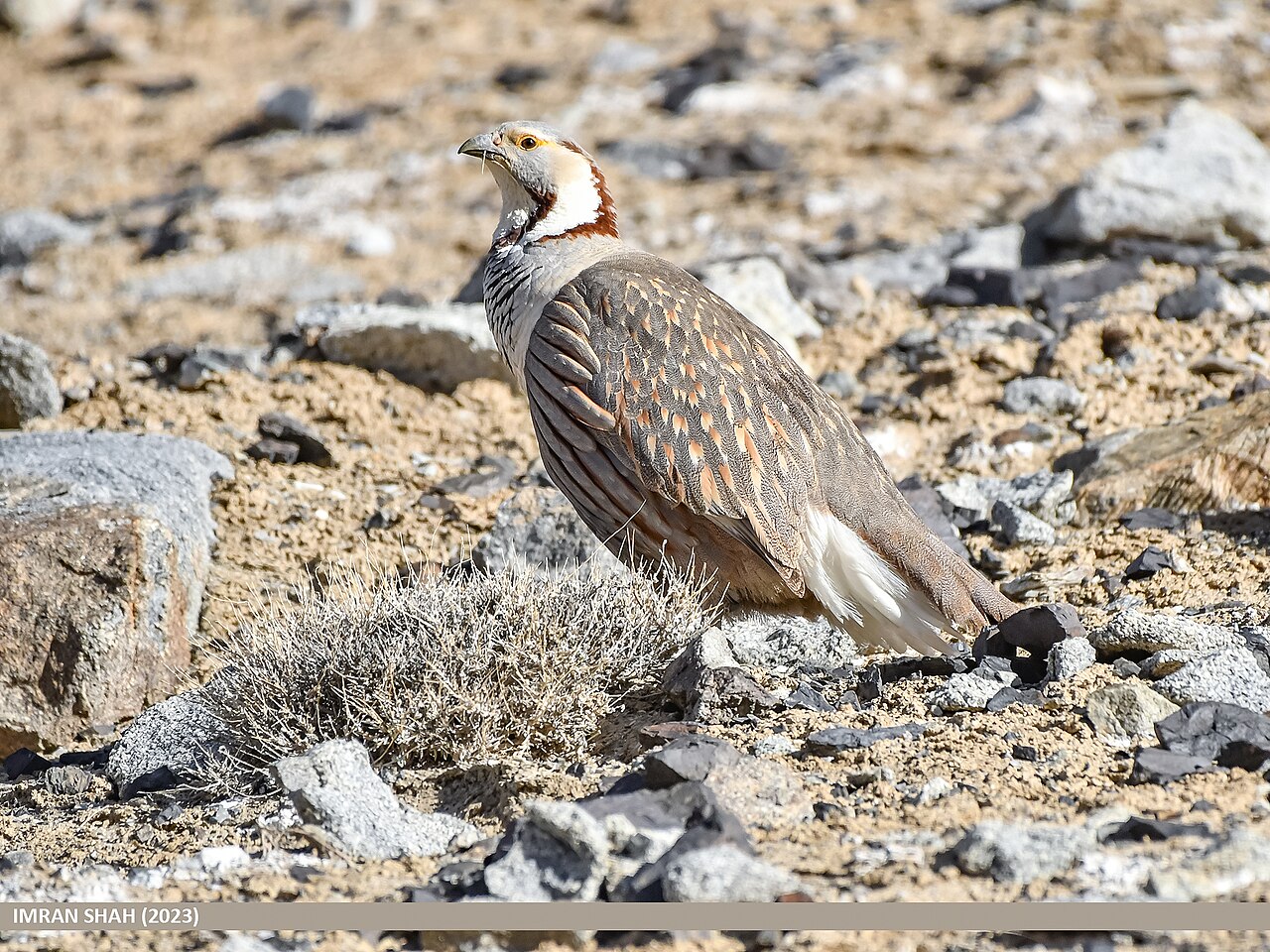
A large, heavy-set gamebird with grey upperparts edged rufous, a grey breast crossed by dark wavy bars, and a white throat bordered on each side by a chestnut stripe. The head carries dark ear patches, and the male has a long spur on each leg that the female lacks or shows much reduced. In flight the white, black-tipped primaries and the rufous outer tail feathers stand out against the otherwise grey bird. Between its bulk — close to the weight of a small turkey — and its taste for bare, steep slopes, there is nothing else it could be mistaken for.
Confusion species
Within its limited North American range confusion is hardly possible: no other gamebird in the Ruby Mountains approaches its size or its preference for bare rock above the treeline. From a distance a group in flight might suggest Wild Turkey (Meleagris gallopavo), but that species stays well below the treeline and has a long, fan-shaped tail instead of the snowcock's short rufous one. Chukar, which occupies the same ranges lower on the slope, is much smaller and plain grey-brown, without the broad chestnut border to the throat.
Habitat
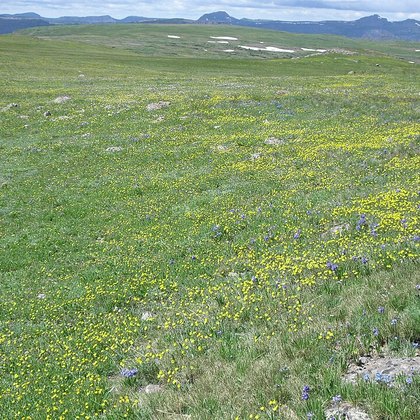
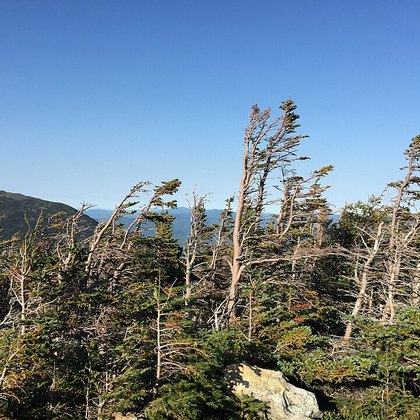
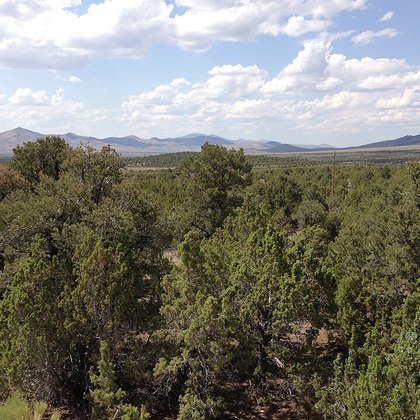
It lives on bare, steep alpine slopes and rocky plateaus well above the treeline, where grasses, forbs and low shrubs among the scree are the only vegetation. In the Ruby Mountains that means the peaks and cirques above roughly 2,700 metres, with pinyon (low-growing pine of the dry south-western foothills)-juniper woodland and sagebrush as the transition zone below. In hard winters it drops to lower, wind-sheltered slopes but returns to the ridges with the first thaw. It avoids forest and dense cover entirely.
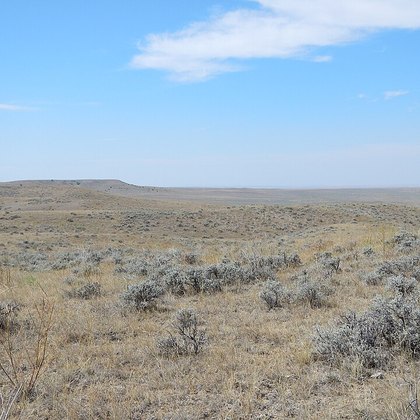
Where the bird is most often found, arranged by the USNVC — the vegetation classification of the United States and Canada — and CMECS for sea and coast.

Range and movements
In North America Himalayan Snowcock occurs only in the Ruby Mountains and the adjoining East Humboldt Range near Elko, in north-eastern Nevada, where more than two thousand birds from Pakistan were released between 1963 and 1979. That introduction has left a small, self-sustaining population estimated at a few hundred birds — the only place in the world outside Central Asia where the species lives wild. It does not migrate and does not leave the range; attempts to establish the species elsewhere in the western United States have not succeeded.
- Breeding (summer)
- dark = core range, pale = thinly spread
Where and when to look
Climb one of the trails to Lamoille Canyon or Liberty Pass in the Ruby Mountains early in the morning and scan the ridges above the treeline with a scope; at that distance the birds are more often heard than seen. Early in summer, before the snow has fully melted, the groups stay close to the last snowfields, where they find water.
Conservation
Worldwide Himalayan Snowcock is listed as Least Concern (LC); across its original range in Central Asia the species is widespread. The North American population is small — a few hundred birds — and confined entirely to one mountain range, which leaves it vulnerable to a single hard winter or a change in how the area is managed. Nevada allows a short, tightly limited hunting season, with the number of permits set each year against the state of the population.
Scientific name
Tetraogallus himalayensis | Gray, 1843
Gray described the species in 1843 as Tetraogallus Himalayensis, in the same genus it still carries, so author and year stand without parentheses. The genus Tetraogallus combines Greek tetraōn, 'grouse', with Latin gallus, 'cock', for its combination of a grouse-like build with the size of a large gamebird. The specific name himalayensis means 'of the Himalaya', after the mountains where the species was first described.