All species › Pelicans, herons and ibises › Herons, egrets and bitterns › Green Heron
Green Heron | Butorides virescens
Groene reiger | Garcita verdosa
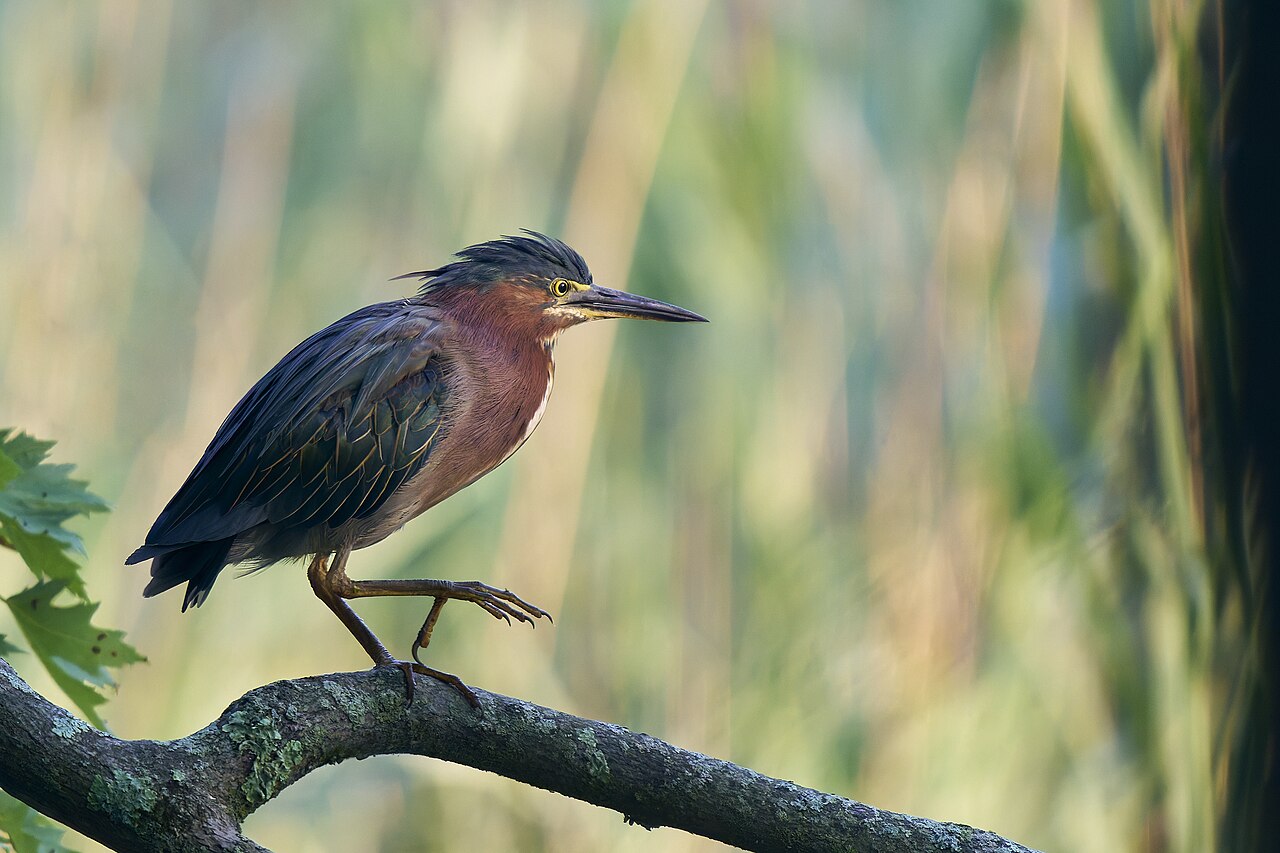
The Green Heron is a stocky, crow-sized heron that keeps to dense waterside cover and rarely hunts far from it. Seen close up it is a colourful bird, with a chestnut neck and a blue-green back, but at a distance it often looks simply dark and compact. It is one of the few birds in the world known to use bait to catch fish.
Voice
The alarm call is a loud, harsh kyow, usually given as the bird flushes low over the water. Quieter series of soft kuk notes are heard at other times, while displaying males give a hoarse raah-rahh with the bill held wide open. In flight a dull, repeated whoom-whoom-whoom sometimes accompanies heavy wingbeats, and a bird approaching the nest gives a soft roo-roo to its mate.
Recording: Stanislas Wroza — CC BY-NC-SA 4.0 · Marais Léon-Provancher, Portneuf, Québec, Canada · xeno-canto
Identification
The adult has a glossy blue-green to blackish cap with a long, shaggy crest raised when excited, a chestnut neck crossed by a white stripe down the throat, and a blue-grey back with a greenish sheen. The legs are yellow to orange-yellow, brighter during courtship, and the bill is long, heavy and dark with a yellow lower mandible. Young birds are dull brown with a heavily streaked neck and breast and lack the adult's metallic sheen. In every plumage the hunched, short-necked posture — the neck held drawn in against the body — gives the species away at a distance.
Confusion species
Immature Black-crowned Night-Heron (Nycticorax nycticorax) is considerably larger and heavier-built, with a thicker bill and a coarser-streaked, more whitish-spotted plumage. Least Bittern (Botaurus exilis) is far smaller and buffier, with a contrasting black cap and pale wing patches that show only in flight, and gives itself away by climbing through reeds rather than standing at the water's edge. From a distance a Green Heron with its neck drawn in can also be mistaken for a small, dark waterbird, until the dagger-like bill and short, hunched legs settle the matter.
Habitat
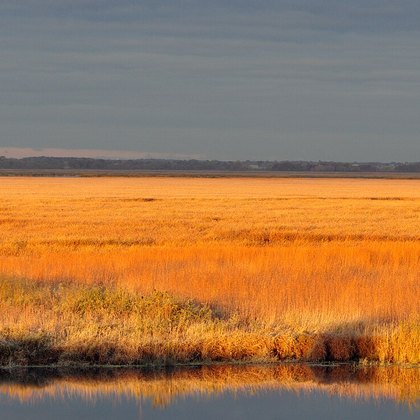
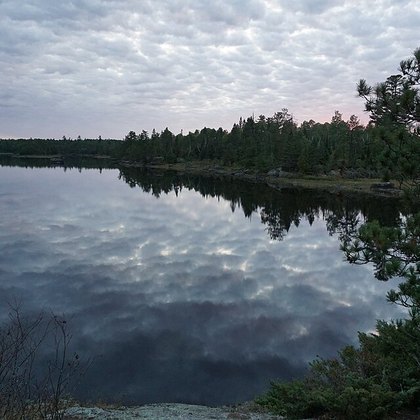
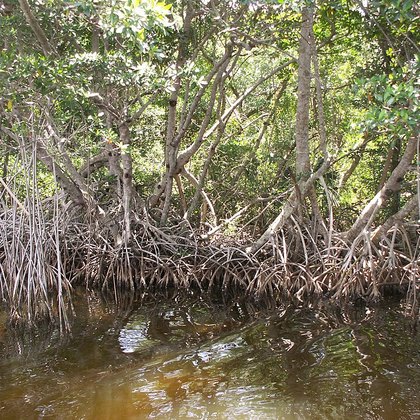
The Green Heron seeks dense, overhanging vegetation along still or slow-moving water: pond and lake margins, marsh edges, mangrove creeks and sheltered ditches. It avoids open shorelines without cover and hunts almost entirely from concealment, standing motionless or stalking slowly until prey comes within reach. In the south of its range it also uses mangrove and brackish creeks; inland, any sheltered waterside with scrub or overhanging branches will do.
Where the bird is most often found, arranged by the USNVC — the vegetation classification of the United States and Canada — and CMECS for sea and coast.


Range and movements
Breeds across almost the entire eastern United States, from the extreme south of Ontario and Quebec southward, west across the Great Plains to the Rocky Mountains, and separately along the Pacific coast from Washington to Baja California. Florida, the Gulf Coast and parts of California and Arizona hold birds year-round; northern and inland breeders withdraw from September, eastern populations moving through Florida, the Gulf Coast and the Caribbean, western populations through Mexico, to winter from the southern United States to northern South America. The species also breeds locally through Central America and the Caribbean.
- Resident
- Breeding (summer)
- Winter
- Passage
- dark = core range, pale = thinly spread
Where and when to look
Look for a quiet waterside with overhanging branches in early morning or late afternoon, and wait: a Green Heron often gives itself away only by its harsh kyow as it flushes. With luck you may see a bird drop a feather, twig or insect onto the water to lure fish within reach — one of the few known cases of tool use in birds.
Conservation
The international Red List has not yet assessed the species on its own (NE): the Red List still lumps it with the Striated Heron (Butorides striata) of South America and the Old World, and that combined species is listed as Least Concern (LC). US breeding-bird surveys show an annual decline of about 1.3 per cent between 1966 and 2019, a cumulative loss of more than half the population — enough to list it as a 'Common Bird in Steep Decline' in the United States, despite an estimated global breeding population of 1.2 million. The main cause is the loss of marsh edge and streamside scrub to drainage.
Scientific name
Butorides virescens | (Linnaeus, 1758)
Linnaeus described the species in 1758 as Ardea virescens, in the then catch-all genus for herons; because it has since been moved to another genus, author and year stand in parentheses. Blyth introduced the genus Butorides in 1852, a contraction of Middle English butor, 'bittern', and the Greek suffix -oides, 'resembling' — hence 'bittern-like'. The epithet virescens is Latin for 'growing green', after the sheen on the back. The type locality, at first simply 'America', was restricted to the coast of South Carolina by Oberholser in 1912.