All species › Pigeons and doves › Doves and pigeons › Common Ground Dove
Common Ground Dove | Columbina passerina
Musduif | Tortolita Pechiescamada
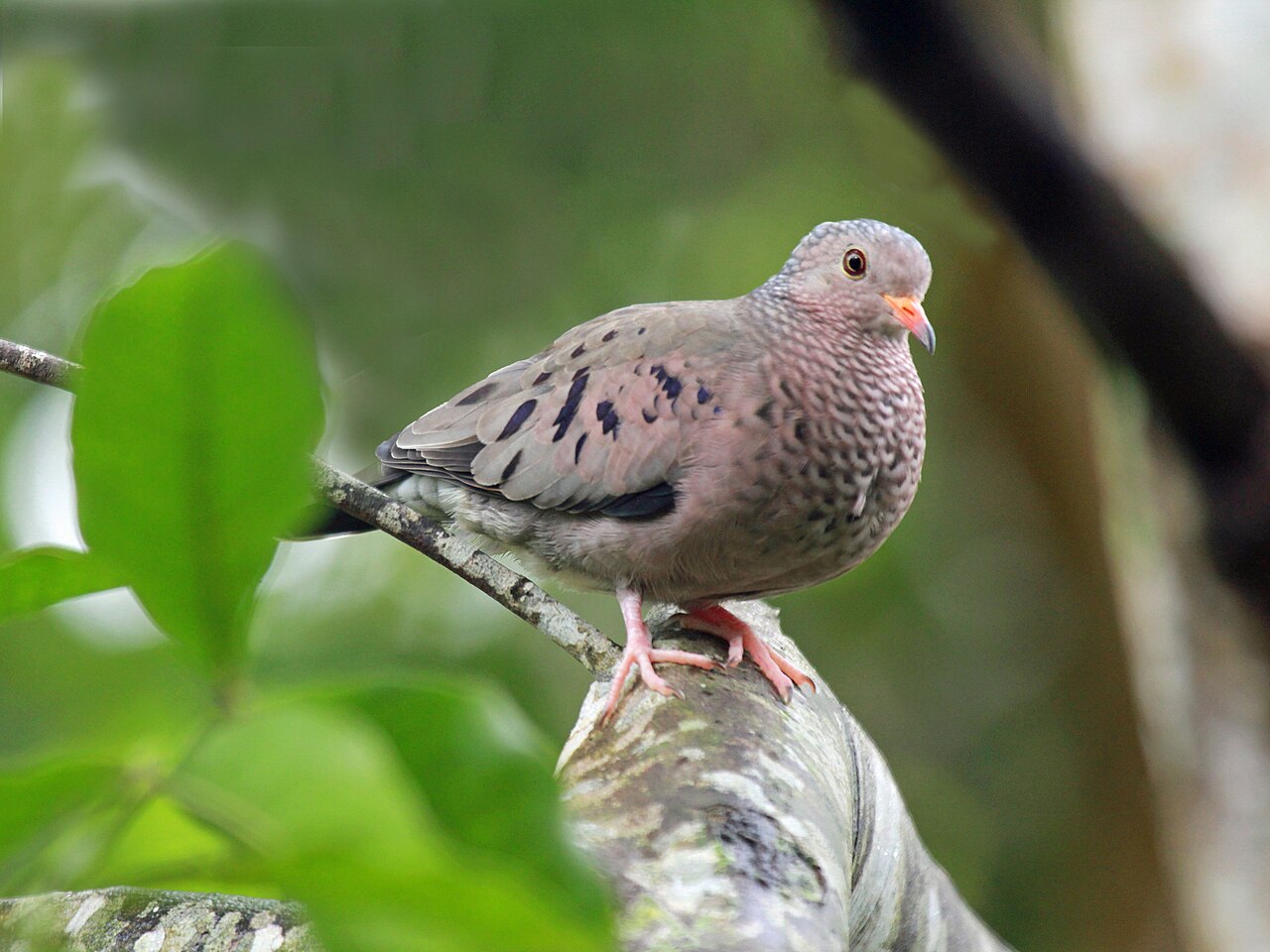
Common Ground Dove is the smallest dove in North America: barely larger than a sparrow, with a short blunt tail and a squat, almost round build. It walks on sandy open ground and sits so still that it flushes only at a few paces, when a rufous wing panel opens and the flight feathers whirr briefly. Its soft rising call belongs to summer in the southern United States the way crickets belong to the evening.
Voice
The call is a soft, short woop that rises in pitch and is repeated about once a second, dozens of times in a row. The sound is hard to place: it seems to come from further away than the bird actually sits, and is easily lost in town noise. It calls mainly in the warm months, from a low branch, a post or the ground, usually in the morning and towards evening. On take-off the wings make a short whirring rustle.
Recording: Richard E. Webster — CC BY-NC-SA 4.0 · Leslie Canyon National Wildlife Refuge, Cochise County, Arizona, United States · xeno-canto
Identification
A small, squat dove with a short dark tail and a proportionately large head. The plumage is sandy brown with scattered black droplet spots on the wing coverts; head, neck and breast are finely scaled, while the back is plain. The male has a pink wash over head, neck and breast and a blue-grey crown; the female is greyer and flatter in tone. The bill is pinkish red with a dark tip, visible at close range in good light. In flight the primaries flash rufous, with dark tips along the wing edge.
Confusion species
Inca Dove is larger, has a long straight tail with white sides and is scaled over the whole body, back included. Ruddy Ground Dove is slightly larger, has a plain unscaled breast, a dark bill and, in the male, a cinnamon back and a black tail. Mourning Dove is far larger and longer-tailed and never shows rufous in the wing. On a brief view, tail length and bill colour are the two features that settle it fastest.
Habitat
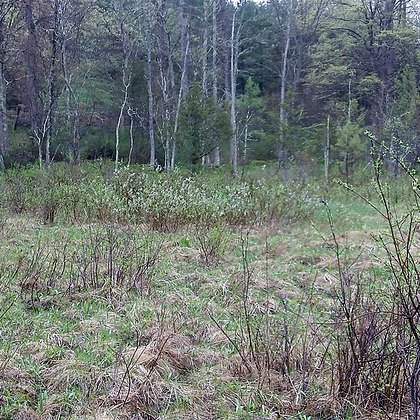
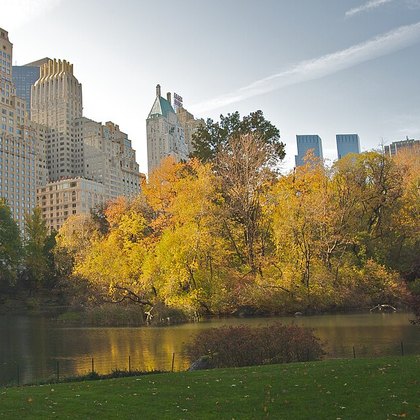
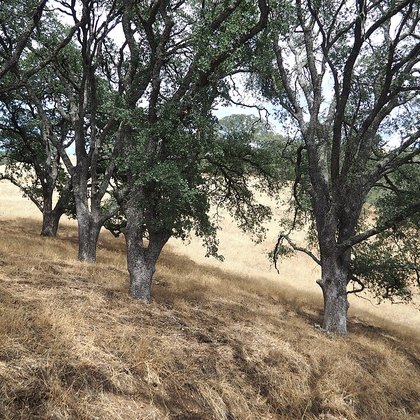
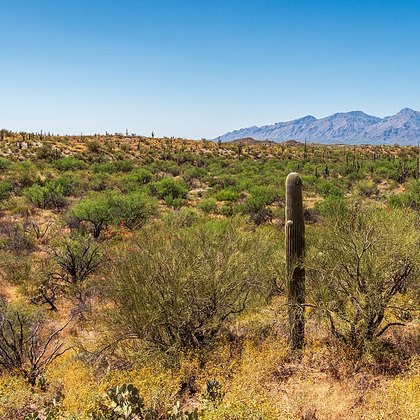
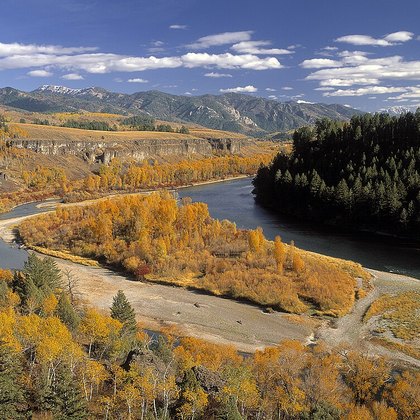
Open and half-open country with bare or sandy patches, tall grass and groves of trees: woodland edges, oak savanna, field margins, pastures, riparian strips and dry scrub. It is equally at home in gardens, hedges, road verges and neglected town edges, searching paths and driveways for seed. It nests low and often on the ground itself. It avoids closed forest and unbroken tall growth without open patches.
Where the bird is most often found, arranged by the USNVC — the vegetation classification of the United States and Canada — and CMECS for sea and coast.
Range and movements
Resident along the southern rim of the United States from California to Florida and South Carolina, throughout Mexico and Central America, on almost all islands of the Greater and Lesser Antilles and on Bermuda, and on into northern South America. It does not migrate, but northern birds shift a little south in winter and mountain birds drop to lower ground. Birds of the Southeast and Texas are darker and richer in colour, those of the Southwest paler and greyer. The range has changed little over the past century, though it has disappeared locally where scrub gave way to building.
- Resident
- Breeding (summer)
- Winter
- Passage
- dark = core range, pale = thinly spread
Where and when to look
Drive or walk a sand track or an unpaved car park early in the morning in Florida, Texas or southern California: Common Ground Doves feed on seed in the ruts and flush only when you are close. Watch then for the rufous opening in the wing and for the short tail without white. Perched, they are small and still; their rising call usually gives away where they sit.
Conservation
The species is listed as Least Concern (LC). Partners in Flight estimates the world population at thirteen million breeding birds, roughly a fifth of them in the United States and a fifth in Mexico. The Breeding Bird Survey showed a stable picture between 1966 and 2014. More than eighty-five per cent of the original scrub in its North American range has been converted to farmland and building; traffic and domestic cats take their share as well, and because it nests low and often on the ground, nests are easily lost.
Scientific name
Columbina passerina | (Linnaeus, 1758)
Linnaeus described the species in 1758 as Columba passerina; because it was later placed in the genus Columbina, author and year stand in parentheses. Columbina is a diminutive of Latin columba, 'dove'; the species name passerina comes from passer, 'sparrow', and refers to its size. Linnaeus gave the origin only as 'America inter tropicos'. Bonaparte restricted the type locality to South Carolina in 1855, by tying the name to the plate by Catesby.