All species › Passerines › Finches, euphonias and allies › Cassin's Finch
Cassin's Finch | Haemorhous cassinii
Cassins roodmus | Camachuelo de Cassin
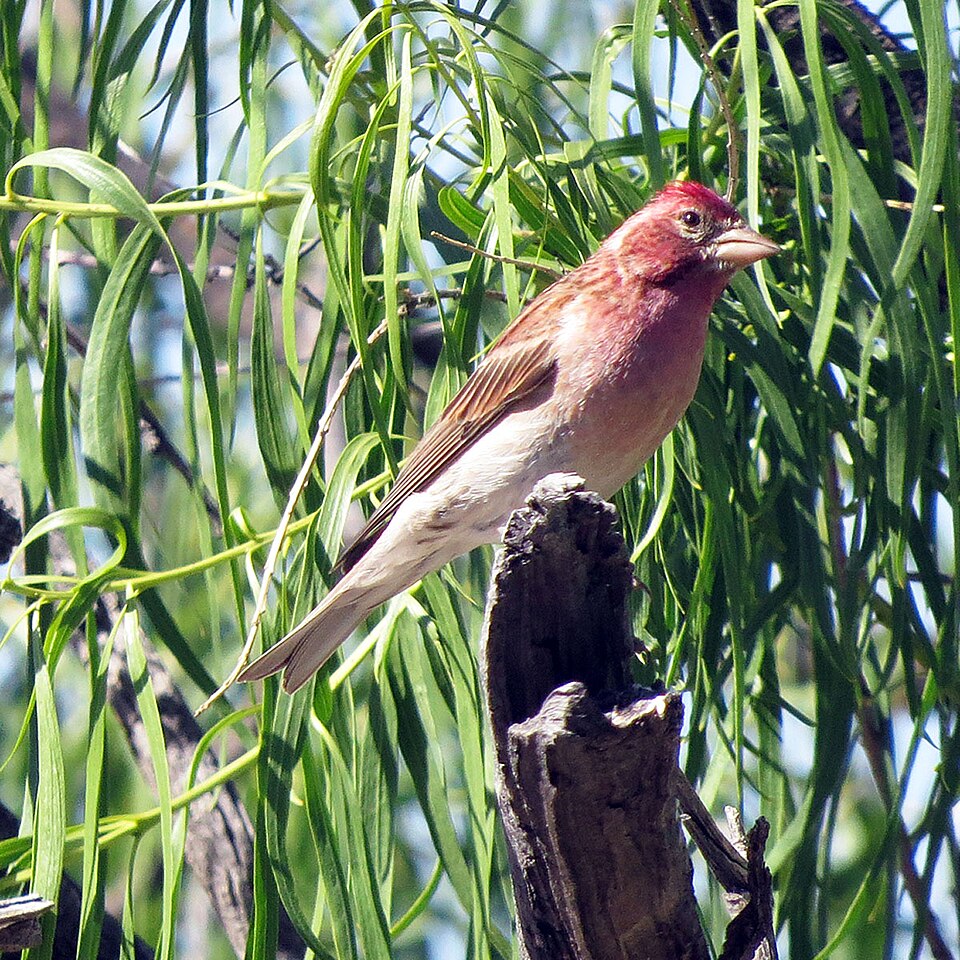
Cassin's Finch is the rosefinch of mountain conifer forest in western North America, from British Columbia to northern New Mexico and, in winter, into central Mexico. It is the largest and longest-billed of the three rosefinches, recognisable by the peaked, sharply bounded red crown of the male.
Voice
The song is a fast, high and clear warble, longer and with more pitch range than in the other two rosefinches, and with short imitations of other forest birds worked in — fragments of Dark-eyed Junco, Clark's Nutcracker or a woodpecker drum are heard regularly. The flight call is a two-syllable dry kee-up or tee-dee-yip, repeated continuously by a passing flock and giving the quickest separation from the other rosefinches.
Recording: Richard E. Webster — CC BY-NC-SA 4.0 · Portal, Arizona, United States · xeno-canto
Identification
The largest rosefinch, with a long bill with straight cutting edges and a nearly flat culmen, a short notched tail and a crown that rises to a point. The male is washed rosy pink on breast and back, with a sharply bounded bright red crown patch sitting like a cap on the browner head; the belly is white and nearly unstreaked. Female and young birds are white with fine, crisp, narrow brown streaks on breast and flanks, a thin white eyering and, unlike the other rosefinches, clearly streaked undertail coverts.
Confusion species
Purple Finch has a shorter bill, a rounder head profile, broader and blurrier streaking and plain white undertail coverts; on the male the red blends gradually into the brown of the crown instead of ending sharply. House Finch has a short, curved upper mandible and brown flank streaking on the male. The undertail coverts are the most reliable mark on streaked birds: streaked on Cassin's, plain on Purple Finch.
Habitat
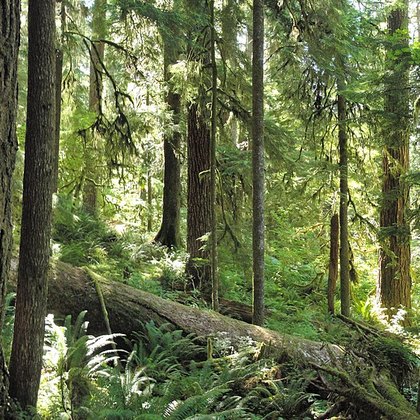
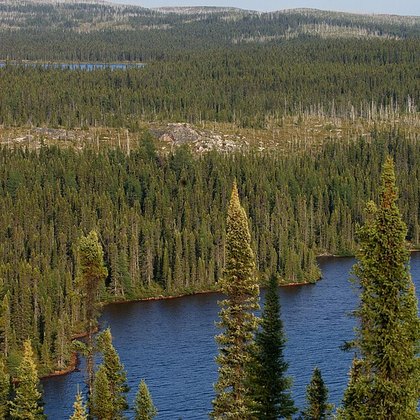
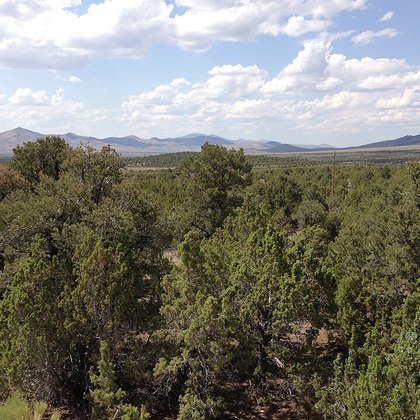
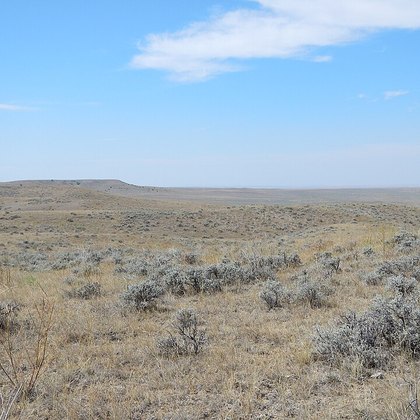
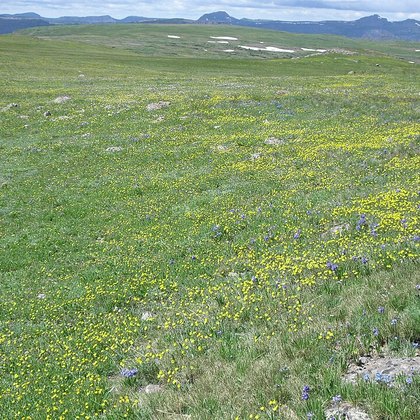
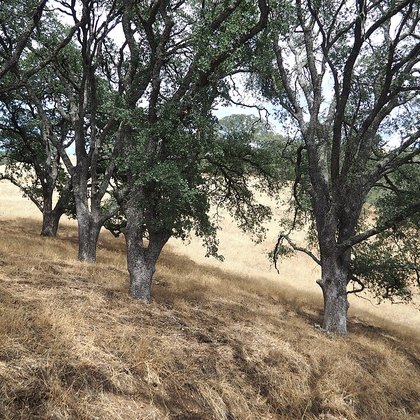
Open mountain conifer forest, mainly between roughly 900 and 3000 metres, with lodgepole pine, ponderosa pine, Douglas-fir, spruce and stands of quaking aspen. At the dry edges of the range also sagebrush (grey-green sagebrush scrub of the dry West) steppe with scattered junipers, and in winter lower-lying pinyon (a low-growing pine of the dry south-western foothills)-juniper woodland and oak country. It forages in the canopy at buds, seeds and cones, and in autumn regularly visits mineral-rich ground.
Where the bird is most often found, arranged by the USNVC — the vegetation classification of the United States and Canada — and CMECS for sea and coast.
Range and movements
Breeds in the mountains of central British Columbia and southwestern Alberta south through Washington, Oregon, Idaho, Montana, Wyoming, Nevada, Utah, California and Colorado to northern Arizona and northern New Mexico. In winter it mainly drops in elevation and spreads over the same country, with part of the population moving south to Baja California, Sonora, Chihuahua and the Sierra Madre Occidental as far as central Mexico. Movement is irregular and follows the cone crop, so numbers can differ greatly between winters and between areas.
- Resident
- Breeding (summer)
- Winter
- Passage
- dark = core range, pale = thinly spread
Where and when to look
Look for it in early summer at a mountain lake or a car park in ponderosa pine forest above about 1500 metres, where small parties come down to drink. Listen for the two-syllable flight call and watch the head shape: the long, straight-edged bill and the peaked crown make an almost angular line the other rosefinches lack.
Conservation
Partners in Flight puts the breeding population at about 3.2 million birds. Numbers have declined since 1967, most strongly along the California coast, and the species is on the Partners in Flight Yellow Watch List. In 2019 it was moved on the Red List from Near Threatened back to Least Concern (LC) because the decline had slowed. Logging, changed fire management, drought and disease are named as pressures, but the causes of the decline are still little studied.
Scientific name
Haemorhous cassinii | (Baird, 1854)
Spencer Fullerton Baird described the species in 1854 as Carpodacus cassinii; because it later moved to Haemorhous, author and year stand in parentheses. The genus Haemorhous goes back to Greek haima 'blood' and orrhos 'rump'. The species name honours John Cassin, curator at the Academy of Natural Sciences in Philadelphia, after whom a vireo, a sparrow and a swift are also named. The specimen described came from a camp recorded as New Mexico but which turns out to lie in present-day Yavapai County, Arizona.