All species › Passerines › New World warblers › Black-throated Gray Warbler
Black-throated Gray Warbler | Setophaga nigrescens
Grijze zwartkeelzanger | Reinita gris
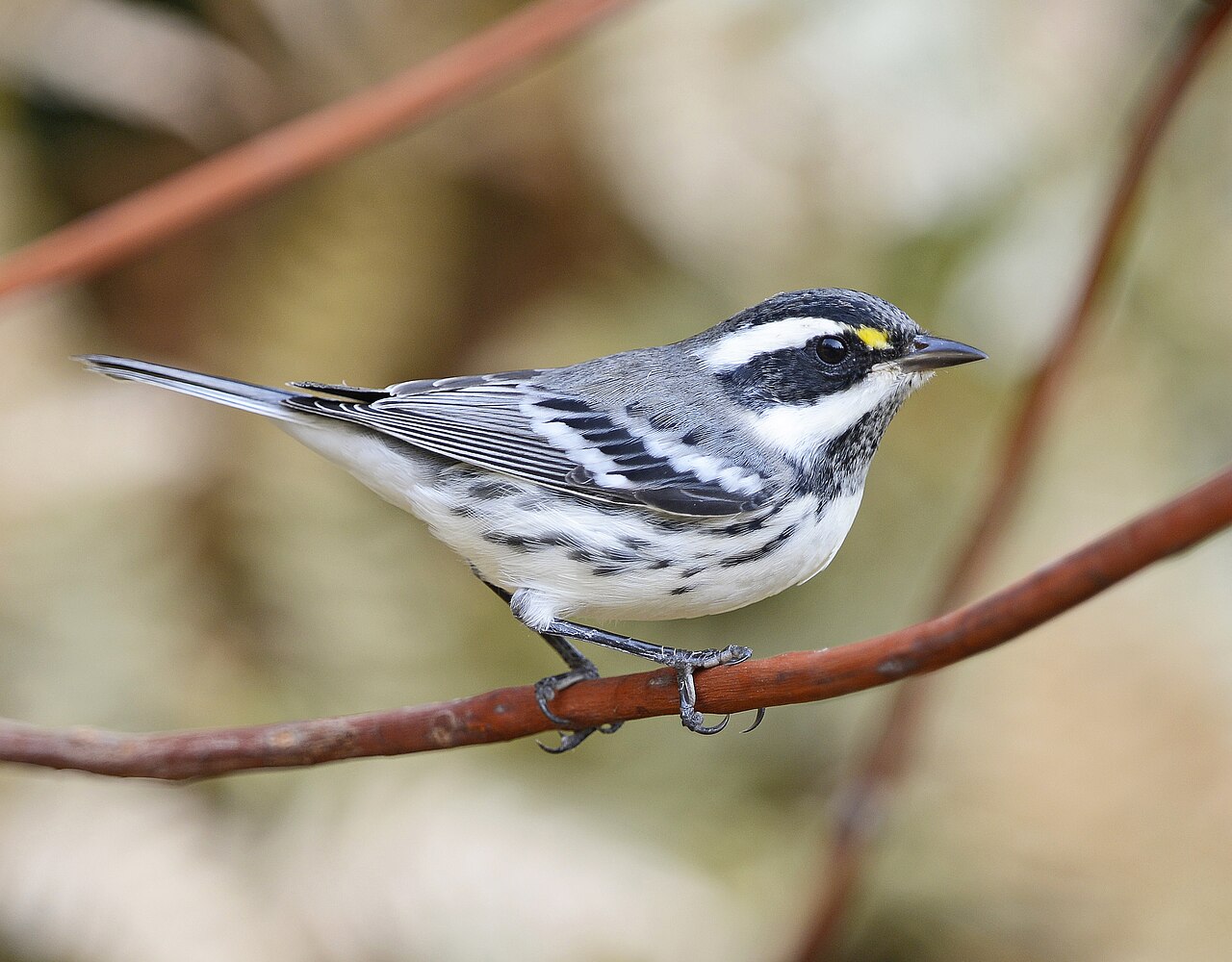
The Black-throated Gray Warbler is the western member of the black-throated group and the only one without yellow or green in its plumage: it is black, grey and white alone, with one small yellow spot before the eye. It belongs to the dry pinyon (low-growing pine of the dry south-western foothills), juniper and oak woodland of western North America.
Voice
The song consists of four to seven buzzy notes, the first two or three repeated in pairs and the next to last pitched higher than the rest, roughly weezy weezy weezy-WEE-chu. There are two loud variants and a quiet version given close to the nest. The call is a sharp, thick tup; the flight note a high, thin see.
Recording: Ed Pandolfino — CC BY-NC-SA 4.0 · Elk Mtn Rd, Lake County, California, United States · xeno-canto
Identification
The male has a black throat and upper breast, a black crown stripe, a black eye-line, and between them a white eyebrow and a white stripe below the cheek — the face is thus divided into black and white bands. The back is plain grey with faint dark streaks, the flanks are streaked black, the belly is white and there are two white wing bars. A yellow spot sits before the eye, often barely visible. The female has a white throat with at most black flecking and a duller face. The plumage is matte and without gloss.
Confusion species
Black-and-white Warbler is also black and white, but has a black-and-white striped crown and back and creeps along trunks and limbs like a nuthatch. Blackpoll Warbler in male breeding plumage has a solidly black cap and no white eyebrow. Black-capped and other chickadees lack streaked flanks and wing bars. Females and young birds resemble those of Townsend's Warbler, but Townsend's always shows yellow on the face and breast.
Habitat
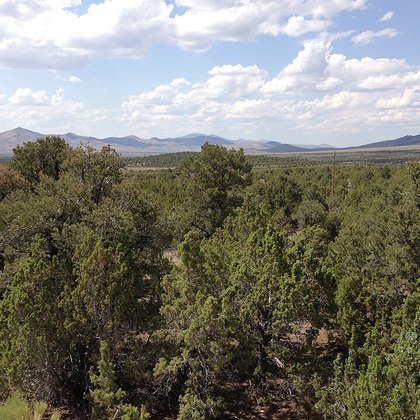
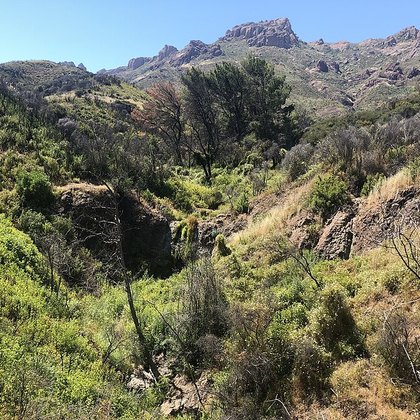
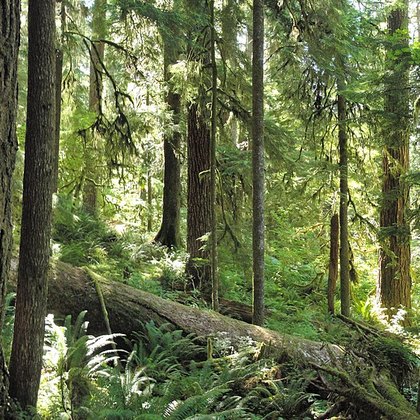
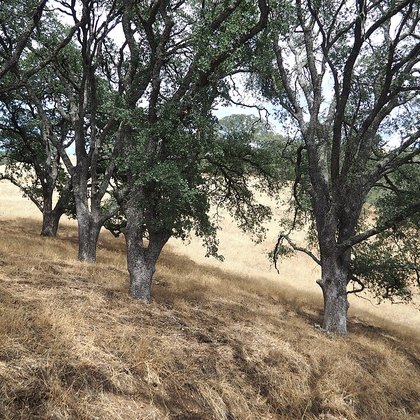
Dry, open woodland with a shrubby understorey: pinyon-juniper, oak, chaparral (dense, hard-leaved scrub of California's Mediterranean climate) and mixed conifer on the lower slopes, generally between 600 and 2500 metres. It forages low to mid-height, in shrubs and the lower branches, rather than at the top of the canopy. Closed, humid conifer forest it avoids. In its winter quarters in western Mexico it uses dry thorn scrub, pine-oak woodland and gardens.
Where the bird is most often found, arranged by the USNVC — the vegetation classification of the United States and Canada — and CMECS for sea and coast.

Range and movements
It breeds from southwestern British Columbia south to northern Baja California and east to southern Montana, Colorado and New Mexico. Migration is short and overland; most birds winter in western Mexico, from southern Baja California and Sonora south to Oaxaca, with small numbers on the southern California coast and in southern Arizona. In autumn it turns up regularly as a vagrant in eastern North America.
- Resident
- Breeding (summer)
- Winter
- Passage
- dark = core range, pale = thinly spread
Where and when to look
Look for it from May to July in pinyon-juniper woodland of the Great Basin or the Colorado Plateau and follow the buzzy song to a bird working low in the shrubs. The black-and-white head pattern reads even against the light; the yellow spot before the eye needs binoculars and good light and is not required for the identification.
Conservation
The species is numerous and widespread and is listed as Least Concern (LC); numbers have been largely stable over recent decades. Large-scale removal of pinyon-juniper woodland for grazing and the increase in wildfire across the dry West do reduce the area of suitable woodland. Continued drying may also shift that woodland type to higher slopes.
Scientific name
Setophaga nigrescens | (Townsend, 1837)
Townsend described the species in 1837 as Sylvia nigrescens; because it was later moved to Setophaga, author and year stand in parentheses. The genus Setophaga was introduced in 1827 by William Swainson, from Greek sēs 'moth' and -phagos 'eating'. The species name nigrescens is Latin for 'becoming black' and refers to the dark head and throat markings. The specimens on which the description rests came from near Fort William, close to Portland, Oregon.