All species › Waders, gulls and terns › Skimmers, noddies, terns and gulls › Black-headed Gull
Black-headed Gull | Chroicocephalus ridibundus
Kokmeeuw | Gaviota reidora
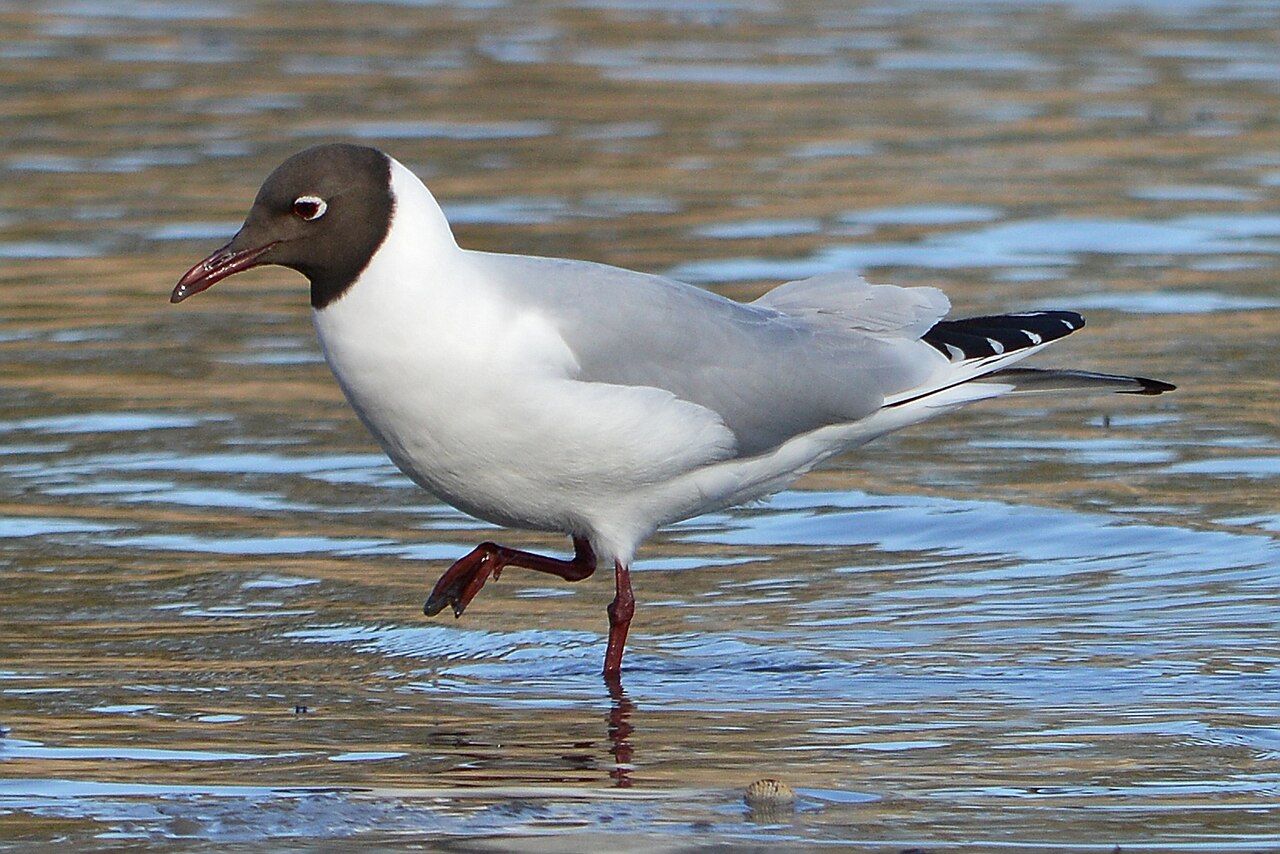
In Europe the Black-headed Gull is one of the commonest birds there is — millions of pairs, on every town pond and behind every plough — but in North America it is a rare visitor from the Old World. Small numbers winter along the northeast coast, almost always as a single bird among hundreds of Bonaparte's Gulls. Its hood is not black but chocolate brown, and in good light that is the first thing to strike you.
Voice
The usual call is a harsh, grating, complaining kree-arr, with something of a mocking laugh in it, and it is what gave the bird its scientific name. In a colony thousands call at once and the noise is deafening; flocks lifting off set up a continuous chattering squabble. In North America it is seldom heard, because there it sits almost always alone and silent among other gulls. Anyone who does hear one call in a flock of Bonaparte's Gulls has the answer at once: the Black-headed Gull sounds heavier and rougher.
Recording: Julien Bottinelli — CC BY-NC-SA 4.0 · Mouroux, Seine-et-Marne, Île-de-France, France · xeno-canto
Identification
A medium-sized, slim gull with a pale grey mantle, a fairly long deep red bill and red legs. In breeding plumage it wears a chocolate-brown hood that stops short of the nape and ends sharply at the rear, broken only by a thin white eyelid. The best mark is in flight: a broad white wedge runs along the leading edge of the outer wing above, while that same wingtip is dark grey to black below — a contrast no other small gull in the region shows in this way. In winter plumage the head is white with a dark ear spot and a smudge above the eye, and the red bill has a black tip. First-year birds have a brown bar across the wing bend, a black tail band and orange legs.
Confusion species
Bonaparte's Gull (Chroicocephalus philadelphia) is the species it always sits among in North America, and the comparison is the same every time: that bird is smaller and finer, with a thin black bill instead of a red one, a black instead of brown hood, and a clean white wingtip below where the Black-headed Gull is dark grey. Laughing Gull (Leucophaeus atricilla) is larger, far darker grey on the mantle, and has no white wedge in the wing. Little Gull (Hydrocoloeus minutus) is much smaller, with rounded wings and a wholly dark underwing. If a winter-plumaged bird has you in doubt, look at the bill: on the Black-headed Gull it is clearly longer and red with a dark tip.
Compare gulls: legs, head, bill and wing tip side by side
Habitat
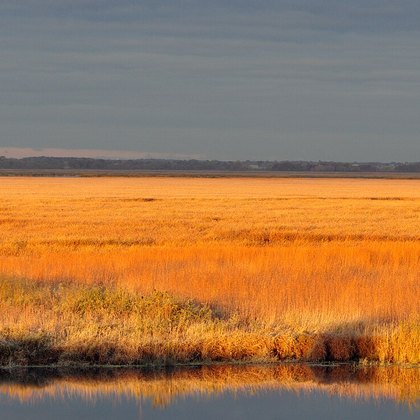
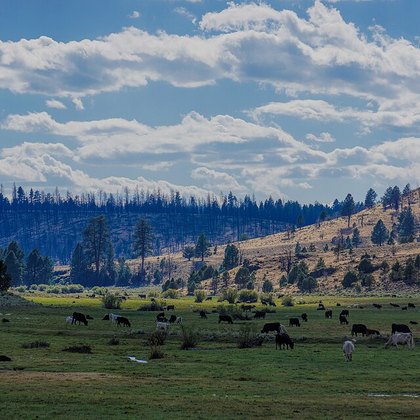
In its Eurasian heartland it breeds in colonies on islets and floating reed beds in shallow lakes, marshes and salt marsh, and feeds all year from arable land, pasture, rubbish dumps and town ponds — no gull is so closely tied to people. The birds that reach North America use a much narrower range of places: harbours, river mouths, outfalls, fish plants and small beaches along the northeast coast, usually in the company of Bonaparte's and Ring-billed Gulls. Inland fresh water is used far less there than in Europe. It hardly goes to sea at all, staying in the shelter of the coast.
Where the bird is most often found, arranged by the USNVC — the vegetation classification of the United States and Canada — and CMECS for sea and coast.



Range and movements
The range runs from Iceland and western Europe east through Russia to Japan and China, with its centre of gravity in Europe, where two to three million pairs breed. During the twentieth century the species moved west: Iceland was settled around 1911, Greenland in 1969, and in 1977 it bred in western Newfoundland, where a handful of pairs has held on since — the only North American foothold. Otherwise it is an irregular guest on this continent: rare but annual from November to April along the coasts of Newfoundland and Nova Scotia to New England and New York, in smaller numbers south to Virginia, and further south and in the Caribbean a real rarity. The contrast with Europe could hardly be sharper: there one of the most numerous birds of the land, here a tick on a year list.
- Resident
- Breeding (summer)
- Winter
- Passage
- dark = core range, pale = thinly spread
Where and when to look
Do not look for the bird, look for the flocks of Bonaparte's Gulls: in a harbour or at a river mouth on the northeast coast, between November and March, and work through the flock steadily until one bird stands out as bigger and red-billed. Then put it up, or wait until it banks: the dark underside of the wingtip is the mark that leaves no doubt. Newfoundland, with Stephenville Crossing and to a lesser extent St. John's, remains the best chance on the continent.
Conservation
Worldwide the species is abundant and listed as Least Concern (LC), but the North American foothold is tiny and fragile. In St. John's in Newfoundland, where dozens once wintered every year, it has become scarce since waste handling changed and the open dumps went — the same thing that is pushing down winter numbers in European cities. Across much of western Europe breeding numbers have been falling since the 1980s, through the draining of marshes and the loss of food at landfill sites.
Scientific name
Chroicocephalus ridibundus | (Linnaeus, 1766)
Linnaeus described the species in 1766 as Larus ridibundus; because it was later placed in another genus, author and year stand in parentheses. The genus Chroicocephalus was introduced by Eyton in 1836; the name is Greek, from chroa for colour and kephale for head, after the coloured hood of the species in this genus. ridibundus is Latin for laughing, from ridere, and refers to the grating call. Linnaeus gave no more precise a type locality than the European seas.