All species › Cranes, rails and allies › Rails, gallinules and coots › Weka
Weka | Gallirallus australis
Weka | Rascón weka
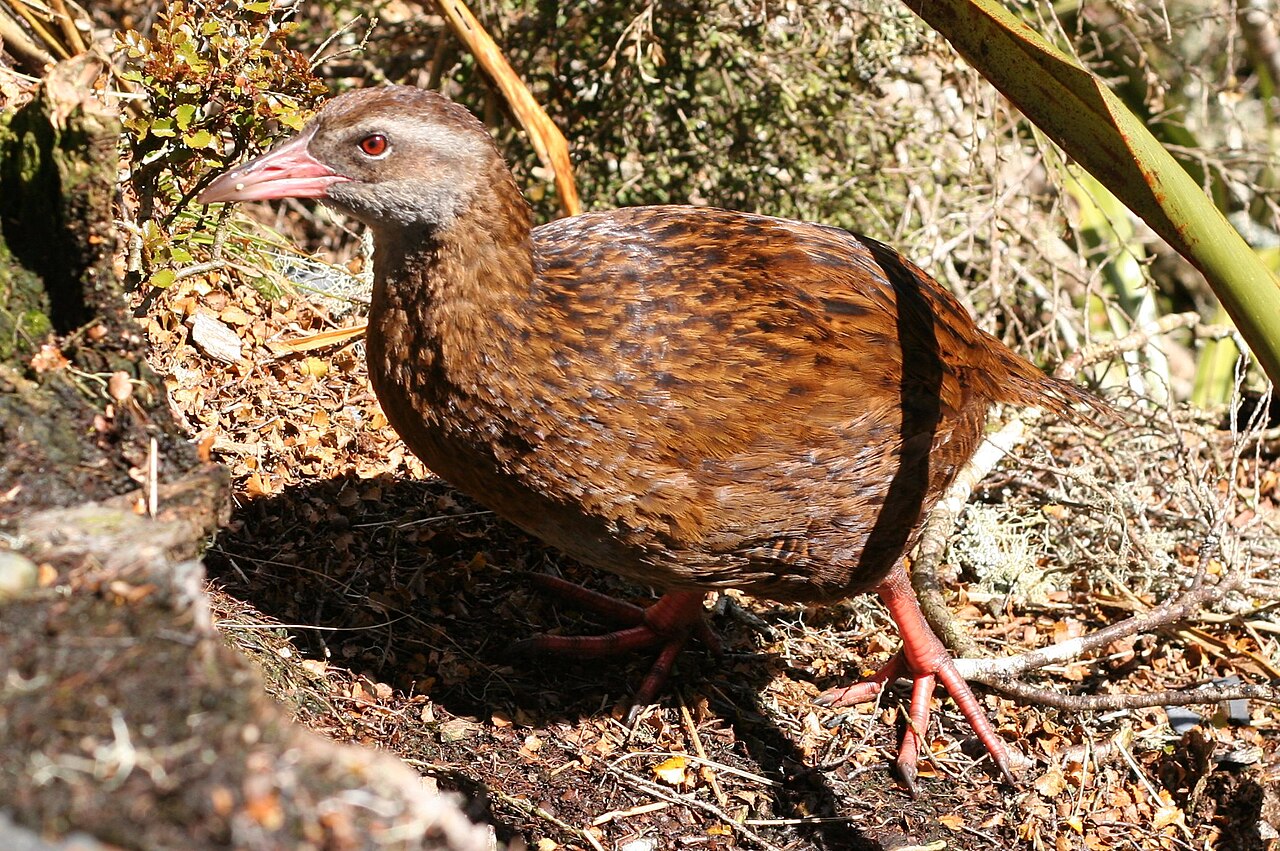
The Weka is the large, flightless brown rail of New Zealand: the size of a hen, with a heavy red-brown bill, red legs, and brown plumage streaked and barred with black. It does not avoid people, walks straight into a campsite, and carries off whatever shines or lies loose; the bird approaches people itself rather than the other way round.
Voice
The territorial duet at dusk is the sound of a New Zealand hut: a high, piercing coo-eet, repeated dozens of times, the male lower and slower than the female and the two interlocking exactly. It is heard mostly in the first half hour after sunset and again at first light. With it go a dull booming note and soft clucking mutters between partners.
Recording: David Boyle — CC BY-NC-SA 4.0 · Taiko Camp, Chatham Island , New Zealand · xeno-canto
Identification
A solid rail of fifty to sixty centimetres in the male and forty-six to fifty in the female, weighing anything from four hundred grams to over fourteen hundred. The plumage is dense and brown, black-streaked above, with bold black barring on the longest wing and tail feathers. The iris is red, the bill heavy, straight and red-brown to grey, the legs sturdy and red. Colour varies strongly by subspecies: Chatham Island birds are tawny, Stewart Island birds chestnut, and some Fiordland birds almost black. The wings are small and it does not fly; it walks with a bobbing tail.
Confusion species
Buff-banded Rail (Gallirallus philippensis) is the close relative you can meet in the same country, but it is far smaller and finer, neatly barred black and white, with a white supercilium, a chestnut eye-stripe and an orange-buff breast band — and it flies. Lord Howe Woodhen (Gallirallus sylvestris) is just as stocky and also flightless, but occurs solely on Lord Howe Island, over two thousand kilometres away; the two never meet. Chestnut Rail (Gallirallus castaneoventris) is a chestnut rail with a long grey bill from the mangroves of northern Australia. Within New Zealand the only other large walker on the forest floor is the kiwi, which is nocturnal and has a long thin bill.
Habitat
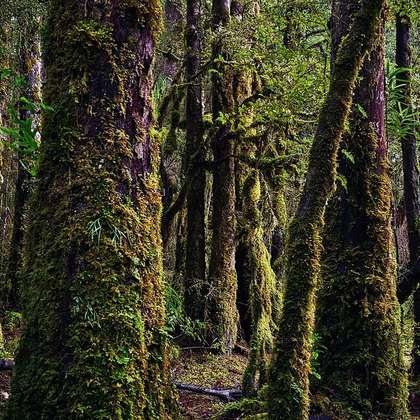
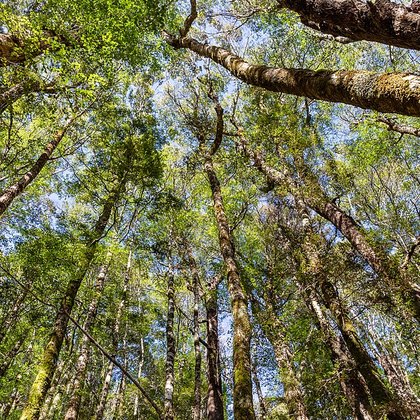
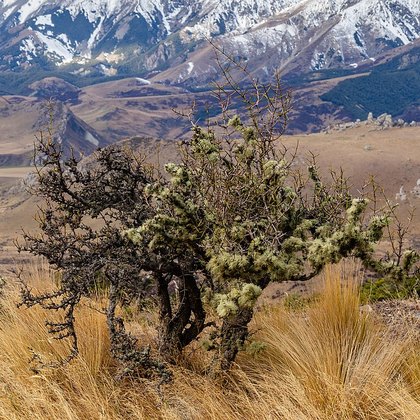
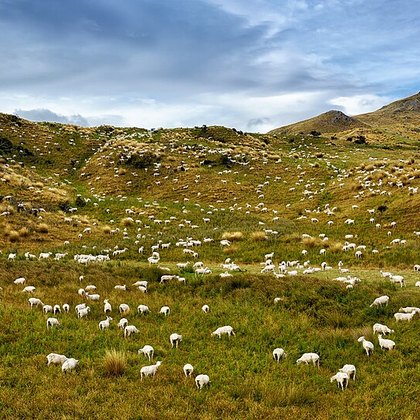
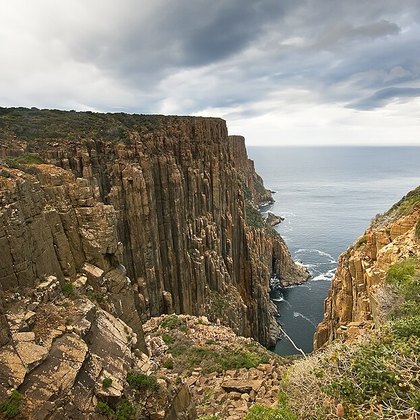
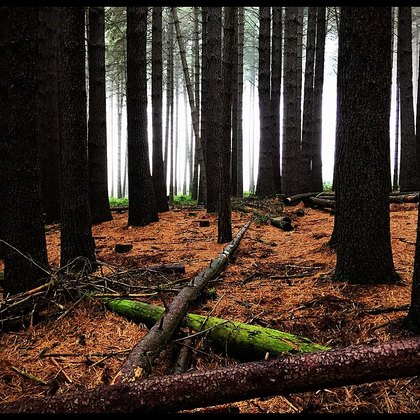
From the tideline to above the treeline: native forest and plantation, scrub, rough pasture, swamp edge, dune and rocky coast. It needs dense cover and favours margins — the strip between forest and grass, between scrub and beach. It eats both animal and plant food, roughly thirty per cent animal to seventy per cent plant, from earthworms and beetles to berries and seeds, and around people picks out anything edible or shiny.
Where the bird is most often found, arranged by main group and formation.
Range and movements
Endemic to New Zealand and split into four subspecies. North Island Weka (greyi) is around Russell and the Bay of Islands peninsula, at Kawakawa Bay and in the Opotiki–Motu country; Western Weka (australis) in the Marlborough Sounds, North-west Nelson, the West Coast and Fiordland; Stewart Island Weka (scotti) on Stewart/Rakiura, Ulva and neighbouring islands and on Kapiti; Buff Weka (hectori) was lost from the eastern South Island but is introduced and numerous on Chatham and Pitt. Birds also live on Kawau and Mokoia. Within the map window there is one more Australian chapter: on Macquarie Island Weka were liberated as a food supply in the 1870s, helped drive the endemic Macquarie rail and Macquarie parakeet to extinction, and were themselves eradicated in 1988.
- Resident
- dark = core range, pale = thinly spread
Where and when to look
Sit down towards sunset at a hut, campsite or car park on the West Coast or on Stewart Island and simply wait: the Weka comes to you. Stow shoes, keys, wallet and food, because anything loose disappears. At last light listen for the duet, which often comes from two directions at once out of the scrub and places the pairs exactly.
Conservation
Vulnerable (VU) on the world list. In New Zealand the status differs by subspecies: Western Weka is Not Threatened, North Island Weka and Buff Weka are ranked At Risk – Relict, and Stewart Island Weka Threatened – Nationally Vulnerable. Predation by ferrets, stoats, cats and loose dogs weighs heaviest; beyond that come starvation in drought, road deaths, hunting on the Chathams and the muttonbird islands (name for young shearwaters harvested for food), secondary poisoning during pest operations, and genetic erosion in small isolated populations. At the same time Weka have been removed from islands where they damaged seabirds, ground-nesters, lizards and invertebrates — protection in one place and eradication in another run side by side for this bird.
Scientific name
Gallirallus australis | (Sparrman, 1786)
Sparrman described the species in 1786 as Rallus australis, from material of Cook's second voyage; it now sits in Gallirallus, so author and year stay in parentheses. Gallirallus is built from Latin gallus, 'cock', and rallus, 'rail', for the hen-like look. australis means 'southern'. The type locality is Dusky Sound in Fiordland; the name Weka is Maori and renders the call.